AI till mänsklig textkonverterare: Förvandla AI till naturligt, engagerande innehåll.
Upptäck hur en AI till mänsklig textkonverterare omvandlar robotaktig AI-output till naturligt, engagerande skrivande. Lär dig hur det fungerar och hur du använder det effektivt.
En AI till mänsklig textkonverterare är ett verktyg som är utformat för att ta robotaktigt, AI-genererat innehåll och polera det tills det låter naturligt, engagerande och genuint mänskligt. Det förfinar texten för att efterlikna mänskliga skrivstilar, vilket hjälper den att passera AI-detektorer och samtidigt göra den mycket mer läsbar.
Från robotaktigt till realistiskt: Varför vi behöver AI-konverterare
Du kan ofta känna igen AI-genererad text på långt håll. Den har en viss steril perfektion – grammatiskt felfri men konsekvent saknar den värme, rytm och de subtila ofullkomligheterna som gör att skrivande känns levande. Det är precis det problemet som en AI till mänsklig textkonverterare är byggd för att lösa.
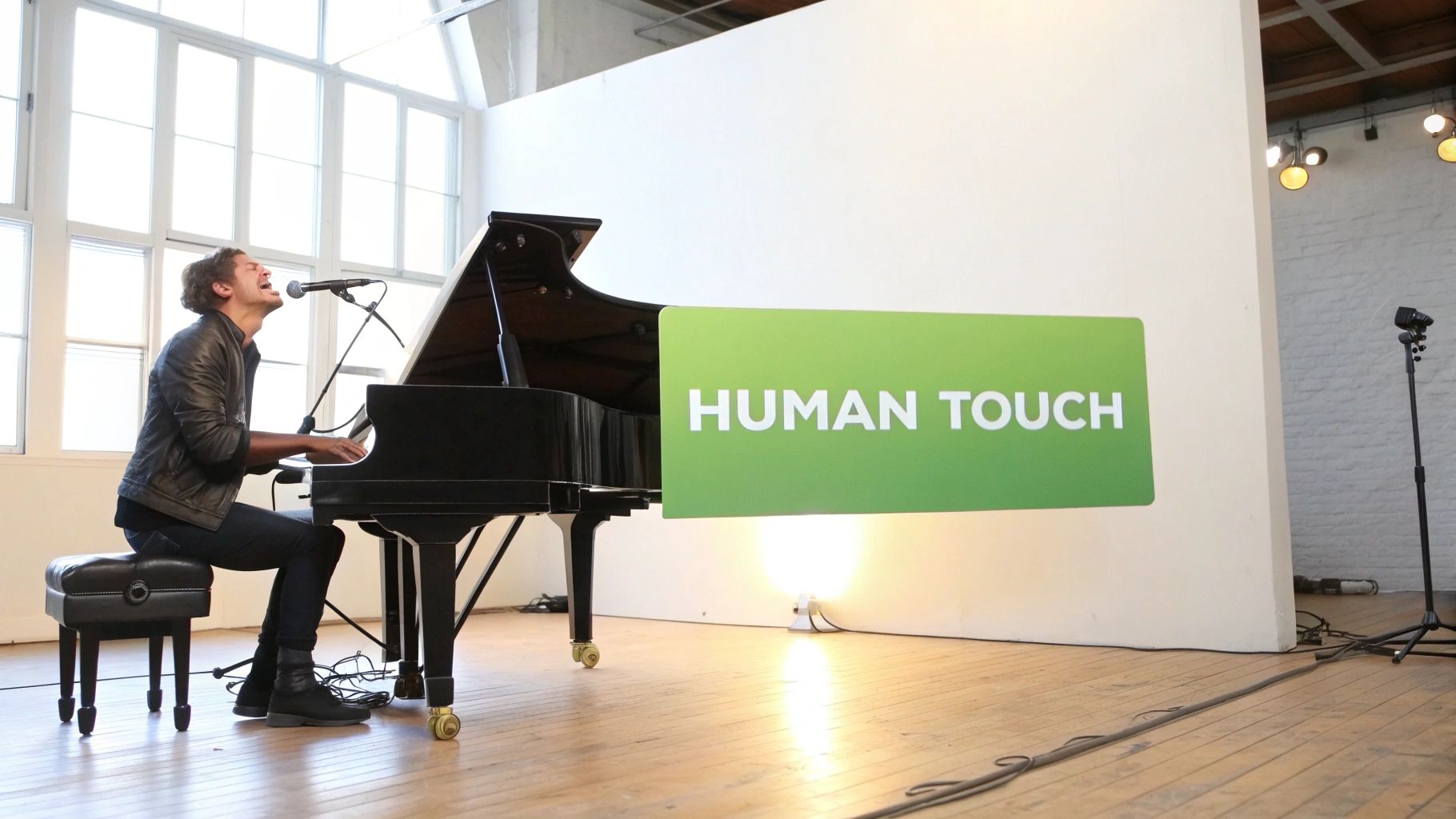
Tänk på en tekniskt skicklig pianist som spelar ett komplext musikstycke. Varje not är perfekt, tajmingen är precis, men det finns ingen känsla, ingen själ. Föreställ dig nu en mästarsmusiker som spelar samma stycke och tillför sin egen tolkning, känsla och passion. Den första framförandet är robotaktigt; det andra är en rörande upplevelse. Det är precis vad dessa konverterare gör för skrivande.
Att bygga bryggan mellan effektivitet och autenticitet
AI-skrivverktyg är otroligt effektiva och kan producera enorma mängder innehåll på sekunder. Men denna hastighet kommer ofta på bekostnad av autenticitet. Texten kan kännas generisk, repetitiv och oengagerad och misslyckas med att skapa en verklig kontakt med mänskliga läsare.
För innehållsskapare är detta ett stort hinder. Innehåll som känns maskingjort kämpar med att bygga förtroende, driva engagemang eller etablera en unik varumärkesröst. Det är funktionellt, visst, men det övertygar inte, inspirerar inte och resonerar inte.
Detta växande behov av autentiskt klingande innehåll har drivit en otrolig marknadstillväxt. Marknaden för AI-textgeneratorer, som driver dessa konverteringsverktyg, värderades till bara USD 335,1 miljoner år 2021. Det steg till USD 534,78 miljoner år 2024 och beräknas nå häpnadsväckande USD 1 890,75 miljoner år 2032, drivet av den globala efterfrågan på mänskliga digitala upplevelser. Du kan läsa mer om trender på marknaden för AI-textgeneratorer och dess imponerande tillväxt.
Vem drar nytta av humaniserat AI-innehåll
Ett brett spektrum av yrkesverksamma förlitar sig nu på dessa verktyg för att förfina sina AI-assisterade arbetsflöden. Målet är inte att fuska eller vilseleda, utan att para ihop AI:s hastighet med den genuina kontakt som bara humaniserat skrivande kan ge.
En AI till mänsklig textkonverterare fungerar som en brygga, tar den råa, strukturerade outputen från en maskin och tillför nyansen och personligheten hos en mänsklig skribent. Det handlar om att låta tekniken tjäna kreativiteten, inte ersätta den.
Olika användare möter unika utmaningar med rå AI-text, och konverterare erbjuder lösningar som nästan känns skräddarsydda. Genom att lägga till det avgörande lagret av autenticitet gör dessa verktyg innehåll mer effektivt i alla slags tillämpningar, från akademiska uppsatser till marknadsföringskampanjer med höga insatser.
Tabellen nedan visar exakt hur olika yrkesverksamma drar nytta av detta.
Vem behöver en AI till mänsklig textkonverterare och varför
| Användarprofil | Huvudutmaning med AI-text | Hur en konverterare löser det |
|---|---|---|
| Studenter | Skrivandet kan låta för formellt, sakna kritisk analys och kan flaggas av verktyg för akademisk integritet. | Tillför nyanserat språk, förbättrar argumentationsflödet och omformulerar innehåll för att verka mer originellt. |
| Innehållsskribenter och SEO-specialister | AI-innehåll saknar ofta en unik varumärkesröst, låter repetitivt och kan straffas av sökmotorer om det är av låg kvalitet. | Tillför varumärkespersonlighet, varierar meningsstruktur och förbättrar läsbarhetspoäng för att stärka SEO-prestandan. |
| Marknadsförare | AI-genererad reklam kan kännas opersonlig och misslyckas med att skapa känslomässig kontakt, vilket leder till låga konverteringsgrader. | Skapar mer övertygande, relaterbar text som resonerar med målgrupper och driver handling. |
| Forskare och akademiker | AI-utkast kan vara generiska och sakna den sofistikerade, auktoritativa ton som krävs för vetenskapliga publikationer. | Förfinar komplexa idéer med akademisk stringens och säkerställer att tonen är lämplig för tidskrifter och uppsatser. |
I slutändan kan alla som använder AI för att hjälpa till med skrivandet dra nytta av en slutlig humaniserande touch. Det är det steget som förvandlar ett funktionellt utkast till ett färdigt stycke som verkligen skapar kontakt.
Hur dessa verktyg faktiskt utför sin magi
Har du undrat vad som händer under huven när du klickar på «humanisera»? Det är inte bara ett enkelt ordutbyte. Tänk på det som en mästerkock som inte bara byter ut ingredienser utan helt och hållet tänker om ett recept för att ta fram helt nya smaker och texturer.
Dessa verktyg gör en djupdykning in i textens allra innersta struktur. De analyserar dess uppbyggnad, rytm och ordval för att ta reda på exakt varför den skriker «AI». De är tränade på miljontals exempel på autentiskt mänskligt skrivande och lär sig de subtila egensinnigheterna och mönstren som gör vår kommunikation genuin.

Att bryta kedjorna av robotaktig enformighet
Den största avslöjaren av AI-genererat innehåll är dess förutsägbarhet. AI-modeller älskar enformighet eftersom det är effektivt. De producerar meningar som ofta är av samma längd, följer samma struktur och har liknande komplexitet. Resultatet är en monoton rytm som helt enkelt känns fel för en mänsklig läsare.
En AI till mänsklig textkonverterare fungerar som en lingvistisk rivningsexpert som systematiskt bryter upp den robotaktiga strukturen. Den skriver aktivt om meningar för att introducera variation och förvandlar en flat textvägg till något dynamiskt och engagerande. För en djupare titt på detaljerna utforskar vår guide om det bästa AI-humaniseringsverktyget hur toppplattformar lyckas med detta.
Det handlar inte bara om omformulering; det handlar om att fundamentalt förändra textens DNA. Hela poängen är att göra innehållet mindre förutsägbart och därmed svårare att detektera av AI-skannrar.
Att introducera perplexitet och burstiness
Så hur uppnår de den naturliga känslan? Konverterare fokuserar på två viktiga lingvistiska begrepp: perplexitet och burstiness. Dessa termer kan låta lite akademiska, men idéerna bakom dem är faktiskt ganska enkla.
Perplexitet mäter hur oförutsägbart ett textstycke är. Mänskligt skrivande är naturligt mer förbryllande eftersom vi använder ett bredare spektrum av ordförråd och meningsstrukturer, vilket gör det mycket svårare för en maskin att gissa vilket ord som kommer härnäst.
En högkvalitativ konverterare skruvar upp perplexiteten genom att:
- Eliminera vanliga AI-fraser: Den hittar och ersätter ord och fraser som AI-modeller överanvänder.
- Lägga till idiomatiska uttryck: Den väver in kollokvialismer och vanliga talesätt som gör språket mer levande.
- Variera ordkomplexiteten: Den blandar enkla och komplexa ord för att skapa ett ordförråd som känns mer sofistikerat och mindre enformigt.
Burstiness handlar å andra sidan om variationen i meningslängd och struktur. Människor skriver naturligt i «bursts» – ett par korta, punchiga meningar följda av en längre, mer beskrivande. Det är en rytm.
AI tenderar däremot att producera meningar med konsekvent längd, vilket är ett tydligt avslöjande tecken. En AI till mänsklig textkonverterare blandar avsiktligt upp saker och skapar ett flöde som efterliknar hur människor faktiskt talar och skriver. Det här ensamt gör innehållet betydligt mer läsbart och intressant.
Kraften i lingvistisk modellering
I grunden förlitar sig en AI till mänsklig textkonverterare på avancerad lingvistisk modellering. Den tittar inte bara på ord isolerat; den förstår de komplexa relationerna mellan dem. Det gör att den kan göra intelligenta ändringar som bevarar den ursprungliga innebörden medan den helt och hållet renoverar stil och struktur.
Tänk på det som en trestegsprocess:
- Analys: Verktyget läser först AI-texten för att kartlägga dess kärnidéer och logiska flöde.
- Dekonstruktion: Sedan identifierar det alla robotaktiga mönster – de repetitiva meningsinledningarna, de förutsägbara övergångarna, den totala avsaknaden av stilistisk flärd.
- Rekonstruktion: Slutligen återuppbygger det texten från grunden med hjälp av sin omfattande kunskap om mänskliga skrivandemönster och injicerar den nödvändiga perplexiteten och burstiness.
Slutprodukten är text som inte bara läses som om den skrevs av en person utan också passerar AI-detektionssystem. Det är en sofistikerad process som förvandlar steril, maskinproducerad output till övertygande innehåll som verkligen skapar kontakt med en publik.
Varför bry sig om att humanisera AI-innehåll? (Den verkliga vinsten)
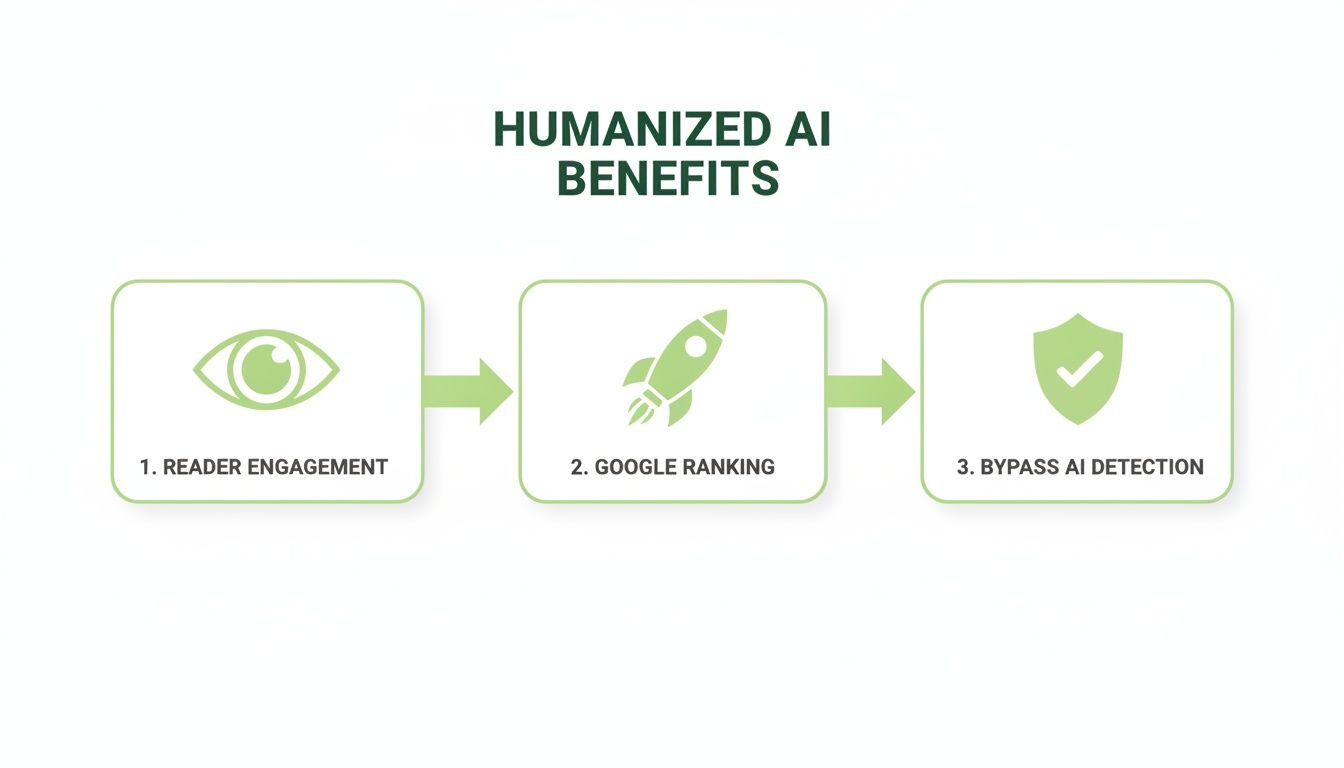
Låt oss vara ärliga: Att ta det extra steget att konvertera robotaktig text till något mer realistiskt ger konkreta resultat som sträcker sig långt bortom att bara låta bättre. Att använda en AI till mänsklig textkonverterare är inte en snabb kosmetisk åtgärd; det är ett strategiskt drag som fundamentalt förändrar hur din publik – och lika viktigt, sökmotorer – ser på ditt arbete.
Kärnidén är enkel. Du förvandlar steril, förutsägbar text till något som faktiskt fångar uppmärksamhet, håller kvar den och bygger en äkta kontakt.
När en läsare landar på innehåll som känns autentiskt är de mycket mer benägna att stanna kvar, lita på vad du säger och faktiskt engagera sig med ditt budskap. Det platta, maskinartade skrivandet? Det är en snabb väg till hög bounce-rate, eftersom folk tröttnar snabbt.
Det handlar om engagemang och förtroende
Den största vinsten här är att skapa en verklig kontakt med din publik. Rå AI-text saknar ofta de subtila känslomässiga signalerna, de varierande meningsrytmerna och det relaterbara språket som håller en läsare engagerad. Den spottar ut information men skapar inte en upplevelse.
Genom att lägga till den mänskliga touchen gör du innehållet mer övertygande och minnesvärt. Tänk på det: En berättelse full av personlighet och unika formuleringar är mycket mer övertygande än en torr, formelartad förklaring. Denna förbättrade läsbarhet håller folk på din sida längre, vilket är ett massivt positivt signal till sökmotorer om att ditt innehåll håller hög kvalitet.
I slutändan försöker varje innehållsstycke skapa kontakt med en person på andra sidan skärmen. Humaniserad text bygger bryggan mellan automatiserad effektivitet och autentisk kommunikation och bygger det förtroende som är absolut nödvändigt för varje varumärke eller skapare.
Håll Google nöjt med E-E-A-T
Om du bryr dig om SEO kan du inte ignorera Googles standarder. Googles E-E-A-T-riktlinjer (Erfarenhet, Expertis, Auktoritet och Trovärdighet) handlar om att prioritera innehåll som är genuint användbart, tillförlitligt och skapat för människor. Oredigerad AI-output faller ofta kort eftersom den känns generisk och saknar en tydlig, auktoritativ röst.
Att humanisera din text är ett direkt sätt att uppnå dessa kvaliteter:
- Visa din erfarenhet: Att tillföra innehåll ett unikt perspektiv gör att det känns som om det kommer från en verklig person med verklig erfarenhet.
- Bygg förtroende: Autentiskt, välutformat skrivande är naturligt mer tillförlitligt än något som låter som om det sattes ihop av en algoritm.
- Öka kvaliteten: Själva handlingen att konvertera texten förbättrar dess övergripande kvalitet och läsbarhet, vilket gör den mer användbar för användare.
Vi har en hel guide som dyker djupare in i praktiska tekniker för att göra AI-skrivande mänskligt och uppnå den autentiska känslan.
Passera AI-detektorer med självförtroende
Ett stort problem för studenter, skribenter och marknadsförare är att få sitt arbete flaggat av en AI-detektor. Dessa verktyg dyker upp överallt i akademiska och professionella sammanhang. En AI till mänsklig textkonverterare är specifikt utformad för att omstrukturera AI-text så att den passerar dessa detektorer.
Genom att variera meningslängd, öka lingvistisk komplexitet och rensa bort robotaktiga mönster gör dessa verktyg outputen praktiskt taget omöjlig att skilja från mänskligt skrivande. Det ger dig självförtroendet att använda AI för att påskynda ditt arbetsflöde utan rädsla för att bli straffad eller avvisad.
Det här behovet driver explosiv tillväxt. Marknaden för AI-genererat innehåll, redan värderad till USD 12,88 miljarder år 2024, är på väg att nå USD 53,79 miljarder år 2033. Denna ökning handlar om efterfrågan på verktyg som kan skapa personliga, mänskliga upplevelser i stor skala.
Håll din varumärkesröst konsekvent
Slutligen är humanisering av AI-innehåll avgörande för att upprätthålla en unik varumärkesröst. Ditt varumärkes personlighet är vad som skiljer dig från mängden, och generisk AI-text kan urvattna den tills du låter precis som alla andra.
Genom att köra AI-utkast genom en konverterare och ge dem en slutlig manuell polish säkerställer du att varje innehållsstycke – från blogginlägg till marknadsföringsmail – återspeglar din specifika stil och dina värderingar. Denna konsekvens är det som bygger en lojal publik som känner igen och litar på ditt varumärke på lång sikt.
En praktisk genomgång av konverteringsprocessen
Att känna till teorin bakom en AI till mänsklig textkonverterare är en sak. Att se den faktiskt förvandla robotaktig, klumpig text till något som känns verkligt? Det är där magin händer.
Låt oss gå igenom processen steg för steg. Vi tar ett tråkigt, standardmässigt AI-stycke och ger det en mänsklig touch.
Resan från maskinartad till autentisk är mer ett partnerskap än du kanske tror. Det handlar inte om att klicka på en knapp och gå därifrån. Tänk istället på konverteraren som en skicklig redaktör som gör det tunga arbetet och förbereder dig för en snabb slutgranskning där du kan lägga till din egen unika flärd.
På så sätt får du det bästa av två världar: AI:s otroliga hastighet och den genuina kontakt som bara en människa kan ge.
Steg 1: Klistra in den AI-genererade texten
Först och främst behöver du ditt råmaterial. Ta texten som genererats av ditt AI-verktyg – oavsett om det är ChatGPT, Gemini eller något annat – och klistra in den direkt i humaniseringsverktyget. De flesta kvalitetskonverterare, som HumanText.pro, erbjuder ett rent, enkelt gränssnitt för detta.
För det här exemplet, låt oss börja med ett stycke som nästan skriker «AI har skrivit det här»:
Ursprunglig AI-text: «The integration of artificial intelligence into modern business operations has resulted in significant efficiency gains. Automated systems can now perform repetitive tasks, which frees up human employees to focus on more strategic initiatives. This technological synergy optimizes workflow and drives productivity.»
Det är grammatiskt perfekt, visst, men det har noll personlighet. Det är torrt, alltför formellt och läses som en lärobok. Det här är den perfekta kandidaten för en omvandling.
Steg 2: Välj inställningar och konvertera
När texten är på plats är det dags att vägleda verktyget. De bästa konverterarna erbjuder inte bara en-storlek-passar-alla omskrivning; de låter dig justera ton, stil och syfte med outputen. Du kan ofta välja mellan inställningar som «konversationsmässig», «professionell» eller «kreativ» för att säkerställa att den slutliga texten slår rätt ton.
När du har valt dina inställningar trycker du bara på «Humanisera»-knappen. På några sekunder sätter verktyget igång, analyserar de robotaktiga mönstren och skriver om innehållet med mer varierade meningsstrukturer, rikare ordförråd och en mycket mer naturlig rytm.
Här är hur vårt exempel ser ut efter konvertering:
Humaniserad AI-text: «Bringing artificial intelligence into the workplace has been a game-changer for efficiency. With automated systems handling the repetitive grunt work, team members are now free to tackle bigger, more creative projects. This smart collaboration smooths out daily operations and really boosts a team's output.»
Ser du skillnaden? Den är omedelbar. Språket är mer aktivt och engagerande («game-changer», «grunt work»), och tonen är omedelbart mer relaterbar. Det låter som något en person faktiskt skulle säga.
Steg 3: Utför en snabb manuell polish
Det här sista steget är det som skiljer bra innehåll från verkligt fantastiskt innehåll. Konverteraren har gett dig ett utmärkt utkast, men nu är det din tur att lägga till de sista 5% som gör det unikt ditt. Den här snabba manuella granskningen är där du kan:
- Lägga in personliga berättelser: Lägg till en kort, relevant anekdot eller ett exempel från verkligheten.
- Finjustera nyckelfraser: Justera en mening eller två för att bättre matcha din specifika varumärkesröst.
- Faktagranska detaljer: Dubbelkolla att all data, namn och specifik information är korrekt.
Låt oss applicera denna slutliga touch på vårt exempel:
Slutlig polerad version: «Bringing artificial intelligence into our workflow has been a total game-changer for efficiency. With automated systems now handling the repetitive grunt work, our team is finally free to tackle the bigger, more creative projects we love. This smart collaboration smooths out daily operations and has seriously boosted our output.»
Den här versionen behåller konverterarens naturliga flöde men lägger till den lilla personliga rösten («our workflow», «we love»). Nu är det autentiskt, engagerande och redo att publiceras. För fler tips om det här avgörande sista steget, kolla in vår guide om hur du helt humaniserar AI-genererad text.
Att välja rätt verktyg för jobbet
En AI till mänsklig textkonverterare är ett kraftfullt, specialiserat tillägg till ditt skrivande arsenal, men den fungerar inte i ett vakuum. För att bygga ett verkligt effektivt arbetsflöde behöver du veta exakt var den passar in bredvid andra vanliga verktyg. Hur jämförs den med en grammatikkontroll, ett omformulerings verktyg eller den gamla goda metoden att redigera för hand?
Varje metod har ett distinkt syfte. Att välja rätt en beror på vad du försöker åstadkomma. Fixar du några stavfel, byter du bara ut några ord, eller förändrar du fundamentalt textens DNA för att låta autentiskt mänsklig? Att förstå dessa skillnader är hemligheten till att skapa förstklassigt innehåll utan att slösa tid.
En direkt jämförelse av skrivverktyg
Låt oss bryta ner vad varje tillvägagångssätt verkligen är bra på – och var det faller kort. Tänk på det som en mekaniker's verktygslåda; du skulle inte använda en skiftnyckel för att slå in en spik. På samma sätt är det att starta en grammatikkontroll när du behöver passera en AI-detektor bara att använda fel verktyg för jobbet.
En grammatikkontroll är fantastisk på att fånga upp objektiva fel – saker som stavfel, skiljeteckenfel och subjekt-verb-överensstämmelse. Det den inte gör är att adressera den monotona meningsstrukturen eller det förutsägbara ordvalet som gör AI-innehåll så robotaktigt. Den rengör ytan men lämnar den klumpiga grunden orörd.
Ett omformuleringsverktyg, å andra sidan, handlar om att ändra orden. Det är praktiskt för att omformulera en mening för att undvika upprepning, men det missar ofta den större bilden. Det kan byta ut «significant» mot «important», men det fixar inte den enformiga rytmen eller avsaknaden av stilistisk flärd som AI-detektorer är tränade att känna igen. Det ger vanligtvis bara en något annorlunda smak av robotaktig text.
Manuell redigering är fortfarande guldstandarden för nyans och röst, och erbjuder fullständig kontroll. Men den betydande tidsinvesteringen gör den opraktisk för skapare som behöver producera innehåll i stor skala – en utmaning som AI-humaniserare är byggda för att lösa.
Den explosiva tillväxten av generativ AI gör detta behov av skala kristallklart. Med företag som ser produktivitetsvinster på 26–55% och en $3,70 ROI för varje dollar som spenderas på AI är det inte förvånande att 88% hoppar på tåget. Det gör en effektiv AI till mänsklig textkonverterare nödvändig för att producera engagerande innehåll effektivt. Du kan läsa mer om prognoser för den generativa AI-marknaden och se trenderna själv.
AI-humaniserare vs andra skrivverktyg: En direkt jämförelse
Att välja rätt verktyg beror helt på ditt slutmål. Medan en grammatikkontroll polerar och ett omformuleringsverktyg omformulerar, omformar en AI-humaniserare fundamentalt textens kärnstruktur och stil. Den här tabellen lägger ut de viktigaste skillnaderna för att hjälpa dig avgöra vilket verktyg som passar ditt specifika behov.
| Funktion | AI-humaniserare | Grammatikkontroll | Omformuleringsverktyg | Manuell redigering |
|---|---|---|---|---|
| Primärt mål | Ändra stil, rytm och struktur för att efterlikna mänskligt skrivande och passera AI-detektorer. | Korrigera objektiva fel som stavning, grammatik och skiljetecken. | Skriva om meningar genom att ersätta ord och ändra formulering. | Förfina innehåll för klarhet, röst, flöde och noggrannhet med full kontroll. |
| Hastighet | Mycket snabb | Mycket snabb | Mycket snabb | Långsam |
| Passera AI-detektorer | Utmärkt | Dålig | Hyfsad | Utmärkt |
| Tillföra unik röst | Bra | Dålig | Dålig | Utmärkt |
| Idealiskt användningsfall | Förfina AI-utkast till att låta autentiska och passera detektering. | Korrekturläsa slutliga utkast för tekniska misstag. | Snabbt omformulera meningar eller korta stycken. | Djupredigering för innehåll med höga insatser som kräver en personlig touch. |
I slutändan handlar det smartaste arbetsflödet inte om att välja bara ett verktyg – det handlar om att kombinera dem. Du kan börja med ett utkast från din favorit-AI, använda en AI till mänsklig textkonverterare som HumanText.pro för att hantera det tunga arbetet med humanisering, och sedan göra en snabb slutgranskning med en grammatikkontroll.
Det här skiktade tillvägagångssättet spelar på styrkorna hos varje verktyg och skapar en process som är både otroligt effektiv och mycket ändamålsenlig.
Vanliga frågor om AI-textkonverterare
I takt med att AI-skrivverktyg blir en vanlig del av den kreativa processen dyker många bra frågor upp. Skribenter vill dra nytta av AI:s hastighet men oroar sig med rätta för etik, effektivitet och potentiella nackdelar. Vi har tagit upp de vanligaste frågorna för att ge dig tydliga, raka svar.
Är det fusk att använda en AI till mänsklig textkonverterare?
Det här är en stor fråga, särskilt i skolor och på arbetsplatser där originalitet är viktigt. Det korta svaret? Det beror helt på din avsikt och hur du använder verktyget.
Att använda en konverterare är inte samma sak som plagiat, vilket innebär att stjäla någon annans arbete och kalla det sitt eget. När du använder en AI till mänsklig textkonverterare förfinar du text som började med din prompt och din riktning. Tänk på det som ett superladdat redigeringsverktyg – något du skulle använda för att hitta ett bättre ord än en synonymordbok eller strukturera om en klumpig mening. Kärnidéerna är fortfarande dina.
Det sagt, reglerna håller fortfarande på att skrivas.
Det bästa sättet att tänka på dessa verktyg är som en medarbetare, inte en ghostwriter. De polerar hur du säger något, men vad – kärnbudskapet, fakta, de unika insikterna – måste komma från dig.
Kontrollera alltid de specifika riktlinjerna för din skola eller publikation om användning av AI-assisterade verktyg. När du är osäker är transparens din bästa vän.
Kan AI-detektorer fortfarande flagga humaniserad text?
Det är mycket mindre sannolikt, särskilt med en kvalitetskonverterare. Dessa verktyg är byggda från grunden för att skriva om text med hjälp av de komplexa, varierade mönstren i mänskligt skrivande, och bryta ner de förutsägbara rytmerna som AI-detektorer är tränade att känna igen.
Men inget verktyg kan lova en 100% idiotsäker garanti. Detektionsalgoritmer blir ständigt smartare. Det smartaste tillvägagångssättet är att behandla den konverterade texten som ett solitt slututkast, inte den färdiga produkten.
Några slutliga justeringar kan göra stor skillnad:
- Lägg till en personlig historia: Väv in en kort, relevant anekdot från din egen erfarenhet.
- Uttryck en unik åsikt: Lägg till en slutsats eller synvinkel med dina egna distinkta ord.
- Skriv om en nyckelmening: Hitta den viktigaste meningen i ett stycke och skriv om den själv för extra genomslagskraft.
Ofta lägger den snabba manuella granskningen till det sista lagret av autenticitet som gör innehållet verkligt oupptäckbart och, viktigare, genuint ditt.
Straffar Google humaniserat AI-innehåll?
Google bryr sig inte om du använde AI. Det bryr sig om ditt innehåll är användbart, tillförlitligt och ger läsaren det de kom för. Problemet är inte AI – det är att rå, oredigerad AI-text ofta är generisk, ytlig och ärligt talat inte särskilt användbar.
Genom att använda en AI till mänsklig textkonverterare gör du aktivt innehållet bättre för en mänsklig läsare. Du förbättrar dess kvalitet, läsbarhet och värde. Den här processen stämmer faktiskt perfekt överens med Googles E-E-A-T-riktlinjer (Erfarenhet, Expertis, Auktoritet och Trovärdighet) eftersom du lägger till det avgörande mänskliga lagret.
Innehåll som är välhumaniserat, faktamässigt korrekt och genuint användbart har goda chanser att rankas bra. Målet är alltid att skapa den bästa möjliga resursen för din publik. Dessa verktyg är bara ett annat sätt att komma dit.
Vilka är begränsningarna med dessa konverterare?
Även om dessa verktyg är kraftfulla är de inte magi. De är mästare på stil, ton och flöde, men de är inte ämnesexperter. Det är en kritisk distinktion.
En konverterare vet inte om en statistik du matade in är fem år gammal eller om en teknisk förklaring har ett subtilt fel. För komplexa ämnen är du fortfarande experten i rummet och den slutliga faktakontrollanten.
Tänk på konverteraren som din co-pilot för skrivandesstil. Du är fortfarande kapten, ansvarig för färdplanen (kärnuppgifterna), instrumentpanelen (fakta) och slutdestinationen (ditt budskap). Ge alltid outputen en slutgranskning för att säkerställa att informationen fortfarande är korrekt.
Redo att förvandla dina AI-utkast till engagerande, oupptäckbart innehåll? HumanText.pro använder avancerad lingvistisk modellering för att humanisera din text på sekunder, vilket hjälper dig att passera AI-detektorer med självförtroende. Prova det gratis och se skillnaden.
Redo att förvandla ditt AI-genererade innehåll till naturligt, mänskligt skrivande? Humantext.pro förfinar din text omedelbart och säkerställer att den läses naturligt och autentiskt. Prova vår gratis AI-humaniserare idag →
Relaterade artiklar
AI Face Search Explained: Verify Identity and Stay Safe
Understand how AI face search works, including embeddings, accuracy, and legal issues. Learn to use these tools for personal safety and verify identity online.

Reverse Face Search: A Verification Safety Guide
Learn how reverse face search works, when to use it for safety, and how to pair it with AI image checks to verify online contacts and reused photos.

Face ID Search Explained: How It Works and How to Verify
Learn how face ID search works, why it differs from reverse image search, and how to verify identities and photos safely with practical checks and tools.

