
Bemästra denotativa vs konnotativa exempel för att vässa ditt skrivande
Utforska denotativa vs konnotativa exempel för att bemästra exakt betydelse och känslomässig ton. Lär dig hur du väljer ord som övertygar, engagerar och berör.
Den verkliga skillnaden mellan denotation och konnotation är enklare än det låter. Denotation är ett ords bokstavliga, ordboksfärdiga definition. Konnotation, å andra sidan, är molnet av känslor, idéer och kulturellt bagage som omger det.
Ta hus jämfört med hem. De denoterar båda samma sak: en byggnad där någon bor. Men hem bär en varm, positiv konnotation av familj, komfort och trygghet som ordet hus helt enkelt inte har. Detta enkla val förändrar hela känslan i en mening.
Att förstå den grundläggande skillnaden mellan denotation och konnotation
Varje ord du väljer gör två jobb samtidigt. Först pekar det på en specifik, bokstavlig betydelse — dess denotation. Se det som den objektiva, svartvita definitionen du skulle hitta i en ordbok.
Men varje ord bär också ett osynligt lager av känslor och kulturell kontext — dess konnotation. Det är här kommunikation blir intressant, övertygande och ibland till och med lite lurigt.
Att få grepp om denna distinktion är en gamechanger för alla som skriver eller talar professionellt. Oavsett om du är en student som försöker formulera en övertygande uppsats, en marknadsförare som skriver reklamtexter, eller bara någon som försöker framföra en poäng mer effektivt — ditt ordval gör hela skillnaden. Det är också ett avgörande koncept inom områden som Natural Language Processing, som fokuserar på att lära maskiner förstå de subtila sätt människor kommunicerar på.
Denotation vs konnotation i korthet
För att se denna skillnad i praktiken fungerar inget bättre än en jämförelse sida vid sida. I tabellen nedan är den bokstavliga betydelsen (denotationen) densamma, men känslan du får av ordet — dess konnotation — förändrar allt.
| Koncept | Denotation (bokstavlig betydelse) | Konnotation (associerad betydelse) |
|---|---|---|
| Hus / Hem | En byggnad där man bor. | Hus är neutralt, medan Hem antyder värme, familj och trygghet. |
| Smärt / Mager | Att ha en smal kroppstyp. | Smärt låter positivt och graciöst, medan Mager ofta känns negativt eller ohälsosamt. |
| Självsäker / Aggressiv | Att uttrycka sina åsikter direkt. | Självsäker antyder självförtroende, medan Aggressiv föreslår fientlighet och konflikt. |
| Prisvärd / Billig | Lågt pris. | Prisvärd antyder bra värde, medan Billig ofta antyder dålig kvalitet. |
Denna känslomässiga lagerläggning är inte bara en liten detalj; den är central för hur vi tolkar språk. Faktum är att en studie från 2018 som analyserade över 5 000 engelska meningar fann att 68 % av ordvalen bar konnotativa lager som direkt påverkade hur läsare tolkade texten. Detta visar hur ofta vi förlitar oss på underförstådd betydelse framför rena definitioner. Du kan upptäcka fler insikter om dessa lingvistiska studier på EssayHub.com.
Viktigt att ta med sig: Denotation ger dig fakta, men konnotation levererar känslan. Skickliga kommunikatörer väljer inte bara ord för vad de betyder, utan för hur de får en publik att känna. Att välja "begagnad" istället för "andrahandsbrukad" eller "doft" istället för "lukt" är en medveten handling för att styra perception utan att ändra de bokstavliga fakta.
Att se denotativa vs. konnotativa betydelser i verkligheten
De akademiska definitionerna är en sak, men den verkliga magin händer när du ser denotation och konnotation spela ut sig i vardagliga konversationer. De ord vi väljer konstaterar sällan bara fakta. De målar subtilt bilder, styr känslor och avslöjar våra egna fördomar — ofta utan att vi ens inser det. Det är detta känslomässiga och kulturella bagage som gör språk så otroligt rikt.
Denna enkla konceptkarta är en utmärkt visuell hjälp för att separera ett ords bokstavliga, ordboksmässiga betydelse (denotation) från alla känslor och idéer det drar med sig (konnotation).
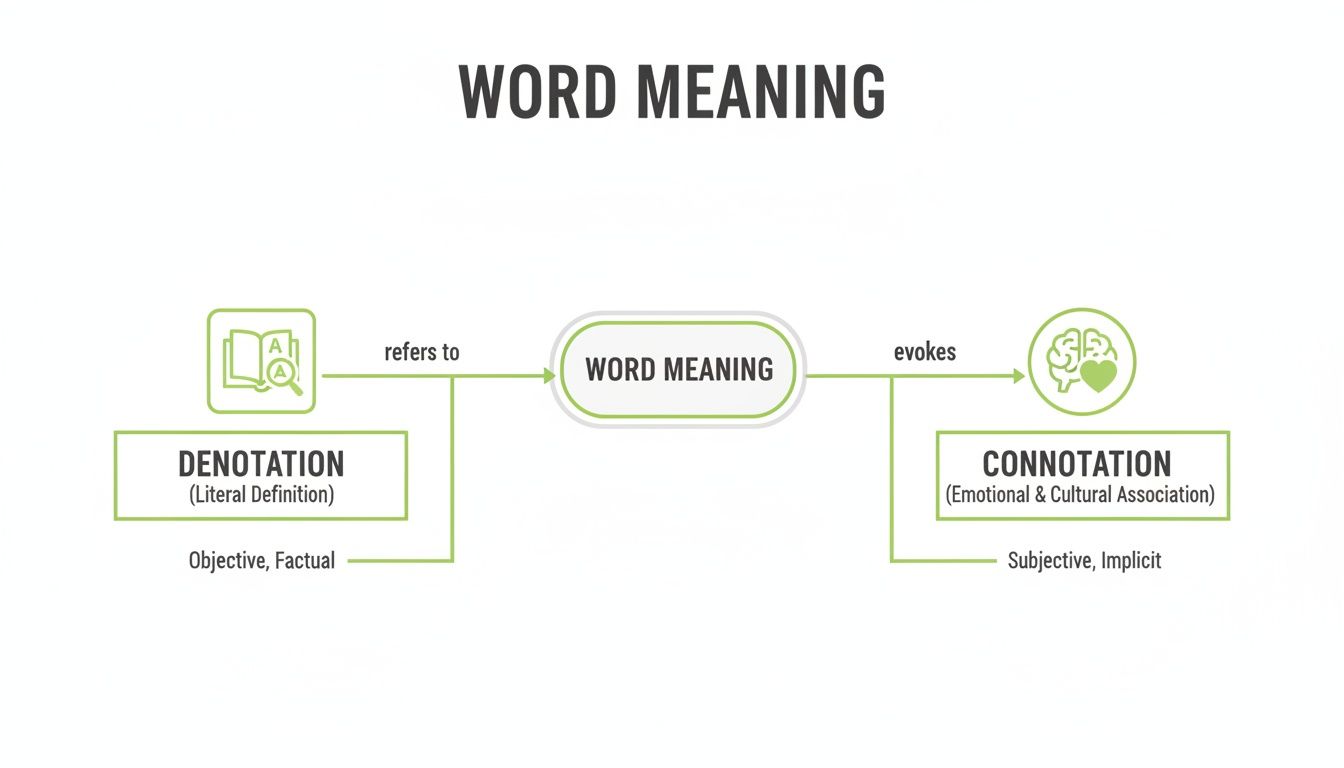
Som diagrammet visar är denotation en rak koppling. Konnotation, å andra sidan, är en rörig väv av personlig historia och delad kulturell förståelse. Låt oss gräva ner oss i några verkliga exempel för att se hur mycket ett enda ord kan förändra hela känslan i ett meddelande.
Att beskriva människor och deras egenskaper
Tänk på hur du beskriver någon. De ord du väljer kanske pekar på samma grundläggande egenskap, men deras konnotationer kan vara världar ifrån varandra, och förvandla en enkel beskrivning till antingen en komplimang eller en förolämpning.
- Självsäker vs. Arrogant: Båda orden denoterar självförtroende. Men självsäker har en positiv klang, som antyder någon som är trygg och kapabel. Byt ut det mot arrogant, och du antyder övermod och ett uppblåst ego.
- Smärt vs. Mager: Denotationen för båda är helt enkelt "smal". Ändå framkallar smärt bilder av elegans och attraktivitet (en positiv konnotation), medan mager ofta antyder att vara ohälsosamt tunn eller till och med bräcklig (en negativ sådan).
Praktiskt exempel: Ett enda ordval kan skifta en beskrivning från beröm till kritik. Att beskriva ett barn som nyfiket ramar in deras önskan att lära som en positiv egenskap, medan att kalla dem nyfiken på ett påträngande sätt ramar in exakt samma beteende som inkräktande och oönskat. Handlingen är densamma; konnotationen förändrar allt.
Att karaktärisera platser och föremål
Etiketterna vi sätter på platser och saker är lika laddade. Ett snabbt ordnyttbyte kan få ett föremål att kännas exklusivt eller värdelöst, även när det fysiska föremålet är identiskt.
Titta på dessa par:
- Ruckel vs. Stuga: Båda denoterar ett litet hus. Ett ruckel framkallar dock bilder av fattigdom, förfall och grovhet. En stuga, å andra sidan, får dig att tänka på ett mysigt, charmigt och pittoreskt litet hem, förmodligen på en vacker plats.
- Prisvärd vs. Billig: Båda betyder "lågt pris". Men prisvärd känns positivt — som att du fick ett bra erbjudande eller hittade verkligt värde. Billig bär en negativ konnotation som antyder dålig kvalitet, dålighet och något som garanterat går sönder.
Dessa nyanser är den hemliga ingrediensen i övertygande skrivande. Att bemästra dem är ett stort steg om du vill lära dig hur du får en uppsats att låta bättre och mer övertygande.
Att rama in handlingar och händelser
Slutligen är verben vi använder för att prata om vad som händer fyllda med konnotativ kraft. Att byta ett verb mot ett annat kan förvandla en neutral händelse till ett dramatiskt uppgör eller en mindre oenighet till en sund diskussion.
- Debattera vs. Bråka: Att debattera något antyder ett strukturerat, resonerat utbyte av idéer, där målet är att hitta den bästa slutsatsen. Att bråka, å andra sidan, antyder en känslomässig, ofta fientlig, sammanstötning där att vinna är allt som räknas.
- Envisas vs. Tjata: Båda orden betyder att fortsätta göra något upprepade gånger. Men att envisas har en positiv konnotation av uthållighet och beslutsamhet. Att tjata antyder att du bara är ett irriterande störmoment.
Att använda konnotation för övertygande skrivande och marknadsföring
I övertygande skrivande och marknadsföring väljs ord aldrig av en slump. Medan denotation ger din publik de bokstavliga fakta, är konnotation det som levererar det känslomässiga slag som faktiskt driver beslut. Mästare inom marknadsföring vet detta instinktivt: de säljer inte produkter; de säljer känslor, ambitioner och lösningar — allt förpackat i noggrant valda ord.

Det klassiska exemplet är skillnaden mellan en "begagnad bil" och ett "begagnat fordon i premiumskick". Båda denoterar en bil som har haft en tidigare ägare, men det känslomässiga bagaget är världar ifrån varandra. "Begagnad" kan antyda slitage, förslitning och problem. "Premiumskick", å andra sidan, känns utvalt, omhändertaget och som en smart investering. Det enda lilla bytet omramar hela köpet.
Att forma varumärkesuppfattning med ord
Varumärkeskommunikation byggs nästan helt på en grund av konnotativt språk. De ord ett företag använder för att beskriva sig själv och sina produkter formar direkt hur du uppfattar dess identitet och värde. Detta är en kärnprincip i övertygandekonsten, och du kan se dess strategiska rötter genom att utforska vad retorik i skrivande är och hur den används för att påverka publiker.
Titta bara på dessa kraftfulla exempel från stora varumärken:
- Lush Cosmetics: De säljer inte bara tvål; de säljer "färska handgjorda skönhetsprodukter". "Färsk" och "handgjord" skapar en omedelbar känsla av naturlig renhet, hantverk och etisk produktion. Det skiljer dem direkt från konkurrenter som säljer massproducerade "produkter".
- Apple: I åratal har de beskrivit sina enheter som "magiska" och "revolutionerande". Dessa ord bär kraftfulla positiva konnotationer av innovation, förundran och ansträngningslös enkelhet, och förvandlar en hårdvara till en upplevelse.
Detta är inte bara kreativ flärd. Det är ett beräknat affärsbeslut utformat för att skapa en känslomässig koppling med kunder.
Handlingsbart råd: Människor köper ofta baserat på känsla och rättfärdigar med logik efteråt. Konnotation talar direkt till den känslomässiga hjärnan och skapar en positiv känsla som gör den logiska rättfärdigandet naturlig och enkel. Använd ord som väcker känslor av trygghet, lyx eller effektivitet för att anpassa dig till dina kunders önskemål.
Konnotation i praktiken: Produktbeskrivningar
Ingen plats är kraften i konnotation mer uppenbar än i produktbeskrivningar. Ett enda ord kan höja ett enkelt föremål till en önskvärd upplevelse och utlösa psykologiska associationer som leder direkt till ett köp.
Låt oss jämföra två beskrivningar för exakt samma doftljus:
- Denotativt fokus: "Detta ljus har en stark lukt av vanilj och brinner i cirka 40 timmar. Det är gjort av sojavax och levereras i en glasburk."
- Konnotativt fokus: "Koppla av med den varma, omslutande doften av krämig vaniljböna. Vårt långsamt brinnande sojaljus erbjuder 40 timmar av fridfull atmosfär, allt inramat i ett elegant glaskärl."
Den första beskrivningen är saklig men glömsk. Den andra använder ord som "doft", "fridfull" och "atmosfär" för att sälja en känsla av lugn och lyx, inte bara ett ljus. För yrkesverksamma som vill tillämpa dessa principer är det avgörande att förstå hur konnotation formar uppfattning för att bygga effektiva strategier som thought leadership-marknadsföring. Denna medvetna ordval är hörnstenen i texter som inte bara informerar — de övertygar och säljer.
Hur ordbetydelser utvecklas och formar kommunikation
Ord är inte fossiler instängda i bärnsten. De är levande, andande ting, och deras betydelser förändras med de kulturella tiderna. Ett ords denotation — dess ordboksdefinition — kanske förblir densamma, men dess konnotation är en helt annan historia. Det är den känslomässiga bruset, det sociala bagaget det bär, och det kan förändras dramatiskt från en generation till nästa. Språk, trots allt, är bara en spegel som reflekterar samhällets värderingar och erfarenheter tillbaka till oss.
Att få grepp om detta är avgörande om du vill kommunicera väl. Ett ord som var helt neutralt för tio år sedan kan vara en mina idag. Det som en gång var en komplimang kan nu vara en förolämpning. Denna ständiga förändring innebär att vi måste vara mer än bara talare; vi måste vara kulturella observatörer, som noggrant uppmärksammar den värld våra ord lever i.
En fallstudie i konnotativ förändring
Behöver du ett skolboksexempel på denotativt vs konnotativt av denna evolution i praktiken? Titta inte längre än ordet "gay".
I århundraden var dess denotation enkel: 'sorglös', 'glad' eller 'ljust färgad'. Du hittar det använt på detta sätt överallt i klassisk litteratur och i vardagliga konversationer. Men kulturella och sociala rörelser kopplande helt om dess associerade betydelse.
Under 1900-talet började "gay" användas som slang för homosexuell orientering, och dess konnotativa betydelse genomgick en seismisk förändring. Data från Google Ngram Viewer avslöjar en häpnadsväckande trend: efter Stonewall-upproren 1969 ökade användningen av 'gay' i denna nya konnotativa kontext med hela 450 %. Under samma period sjönk dess gamla denotativa användning för att betyda 'glad' med 28 % i liknande texter. Du kan utforska mer om hur historiska händelser formar ordanvändning.
Varför detta spelar roll: Denna transformation rymmer en avgörande lärdom för varje skribent och talare. Betydelsen av dina ord handlar inte bara om din avsikt. Det handlar om din publiks nuvarande kulturella förståelse. Ignorera det, och du riskerar att bli missförstådd, orsaka anstöt eller bara att ditt budskap faller platt.
Detta är inte ett engångsfenomen. Ord kopplade till teknik, social rättvisa och politik plockar ständigt upp nya konnotativa lager. Tänk på hur "literally" informellt har utvecklats till att betyda sin motsats, "figuratively" — en förändring som drivs helt av hur människor pratar. Ord som "woke" eller "cancelled" har flytt sina ursprungliga sammanhang och gått in i mainstream, och samlat komplexa och ofta kontroversiella konnotationer på vägen.
För att kommunicera med precision och känslighet måste du hänga med i dessa förändringar. Att välja rätt ord handlar om mer än att bläddra i en synonymordbok. Det kräver kulturell läskunnighet och en medvetenhet om hur sociala dialoger aktivt omformar vårt språk varje dag. Den medvetenheten är det som håller ditt budskap från att låta föråldrat, klumpigt eller helt enkelt fel.
En praktisk guide till att bemästra ordval
Att veta skillnaden mellan denotation och konnotation är en sak. Att faktiskt använda den kunskapen för att göra ditt skrivande kraftfullt är en helt annan match. Att bemästra ordval handlar inte om att visa upp ditt ordförråd med den flottaste synonymen; det handlar om att välja det enda ord med den perfekta känslomässiga frekvensen för ditt budskap.
Det är så du förvandlar platt, funktionell text till något som fastnar hos din läsare.

Ditt första steg? Sluta lita enbart på en synonymordbok. Även om den är bra för att fräscha upp minnet, ger en synonymordbok dig alternativ utan att förklara deras konnotativa bagage. Istället för att bara byta ord måste du stanna upp och känna den subtila känslomässiga vikten som varje synonym bär.
Att förfina ditt budskap med avsikt
För att välja ord med denna typ av precision behöver du en process. Detta är inte bara för romanförfattare; det är för alla som behöver göra ett intryck, från studenter som skriver uppsatser till marknadsförare som utformar en kampanj. Målet är enkelt: se till att budskapet du avser är det som din publik tar emot.
Här är några praktiska sätt att vässa dina instinkter:
- Läs ditt arbete högt: Det här tricket är bedrägligt enkelt men otroligt kraftfullt. När du hör dina ord fångar du deras rytm och ton. Låter den meningen självsäker eller bara arrogant? Empatisk eller kall? Den känslomässiga vibben blir omöjlig att ignorera när den uttalas.
- Analysera publikens kontext: Vem skriver du för? Ett ord med positiv klang i en kultur eller gemenskap kan landa med en duns — eller till och med orsaka anstöt — i en annan. Du måste ta hänsyn till din läsares bakgrund, värderingar och delade erfarenheter för att effektivt knyta an och undvika misstag.
- Kartlägg dina synonymer: Ta inte bara den första synonymen du ser. När du har ett nyckelord, lista flera alternativ och kartlägg deras konnotationer på ett spektrum. För ett ord som "tunn" kan du ha smärt på den positiva sidan, smal i mitten och utmärglad i den negativa extremen. Denna visuella karta gör ofta det rätta valet uppenbart.
Handlingsbart råd: Behandla ditt första utkast som en grov skiss. När du redigerar, ringa in 5-10 av dina viktigaste beskrivande ord. För varje ord, brainstorma minst två alternativ och anteckna den specifika känsla eller bild varje ett frambringar. Denna övning tränar bokstavligen din hjärna att upptäcka konnotativa möjligheter överallt.
Att koppla samman idéer med precision
När du har valt de perfekta orden behöver du trä dem samman smidigt. Flödet i ditt skrivande är lika avgörande som de enskilda orden själva. Rätt övergångsfraser säkerställer att dina noggrant valda konnotationer bygger på varandra och skapar en sammanhängande känslomässig resa för din läsare.
Detta handlar ofta om att bemästra specifika språkliga verktyg. För akademiska och professionella skribenter kan ett starkt grepp om effektiva övergångsord i uppsatser vara skillnaden mellan ett klumpigt argument och en övertygande, flödande berättelse. Genom att länka dina idéer med avsikt förstärker du den konnotativa kraften i ditt språk och guidar din läsare från en punkt till nästa med absolut klarhet. Det är den sista poleringen som säkerställer att ditt budskap inte bara förstås, utan känns.
Svar på dina frågor om denotation och konnotation
Även med tydliga definitioner och exempel kan vissa nyanser vara knepiga. Här är svaren på de vanligaste frågorna, utformade för att ge dig snabba, praktiska svar så att du kan använda dessa koncept med tillförsikt.
Kan ett enda ord ha flera konnotationer?
Absolut. Faktum är att de mest kraftfulla orden nästan alltid har det. Ett ords konnotation är inte en enda, fast känsla; det är mer som en väv av associationer som kan skifta dramatiskt baserat på kultur, kontext och till och med personlig erfarenhet.
Ta ordet "lejon". Dess denotation är enkel: ett stort rovdjur i kattfamiljen. Men dess konnotationer är spridda:
- Positiv: Det kan antyda mod, kungavärdighet och styrka ("Han kämpade som ett lejon").
- Negativ: Det kan också antyda rovdjursfara och aggression ("Hon kastades till lejonen").
Den "rätta" konnotationen beror helt på situationen du placerar ordet i. Skickliga kommunikatörer vet detta och använder kontext för att utlösa den specifika känsla de vill att deras publik ska uppleva.
Hur väljer jag rätt konnotation för min publik?
Detta handlar mindre om att hitta ett "korrekt" ord och mer om att visa empati för din läsare. Nyckeln är att kliva utanför ditt eget huvud och överväga vem du skriver för. Ditt mål är att välja ord vars känslomässiga bagage kommer att resonera positivt och tydligt med dem.
Handlingsbart tips: Innan du skriver, skissa upp en enkel publikprofil. Fråga dig själv: Vad värderar de? Vilken är deras professionella eller kulturella bakgrund? Vilken ton bygger förtroende? Att besvara dessa frågor hjälper dig att filtrera ordval genom deras lins, inte bara din egen. Att till exempel använda ordet "disruptiv" skulle ha en positiv konnotation för en tech-startuppublik men en negativ för en publik fokuserad på social stabilitet.
För en teknisk publik bygger det trovärdighet att hålla sig till precist, denotativt språk. För en marknadsföringspublik är ord med starka, positiva konnotationer allt. Prioritera alltid din publiks troliga tolkning framför din egen anknytning till ett ord.
Varför är det viktigt att förstå denna distinktion för SEO?
Sökmotoroptimering (SEO) har gått långt bortom att bara matcha nyckelord. Nu handlar det om att matcha användaravsikt och leverera en bra användarupplevelse — och konnotation spelar en enorm roll i det. När du väljer ord med rätt känslomässig vikt skapar du innehåll som knyter an på en djupare nivå.
Den kopplingen leder direkt till högre engagemangsmått som sökmotorer älskar:
- Ökad tid på sidan: Känslomässigt resonerande innehåll håller människor läsande längre.
- Lägre avvisningsfrekvens: När en läsare känner sig förstådd är de mycket mer benägna att stanna kvar.
- Högre klickfrekvens: Titlar och metabeskrivningar som använder övertygande konnotativa ord (tänk "Enkla lösningar" vs. "Funktionella metoder") får helt enkelt fler klick.
I slutändan vill sökmotorer belöna innehåll som människor finner värdefullt och engagerande. Att bemästra konnotation är en direkt väg till att skapa exakt den typen av högpresterande innehåll.
Är denotation och konnotation alltid motsatser?
Inte alls. Detta är en vanlig missuppfattning. Denotation och konnotation är inte fiender; de är bara två olika lager av betydelse som samverkar. Denotation är ordets bokstavliga kärna, och konnotation är känslan eller smaken som omger det.
Tänk på ordet "mästare". Dess denotation är "en vinnare av förstapriset eller förstaplatsen i en tävling". Dess konnotation är överväldigande positiv — den antyder förträfflighet, uthållighet och seger. Här förstärker konnotationen bara denotationen. De två betydelserna är perfekt anpassade, vilket gör ordet både tydligt och känslomässigt kraftfullt.
Den verkliga skickligheten är att veta när ett ords konnotativa lager stödjer ditt budskap och när det oavsiktligt kan underminera det.
Redo att säkerställa att din AI-genererade text har den perfekta mänskliga touchen? Humantext.pro förvandlar robotaktiga utkast till naturligt, engagerande innehåll som verifieras av AI-detektorer med upp till 99 % noggrannhet. Klistra in din text och se skillnaden direkt. Prova nu på https://humantext.pro.
Redo att förvandla ditt AI-genererade innehåll till naturligt, mänskligt skrivande? Humantext.pro förfinar din text omedelbart och säkerställer att den läses naturligt och autentiskt. Prova vår gratis AI-humaniserare idag →
Relaterade artiklar

AI Face Search Explained: Verify Identity and Stay Safe
Understand how AI face search works, including embeddings, accuracy, and legal issues. Learn to use these tools for personal safety and verify identity online.

Reverse Face Search: A Verification Safety Guide
Learn how reverse face search works, when to use it for safety, and how to pair it with AI image checks to verify online contacts and reused photos.

Face ID Search Explained: How It Works and How to Verify
Learn how face ID search works, why it differs from reverse image search, and how to verify identities and photos safely with practical checks and tools.

