Den oupptäckbara AI-handboken för innehållsskapare
Utforska sanningen bakom oupptäckbar AI. Lär dig hur AI-detektorer fungerar, upptäck etiska sätt att humanisera innehåll och förstå riskerna med AI-skrivverktyg.
Du har spenderat timmar på att locka fram det perfekta blogginlägget från din AI-assistent. Du har förfinat promptarna, justerat strukturen, och äntligen är det klart. Sedan kör du det genom en kontroll, och en stor röd flagga dyker upp: 100 % AI-genererat. Det är en frustrerande verklighet för otaliga skapare som försöker använda AI som en samarbetspartner, inte ett spöke.
Det är här idén om oupptäckbar AI kommer in. Målet handlar inte om bedrägeri; det handlar om att få AI-assisterat innehåll att kännas genuint mänskligt, autentiskt och värdefullt.
Utmaningen för moderna innehållsskapare

Den här guiden gräver i vad "oupptäckbar AI" verkligen betyder, med fokus på dess roll som ett verktyg för förfining – inte oärlighet. Vi utforskar varför det att omvandla robotaktig AI-text till något som läses som om en människa har skrivit det har blivit en avgörande färdighet för nästan alla. Oavsett om du försöker upprätthålla en konsekvent varumärkesröst eller bara vill att ditt innehåll ska uppfylla moderna SEO-kvalitetsstandarder, har det aldrig varit viktigare att få detta rätt.
Insatserna är överraskande höga. Den verkliga utmaningen handlar inte om att ta äran för AI-arbete som ditt eget. Det handlar om att använda teknik för att förstärka dina egna färdigheter utan att bli straffad för det. AI är ett otroligt hjälpmedel för att brainstorma idéer, strukturera skisser och bryta igenom skrivblock. Men låt oss vara ärliga – råresultatet saknar ofta den personlighet och nyans som faktiskt når fram till människor.
Vem behöver oupptäckbart AI-innehåll
Behovet av att polera AI-genererad text dyker upp överallt, av alla möjliga anledningar. Kärnproblemet är universellt: rå AI-text kan kännas generisk, konstigt repetitiv eller bara… fel. Detta gap har skapat en verklig efterfrågan på verktyg och tekniker som kan blåsa lite mänsklighet tillbaka i orden.
Här är några av dem som finner detta avgörande:
- Innehållsmarknadsförare: De behöver se till att blogginlägg och artiklar faktiskt låter som deras varumärke och inte flaggas av sökmotorer som innehåll av låg kvalitet eller spam.
- Studenter: Många använder AI som en studiehjälp för att kontrollera grammatik och struktur, men de måste lämna in arbete som återspeglar deras eget kritiska tänkande och akademiska stil.
- Frilansskribenter: De ökar produktiviteten genom att använda AI för utkast men måste leverera polerade, originalklingande artiklar som kunderna älskar.
- Icke-infödda engelsktalare: De förlitar sig ofta på AI för grammatisk perfektion men vill humanisera den slutliga texten så att den låter mer naturlig och flytande.
Det ultimata målet är att skapa en slutprodukt som är autentisk, värdefull och genuint hjälpsam för läsaren. Det handlar om att använda AI för att förstärka mänsklig kreativitet, inte ersätta den.
Tänk på den här guiden som din färdplan. Vi packar upp hur AI-detektorer fungerar, utforskar tekniken bakom så kallade "AI-humaniserare" och går igenom deras legitima, vardagliga användningsområden. Vi är också ärliga om de viktiga etiska gränserna du behöver vara medveten om, och ger dig ett praktiskt ramverk för att använda dessa verktyg ansvarsfullt och effektivt.
För att skriva AI-innehåll som passerar som mänskligt måste du först förstå tankegången hos en AI-detektor. Tänk på dessa verktyg som lingvistiska detektiver, tränade för att upptäcka de subtila – och inte så subtila – ledtrådarna som skriker "maskinskrivet". Det är inte längre enkla nyckelordsskannrar; de har blivit otroligt sofistikerade.
Tekniken bakom AI-detektering rör sig med blixtens hastighet. 2025 har faktiskt varit ett enormt år för dessa verktyg. De bästa använder nu ensemblemetoder för att uppnå 96 % noggrannhet och håller falska positiva under 3 % – ett massivt språng från bara ett år sedan. De har också blivit mycket snabbare, och minskat analystiderna från 200 ms till under 100 ms per textprov.
Hur gör de det? De letar efter statistiska och lingvistiska fingeravtryck som lämnas av AI:n. I hjärtat av allt finns två begrepp du absolut måste förstå: perplexitet och burstiness. Att förstå dessa två idéer är det första steget mot att skapa AI-innehåll som genuint når fram till människor.
Viktiga ledtrådar AI-detektorer letar efter
Innan vi dyker in i detaljerna kring perplexitet och burstiness hjälper det att se hela bilden. Detektorer söker efter en samling signaler som, när de hittas tillsammans, skapar en stark profil av maskinskriven text.
Här är en snabb sammanfattning av vad dessa digitala detektiver är tränade för att hitta:
| Ledtråd | Vad det mäter | Varför det signalerar AI-innehåll |
|---|---|---|
| Låg perplexitet | Förutsägbarheten i ordval. | AI-modeller älskar det vanligaste, statistiskt säkra ordet. Resultatet är grammatiskt perfekt men kreativt platt skrivande. |
| Låg burstiness | Variationen i meningslängd och struktur. | Människor skriver i utbrott av korta och långa meningar. AI producerar ofta meningar av enhetlig längd, vilket skapar en robotaktig rytm. |
| Lingvistisk enhetlighet | Konsekvensen i ordförråd och formuleringar. | En AI kan använda ordet "följaktligen" tre gånger i en enda artikel, medan en människa naturligt skulle variera sina övergångar. |
| Perfekt grammatik och interpunktion | Felfri efterlevnad av grammatikregler. | Även om det är bra är perfektion onaturlig. Människor gör mindre fel, använder talspråk och böjer regler för effektens skull. |
| Brist på idiom eller nyans | En alltför bokstavlig eller formell ton. | AI kämpar med det subtila kulturella sammanhanget inbyggt i idiom, sarkasm och humor, och låter ofta som en lärobok. |
| Generiska formuleringar | Användningen av vanliga, klichéartade påståenden. | Fraser som "Sammanfattningsvis..." eller "Det är viktigt att notera..." är vanliga AI-återfall som känns formulaiska för mänskliga läsare. |
Att förstå dessa ledtrådar är som att lära sig fiendens spelbok. När du vet vad de letar efter kan du börja skriva och redigera på ett sätt som undviker dessa fällor helt.
Vad är perplexitet? (Och varför AI älskar förutsägbara ord)
Perplexitet låter komplicerat, men det är bara ett fancy sätt att mäta hur förutsägbar ett stycke skrivande är.
Tänk dig att du läser den här meningen: "Hunden jagade..." Din hjärna fyller omedelbart i luckan med ord som "bollen", "katten" eller "bilen". Det är lågperplexitetsval – de är förväntade och överraskar dig inte.
Språkmodeller är tränade på enorma mängder internettext, så de blir väldigt, väldigt bra på att förutsäga det nästa mest sannolika ordet i en sekvens. Det gör att de som standard väljer trygga, vanliga fraser. Resultatet är skrivande som är grammatiskt felfritt men känns totalt oinspirerat. Denna lingvistiska trygghet är en massiv röd flagga för alla detektorer.
Viktig insikt: Låg perplexitet är kännetecknet för AI-skrivande. Texten är bara för slät, för förutsägbar. Den saknar de intressanta ordvalen eller de unika formuleringarna en människa skulle använda för att framföra en poäng.
En mänsklig skribent har däremot naturligt högre perplexitet. Vi kanske skriver: "Hunden rusade efter det galna ekornet." Det är mindre förutsägbart och mycket mer engagerande. AI-humaniserare fungerar genom att medvetet injicera den här typen av lingvistisk variation, och byta ut de tråkiga, högsannolika orden mot sådana med lite mer karaktär.
Hitta en mänsklig rytm med burstiness
Utöver ordval analyserar detektorer rytmen och flödet i dina meningar. Det kallas burstiness.
Mänskligt skrivande är naturligt ojämnt. Vi skriver i utbrott – några korta, punchiga meningar följt av en längre, mer beskrivande, sedan kanske ytterligare en kort för att framföra en poäng. Det är en dans.
Denna naturliga variation skapar en dynamisk läsarupplevelse som håller folk engagerade. AI producerar dock ofta meningar av mycket liknande längd och struktur efter varandra. Det skapar en monoton, robotaktig rytm som känns platt och tråkig. "Utbrotten" är borta.
När en detektor skannar ett dokument och finner att varje mening är mellan 15 och 20 ord lång och följer samma grammatiska mönster, är det ett nästan säkert tecken på att en maskin har skrivit det. För att göra AI-innehåll oupptäckbart måste du bryta upp den monotonin och återinföra det naturliga ebb och flod som definierar mänskligt uttryck.
Hur AI-humaniserare arbetar för att efterlikna mänskligt skrivande
För att få AI-genererad text att låta mänsklig måste du tänka som en AI-detektor och sedan göra det exakta motsatsen. Det är i princip vad en AI-humaniserare är byggd för. Tänk på det som en specialiserad stilredaktör, men istället för att bara fånga stavfel är den tränad för att injicera de mänskliga egensinnigheterna som AI-detektorer är utformade för att flagga som saknade.
Dess huvuduppgift är att ta text som känns statistiskt förutsägbar och rytmiskt platt och ge den lite personlighet och naturligt flöde. Målet är inte att ändra kärnbudskapet, utan att helt omarbeta leveransen så att det känns mindre som att en maskin har skrivit det.
Hela processen kokar ner till att ta itu med de två nyckeltal vi pratade om: perplexitet och burstiness. En humaniserare skriver strategiskt om meningar för att öka båda, vilket gör texten långt mindre sannolik att utlösa detektionslarm. Det här är mycket mer sofistikerat än att bara köra ett stycke genom en synonymbytare.
Det här diagrammet bryter ner de två huvudpelarna för AI-detektering som humaniserare är utformade för att motverka.
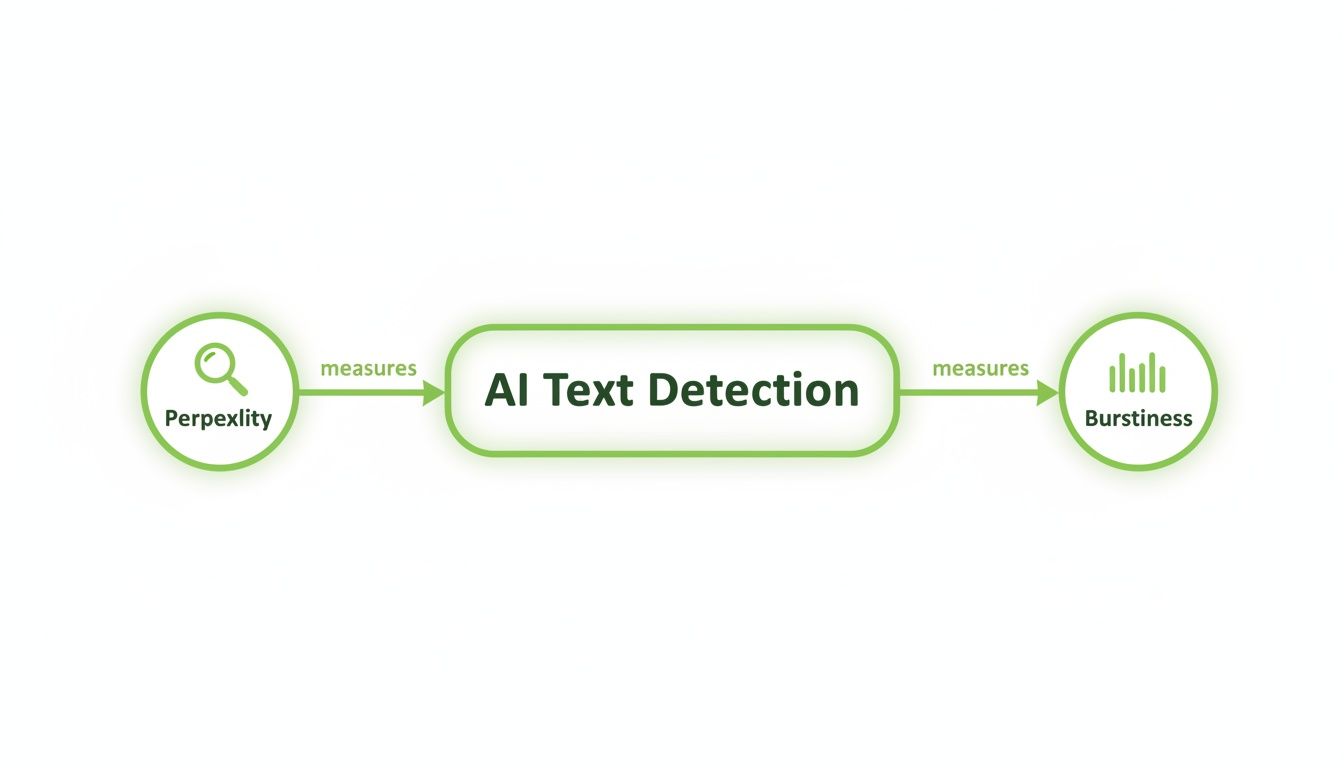
Som du kan se hänger en humaniserares framgång på dess förmåga att manipulera dessa två grundläggande lingvistiska signaturer tills texten läses som något en person naturligt skulle ha skrivit.
Öka perplexiteten med varierat språk
Framför allt måste en humaniserare åtgärda låg perplexitet. Den skannar texten efter de överanvända, förutsägbara fraserna som AI-modeller lutar sig på – de uppenbara avslöjandena – och byter ut dem mot mer intressanta, kontextmedvetna alternativ.
Det handlar inte bara om att hitta ett annat ord; det handlar om att välja ett bättre ord som tillför en specifik smak. Till exempel, istället för det generiska AI-uttrycket "Det är nödvändigt att", kan en humaniserare föreslå "Du måste absolut" eller "Missa inte behovet av att". Direkt känns skrivandet mindre som en steril rapport och mer som ett riktigt samtal. Du kan lära dig mer om hur ett förstklassigt AI-humaniseringsverktyg använder avancerad lingvistisk analys för att uppnå detta.
Genom att injicera den här typen av lexikal mångfald gör verktyget medvetet texten svårare för en maskin att förutsäga, vilket i sin tur driver upp perplexitetspoängen.
Skapa rytm genom att variera meningsstrukturen
Nästa steg tar humaniseraren itu med burstiness. Den analyserar meningsstrukturen i hela artikeln och letar efter de monotona, enhetliga mönstren som skriker "AI-genererat".
När den hittar dem sätter den igång med att omstrukturera texten:
- Kombinera korta meningar: Den kan slå ihop två enkla meningar till en mer komplex för att skapa en mer sofistikerad tanke.
- Dela långa meningar: Den kan hugga upp en rörig, löpande mening till några kortare, mer punchiga för betoning och tydlighet.
- Ordna om led: Den vänder ofta på den grammatiska strukturen, kanske börjar med en bisats för att skapa en annan typ av rytm.
Denna process återuppbygger det naturliga ebb och flod vi förväntar oss av mänskligt skrivande, och skapar den varierade kadens som detektorer förknippar med autenticitet.
Det verkliga målet med humanisering: Poängen är inte bara att lura en detektor. Det handlar om att ta robotklingande utkast och polera dem till tydligt, engagerande innehåll av hög kvalitet som faktiskt når fram till en mänsklig läsare.
Begränsningarna med AI-humaniserare
Även med dessa smarta tekniker är ingen humaniserare en universallösning som skapar perfekt oupptäckbart AI-innehåll varje gång. Deras effektivitet är ett rörligt mål, och de försöker ständigt hålla jämna steg med de ständigt förbättrade AI-detektorerna de är utformade för att slå.
Det är ett evigt katt-och-råtta-spel. När detektionsmodeller blir smartare måste humaniseringsalgoritmer bli mer sofistikerade. Till exempel visade ett test från juli 2025 av GPTinf-teamet att efter att ha kört 100 % AI-genererad text genom en populär humaniserare, flaggades den fortfarande som AI 61 % av gångerna. När indata var en 50/50-blandning av mänskligt och AI-innehåll sjönk detektionsgraden till 37 %. Rent mänsklig text flaggades aldrig.
Dessa data berättar något avgörande: dessa verktyg fungerar bäst när de används för att polera och förfina AI-assisterade utkast, inte som en trollstav för att fullständigt dölja rent maskinskriven text. Den mänskliga touchen är fortfarande den viktigaste ingrediensen för att skapa något genuint autentiskt och värdefullt.
De verkliga, produktiva användningsområdena för AI-humaniserare
Samtalet om att göra AI-innehåll oupptäckbart fastnar ofta på att kringgå regler. Men det missar poängen helt. Verkligheten är mycket mer praktisk och produktiv. Yrkesverksamma, skapare och studenter vänder sig till AI-humaniserare inte för att bedra, utan för att förfina och lyfta sitt arbete på genuint hjälpsamma sätt.
Tänk på en AI-modell som en briljant men socialt klumpig forskningsassistent. Den kan hämta fakta och sätta ihop grammatiskt perfekta meningar, men den saknar helt nyansen, tonen och personligheten som gör kommunikation till att faktiskt fungera. Målet är inte att dölja assistentens arbete; det är att coacha dess robotaktiga utdata tills den talar riktiga människors språk.
Övervinna skrivblock och tända kreativiteten
Vi har alla varit där – stirrat på en blank sida medan markören blinkar hånfullt. Det här är ett av de mest kraftfulla och legitima användningsområdena för den här tekniken: att helt enkelt komma igång. AI kan producera ett omedelbart första utkast eller en lista med brainstormade idéer, och bryta igenom den initiala kreativa väggen.
En skribent kan sedan ta det råa, ofta generiska resultatet och köra det genom en humaniserare som det första steget i redigeringsprocessen. Det hjälper till att jämna ut klumpiga meningar och introducerar ett mer naturligt flöde, vilket ger dig en mycket starkare grund att bygga på. Det förvandlar AI från ett enkelt spöke till en riktig kreativ partner, och frigör människan att fokusera på det som spelar roll: att tillföra unika insikter, personliga berättelser och djup expertis.
Viktig insikt: Den etiska användningen av AI-humaniserare handlar om förstärkning, inte ersättning. Dessa verktyg förfinar en startpunkt, vilket gör att skaparna kan lägga mer tid på strategi på hög nivå, kritiskt tänkande och att tillföra oersättligt mänskligt värde.
Det här arbetsflödet förvandlar en skrämmande uppgift till en hanterbar. Det handlar inte om att ta äran för AI-arbete som ditt eget; det handlar om att använda ett smart verktyg för att kickstarta din egen kreativa process och nå ett bättre slutresultat, snabbare.
Polera innehåll för en specifik varumärkesröst
Varje varumärke har sin egen personlighet. Ett kan vara kvickt och informellt, medan ett annat är auktoritativt och seriöst. Råt, färdigpaketerat AI-innehåll är ökänt för att vara generiskt – en tam, enhetlig röst som misslyckas med att bygga varumärkesidentitet eller skapa kontakt med en publik.
Det är här marknadsförare hittar enormt värde. De använder AI-humaniserare för att anpassa generiska utkast till en specifik varumärkes stilguide, och justerar ordförråd, meningsstruktur och den övergripande rytmen för att anpassa sig till företagets etablerade röst.
Till exempel kan en humaniserare ta en steril AI-mening som:
- "Det rekommenderas att implementera dessa strategier..."
- Och göra den till något som låter som ditt varumärke: "Du vill definitivt prova de här taktikerna..."
Det här är inte bedrägeri; det är bara god kvalitetskontroll. Det säkerställer att allt innehåll känns sammanhängande och autentiskt representerar varumärket, oavsett vem som utarbetade den ursprungliga versionen. Det här har blivit ett kritiskt arbetsflöde för företag, där marknadsförare och e-handelsbutiker förlitar sig på oupptäckbar AI för att skapa innehåll som faktiskt resonerar.
Hjälpa icke-infödda engelsktalare att kommunicera naturligt
För alla som skriver på ett andraspråk är generativ AI ett fantastiskt verktyg för att fånga grammatikfel. Problemet är att grammatiskt perfekt text ofta kan låta stel, alltför formell eller helt enkelt onaturlig för en infödd talare.
AI-humaniserare spelar en avgörande roll här. En icke-infödd talare kan skriva sitt utkast, använda ett AI-verktyg för att städa upp grammatiken och sedan använda en humaniserare för att få språket att låta mer flytande och idiomatiskt. Det är ett arbetsflöde som ger dem möjlighet att kommunicera sina idéer tydligt och säkert, utan att texten känns robotaktig.
Det överbryggar klyftan mellan teknisk korrekthet och naturligt uttryck. Det hjälper yrkesverksamma och studenter från olika bakgrunder att delta mer effektivt i globala samtal och säkerställer att bra idéer inte går förlorade bakom klumpiga formuleringar. Målet är tydlighet och självförtroende, inte feltolkning.
Att navigera risker och etiska gråzoner
Även om det är lätt att se den produktiva sidan av AI-humaniserare lever tekniken i sig i ett dunkelt etiskt utrymme. Samma verktyg som hjälper en marknadsförare att perfektionera sin varumärkesröst kan användas för långt mindre ädla mål och skapa allvarliga risker. Att få grepp om dessa gråzoner är nyckeln till att använda den här tekniken ansvarsfullt.
I slutändan kokar det ner till avsikt. Det finns en värld av skillnad mellan att använda ett verktyg för att polera ett utkast du startade med AI och att använda det för att presentera ett fullständigt maskinskrivet papper som ditt eget. Det skiljet är hjärtat i hela den etiska debatten.
Akademisk integritet i AI:ns tidsålder
Universitet runt om i världen kämpar för att hålla sina riktlinjer för akademisk integritet aktuella. Boomen med verktyg som skapar oupptäckbar AI har tvingat dem att tänka om vad plagiat och obehörig hjälp ens betyder längre.
Kloka institutioner rör sig bort från ett rent bestraffande tankesätt. De vet att rena förbud är ett förlorat slag. Istället lär de studenter att använda AI etiskt – som en forskningsassistent eller en grammatikcoach – medan de gör det kristallklart att den slutliga analysen och det kritiska tänkandet måste vara deras eget.
Många skolor har uppdaterat sina hederskoder för att explicit kräva att studenter redovisar när och hur de använde AI-verktyg, och fremjar transparens framför döljande. Påföljderna för att försöka presentera AI-arbete som originalt är fortfarande hårda, ofta i paritet med traditionellt plagiat.
SEO- och affärsrisker
För företag är den största risken inte att flaggas av en detektor; det handlar om att straffas av Google för att pumpa ut oanvändbart innehåll. Googles hela uppdrag är att belöna innehåll som visar verklig erfarenhet, expertis, auktoritet och trovärdighet (E-E-A-T).
Att bara humanisera AI-spam av låg kvalitet för att smita förbi en detektor missar hela poängen. Sökalgoritmerna är otroligt komplexa och tittar på hundratals olika signaler. Om ditt innehåll är tunt, felaktigt eller inte löser en användares problem kommer det inte att rankas väl – oavsett hur "mänskligt" det låter.
Den verkliga straffen: Den yttersta konsekvensen för företag är inte ett misslyckat AI-detektionsresultat; det är en misslyckad användarupplevelse. Att publicera generiskt, oanvändbart innehåll i stor skala kommer att skada ditt varumärkes rykte och sökmotorrankningar, även om det till en början verkar oupptäckbart.
Det är precis därför det är så avgörande att ha en människa i loopen. Din unika expertis och dina insikter är de enda sakerna som verkligen kan tillfredsställa både användare och sökmotorer.
Framväxande säkerhetshot
Kanske den mest alarmerande risken finns i cybersäkerhetsvärlden. Samma teknik som får AI-text att låta naturlig kan vridas för att skapa mycket övertygande skadligt innehåll.
Hotaktörer kan använda den här tekniken för flera farliga syften:
- Nätfiskebedrägerier: Skapa personaliserade, grammatiskt perfekta nätfiskemejl som är mycket svårare att upptäcka än de stavfelsuppfyllda meddelanden vi är vana vid.
- Social manipulation: Generera trovärdiga onlinepersonas eller meddelanden för att manipulera människor att ge upp känslig information.
- Desinformationskampanjer: Snabbt producera enorma volymer naturklingande falsk information för att översvämma sociala medieplattformar.
Dessa hot är särskilt farliga eftersom de utnyttjar mänsklig tillit. Det belyser varför alla som använder dessa verktyg behöver en stark etisk kompass. Även om du kan lära dig mer om den tekniska sidan genom att läsa vår guide om hur du gör AI-innehåll oupptäckbart är det avgörande att alltid väga de etiska konsekvenserna av dina handlingar.
Ett praktiskt ramverk för att skriva med AI på ett ansvarsfullt sätt
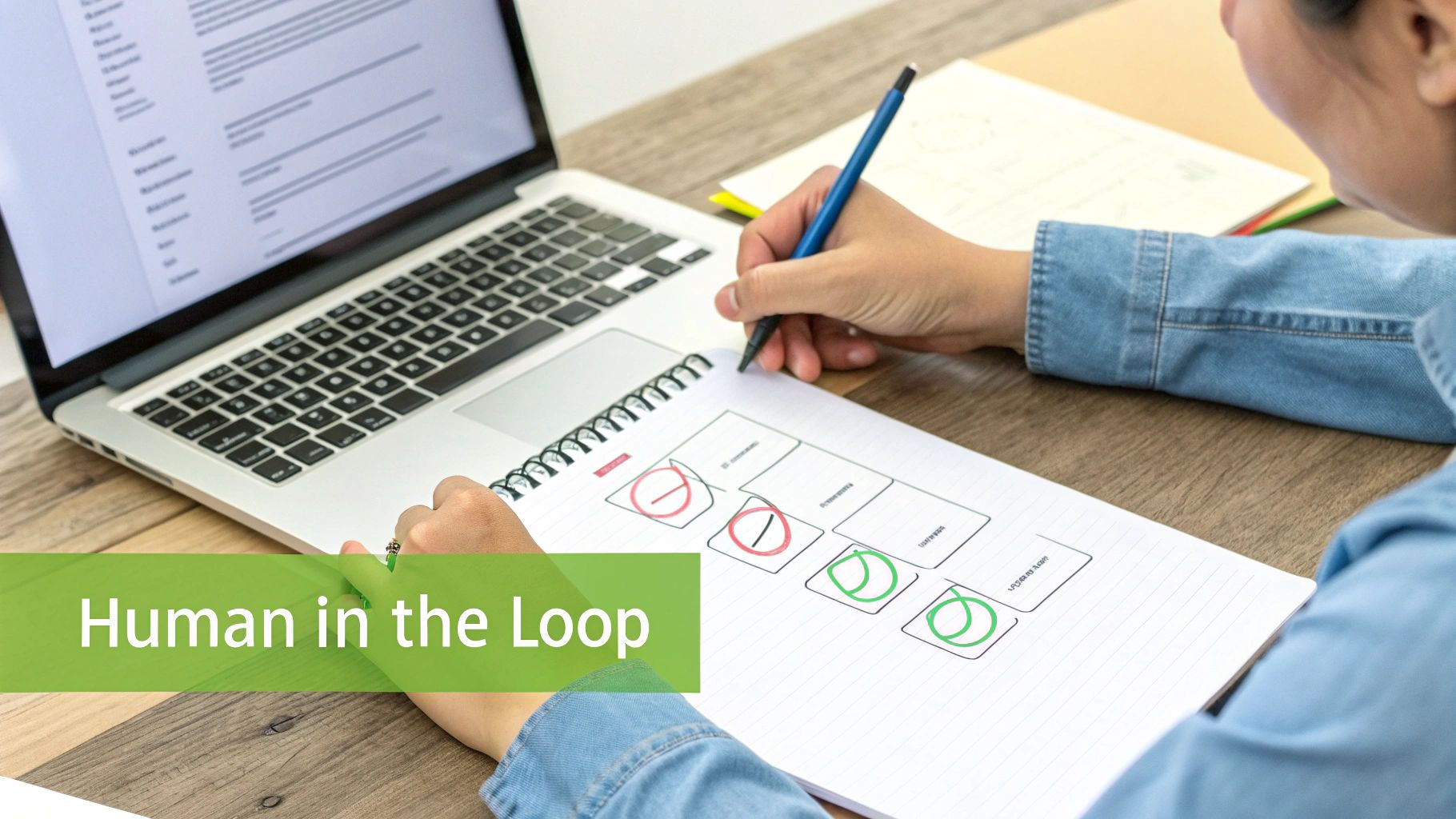
Att använda AI effektivt utan att korsa etiska gränser handlar inte om att hitta en magisk "oupptäckbar"-knapp. Det handlar om att bygga ett smart, strukturerat arbetsflöde som håller dig – den mänskliga experten – fast i förarsätet.
Tänk på det som att anta ett "människa i loopen"-tänkesätt. Målet är inte bedrägeri; det är att skapa genuint värdefullt innehåll där AI fungerar som en kraftfull assistent, inte den enda författaren.
Du blir skaparen, strategen och den slutliga kvalitetskontrollen. Maskinen hanterar grovjobbet med ett första utkast, men du bidrar med det kritiska tänkandet, den personliga erfarenheten och den unika rösten som AI helt enkelt inte kan förfalska. Det här är hur du förvandlar råt AI-resultat till något polerat, auktoritativt och genuint hjälpsamt.
De fyra pelarna i ett etiskt AI-arbetsflöde
Det bästa sättet att producera högkvalitativt, mänsklighetsorienterat innehåll med AI involverar fyra tydliga steg. Varje steg lägger din expertis ovanpå maskinens grund, vilket resulterar i ett slutstycke som är autentiskt ditt.
1. AI-driven brainstorming och utkastskrivning
Behandla ditt AI-verktyg som en junior forskningsassistent, inte en färdig skribent. Använd det för att generera skisser, utforska olika vinklar eller producera ett grovt första utkast. Det här steget handlar om fart och effektivitet. Det är ett fantastiskt sätt att bryta igenom skrivblock och få en grundläggande struktur på plats snabbt.
2. Noggrann faktakontroll och insiktsinjicering
Det här steget är absolut icke-förhandlingsbart. Granska varje påstående, statistik och uttalande som AI producerar. AI-modeller är ökända för att "hallucinerafakta, så du måste vara noggrannhetens väktare.
Ännu viktigare är detta där du injicerar dina unika insikter, personliga anekdoter och expertanalys. Det är de element som ger verkligt värde och etablerar din auktoritet – precis det din publik kom för.
3. Strategisk språkförfining
När ditt innehåll är sakligt korrekt och berikat med din expertis är det dags att förfina språket. Det är här ett humaniseringsverktyg kommer till nytta. Dess syfte är inte att dölja AI:ns inblandning utan att jämna ut robotaktiga formuleringar och förbättra det övergripande flödet, tonen och läsbarheten. Det hjälper till att förvandla klumpiga, maskinliknande meningar till naturlig prosa som skapar kontakt med en mänsklig läsare. Om du vill ha en djupare titt på den här delen av processen kan du kolla in vår guide om resan från AI-text till mänsklig text.
4. Den slutliga mänskliga poleringen
Det sista steget är en slutlig, heltäckande genomgång utförd helt av dig. Läs hela stycket högt. Det är det bästa sättet att fånga klumpiga formuleringar, kontrollera en konsekvent ton och se till att stycket passar perfekt med din varumärkesröst och vad dina läsare förväntar sig. Det sista passet är din garanti för kvalitet, sammanhang och originalitet.
När du följer det här ramverket förändras idén om "oupptäckbar AI" helt. Det handlar inte längre om att lura en skanner; det handlar om att skapa innehåll som är så grundligt förbättrat och ägt av en mänsklig expert att dess maskinassisterade ursprung blir irrelevant. De bästa resultaten kommer alltid av att förstärka dina färdigheter, inte att försöka ersätta dem.
Frågor vi hör hela tiden om oupptäckbar AI
När du navigerar i världen av AI-innehåll dyker det upp många frågor. Vi förstår det. Här är några tydliga, raka svar på det folk frågar oss mest om oupptäckbar AI, humaniserare och hur man använder dessa verktyg på rätt sätt.
Hur bra fungerar AI-humaniserare mot toppdetektorer?
Det här är ett konstant katt-och-råtta-spel. Även om de bästa humaniserarna ofta kan komma förbi många detektorer finns det ingen trollstav som garanterar 100 % framgångsgrad varje gång. Det är en tvådelad ekvation: framgång beror på hur sofistikerad humaniseraren är och hur avancerad detektorn den möter har blivit.
Ett grundläggande ordbytar-verktyg kommer nästan säkert att flaggas av en kraftfull detektor som Turnitin, som ständigt lär sig av nya data. Men de mer avancerade verktygen gör mycket mer än att bara byta ord – de omstrukturerar meningar fundamentalt, varierar lingvistiska mönster och introducerar den typen av subtila ofullkomligheter som gör att skrivande känns genuint mänskligt.
Vad är den verkliga skillnaden mellan omskrivning och humanisering?
Det här är en avgörande distinktion, och en som många missar. En omskrivare är ganska enkel: den omformulerar bara text för att säga samma sak med andra ord. Huvudmålet är att undvika direkt plagiat, men resultatet behåller vanligtvis samma robotaktiga meningsstruktur och förutsägbara ordförråd som den ursprungliga AI-texten.
En AI-humaniserare går mycket, mycket djupare. Den analyserar skrivandets underliggande DNA – saker som perplexitet (komplexitet) och burstiness (rytm) – och återuppbygger texten från grunden för att låta autentisk.
En humaniserare omformulerar inte bara; den omformar. Den injicerar personlighet, varierar flödet och introducerar den nyanserade kadensen som definierar verkligt mänskligt skrivande.
Tänk på det så här: omskrivning är som att ge en bil ett nytt lackjobb. Humanisering är som att uppgradera motorn, fjädringen och interiören för en helt annan körupplevelse.
Kan du göra AI-innehåll verkligt, 100 % oupptäckbart?
Att göra AI-innehåll verkligt oupptäckbart handlar mindre om ett enda verktyg och mer om ett smart arbetsflöde. Att bara köra 100 % AI-genererad text genom en humaniserare och kalla det en dag är ett riskabelt spel, särskilt när detektorer blir smartare varje månad. Den enda verkligt pålitliga metoden är att behålla en "människa i loopen".
Så här ser den processen ut:
- Använd AI för tungt lyft: Generera ditt första utkast, brainstorma idéer och få en grundläggande struktur på plats.
- Ta med din expertis: Det är här du lägger till dina unika insikter, personliga berättelser och svårhittad fakta.
- Förfina med en humaniserare: Nu använder du verktyget för att jämna ut språket, fixa klumpiga formuleringar och förbättra det naturliga flödet.
- Gör en slutlig mänsklig redigering: Ge det en sista polish för att fånga eventuella fel och se till att ton och kvalitet är perfekta.
När du följer dessa steg är slutprodukten inte längre "humaniserad AI". Det är ett genuint stycke mänskligt lett arbete, helt enkelt gjort mer effektivt med teknik. Det här är utan tvekan det säkraste, mest effektiva och mest etiska sättet att skapa högkvalitativt innehåll som skapar kontakt med läsare och håller sig på rätt sida av plattformsriktlinjerna.
Redo att förvandla dina AI-utkast till naturligt, engagerande innehåll som skapar kontakt med läsare? HumanText.pro använder avancerad teknik för att humanisera din text, och hjälper dig att komma förbi AI-detektorer medan kärnbudskapet hålls intakt. Prova det gratis och se skillnaden själv.
Redo att förvandla ditt AI-genererade innehåll till naturligt, mänskligt skrivande? Humantext.pro förfinar din text omedelbart och säkerställer att den läses naturligt och autentiskt. Prova vår gratis AI-humaniserare idag →
Relaterade artiklar

AI Face Search Explained: Verify Identity and Stay Safe
Understand how AI face search works, including embeddings, accuracy, and legal issues. Learn to use these tools for personal safety and verify identity online.

Reverse Face Search: A Verification Safety Guide
Learn how reverse face search works, when to use it for safety, and how to pair it with AI image checks to verify online contacts and reused photos.

Face ID Search Explained: How It Works and How to Verify
Learn how face ID search works, why it differs from reverse image search, and how to verify identities and photos safely with practical checks and tools.

