10 Different Words for Sad: Ranked by Intensity and Tone
Explore different words for sad, ranked by intensity, register, and context, with example sentences and usage notes for writers and students.
You've probably written a paragraph in which someone feels sad, then feels sad again, and finally looks sad. The meaning is clear, but the writing feels flat because one broad word is doing too many jobs. Sad can describe a passing dip in mood, disappointment after a setback, loneliness, reflective longing, or deep grief.
A more precise word gives the reader the right emotional weight. It also shows what caused the feeling and how it appears from the outside. If you're building a reflective habit, how to start journaling can help you notice those differences in your own experience.
The different words for sad below sit on a shared scale. Each entry includes intensity, register, typical context, an example sentence, and a practical usage note. Use the list as a writing tool, not as a collection of interchangeable labels.
1. Glum
Intensity: Low to moderate
Register: Everyday
Typical context: Quiet withdrawal, a sullen mood, or subdued behavior
Glum describes sadness that shows through demeanor. A glum person may speak less, avoid eye contact, or move through a room without much interest. The feeling is usually quieter than grief or despair. It often appears in realistic scenes where body language carries more meaning than dialogue.
Practical rule: Use “glum” when the reader should notice a person's mood before the person explains it.
For example, “Maya was sad after the meeting” gives the reader very little. “Maya sat glumly at her desk, turning the same page without reading it” shows the mood through a specific action. The second sentence also leaves room for curiosity. Did the meeting bring bad news, embarrassment, or disappointment?
Glum works well in a workplace narrative, family scene, coming-of-age story, or behavioral observation. It sounds natural in everyday writing, but it isn't the best choice for a formal memorial or a moment of severe loss. A character can be glum after a failed presentation, a tense conversation, or a rainy weekend.
When writing glumness, show engagement beneath the withdrawal. The character might still answer a colleague, feed the dog, or reread a message. Those small actions keep the person from seeming merely passive. For guidance on describing behavior and body language, see these examples of demeanor.

2. Dejected
Intensity: Moderate
Register: Everyday to formal
Typical context: Discouragement after failure, rejection, or a setback
Dejected means sad because confidence or motivation has fallen. It carries more force than glum. A glum person seems low; a dejected person seems to have lost some of their spirit.
Compare these sentences:
- “The team looked sad after the presentation.”
- “The team looked dejected after the client rejected the proposal.”
The second version connects the feeling to a clear event. It tells the reader that the team had hoped for a different result. Dejected works especially well in employee reflections, recovery narratives, academic writing about setbacks, and realistic fiction.
Give dejection a trigger
A dejected character shouldn't seem empty for no reason. Name the event, then show what changed. Perhaps an employee stops volunteering ideas after a project fails. Perhaps a student closes a laptop without submitting an application. Perhaps a runner sits on the curb after an injury ends months of preparation.
The word can describe a temporary state. It doesn't automatically mean hopelessness, and it shouldn't be treated as a diagnosis. A dejected person may still try again later.
“She was dejected, but she kept the rejection letter in her notebook.”
That sentence creates emotional depth because the character has lost confidence without losing all agency. Use concrete actions, vary sentence rhythm, and leave room for effort or recovery. Dejected is often the right choice when “sad” hides the important fact that a setback has weakened someone's energy.
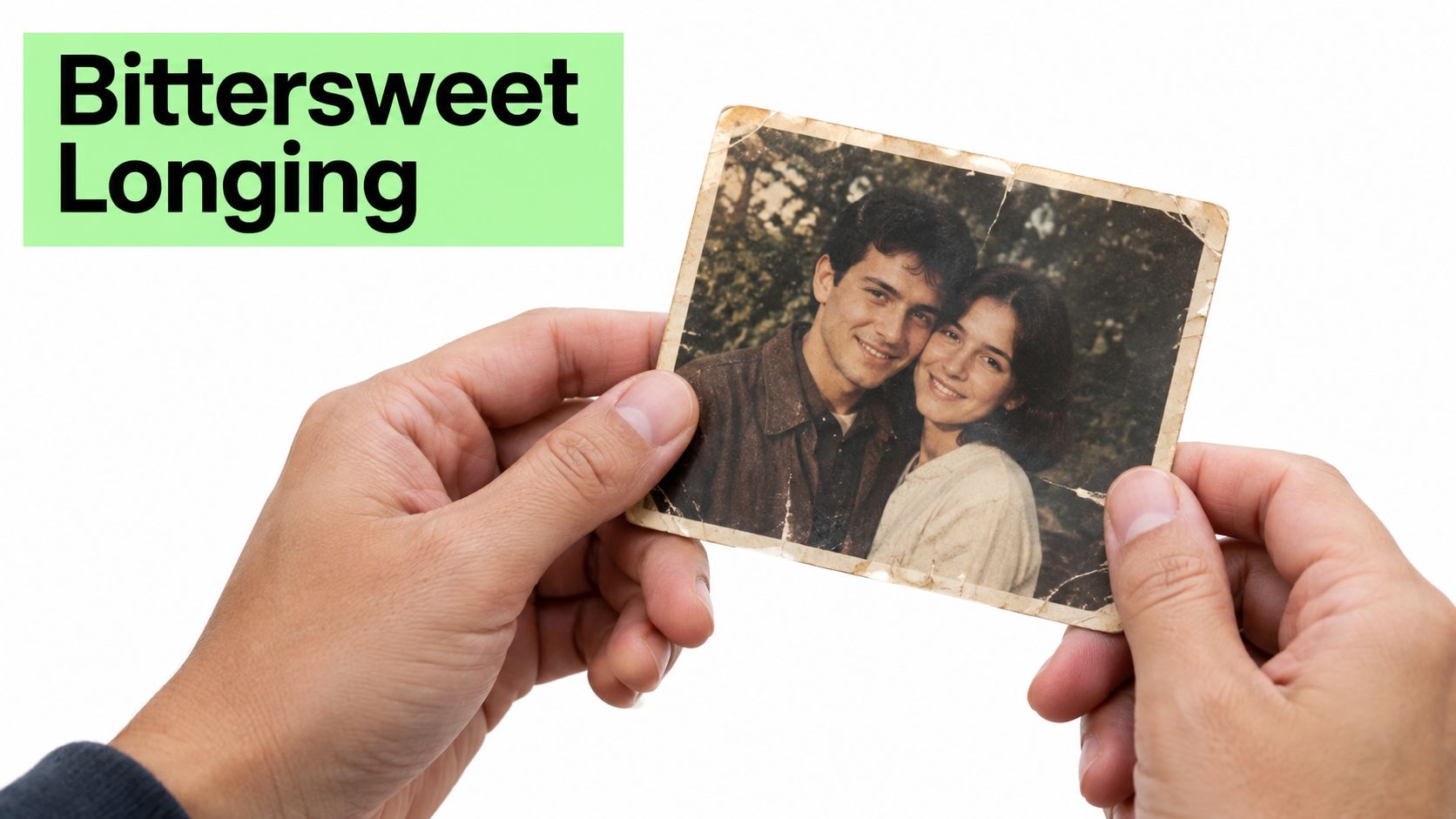
3. Wistful
Intensity: Low to moderate
Register: Literary or reflective
Typical context: Longing for something absent, lost, or unattainable
Wistful combines sadness with desire. The person isn't only unhappy. They're thinking about something they miss or never had. The emotion is often gentle, bittersweet, and restrained.
A writer might use “wistful” in a personal essay about childhood, a story about a missed opportunity, or a brand narrative about an old neighborhood. It can also describe a look, voice, memory, or photograph.
“She was sad when she found the old ticket” is broad. “She gave the old ticket a wistful smile before placing it back in the drawer” suggests both affection and loss. The object gives the feeling a physical shape.
Keep longing concrete
Wistful writing becomes weak when it relies on vague phrases such as “if only” or “I wish things were different.” Show the place, object, or sensation that carries the memory. A faded bus pass, an empty classroom, or the smell of a familiar kitchen can suggest longing without explaining it at length.
The emotion should also contain some acceptance. A wistful character may understand that the past can't return. That awareness separates wistfulness from active grief or urgent despair.
For help distinguishing literal meaning from emotional association, review these denotative and connotative examples. The distinction matters because wistful carries more than sadness. It tells the reader that absence and desire are working together.
4. Melancholy
Intensity: Moderate
Register: Literary, formal, or artistic
Typical context: Quiet, lasting, reflective sadness
Melancholy describes sadness that lingers and invites reflection. It often has an atmospheric quality. A song, afternoon, scenery, memory, or character can all be melancholy.
Cambridge describes melancholy as sadness lasting for a long period, often without an obvious reason, and gives examples involving autumn days, music, and a person's mood in the definition of melancholy. That makes it more specific than everyday sad. It suggests duration and thoughtfulness rather than a sudden emotional blow.
“The rejected proposal made him sad” focuses on an immediate reaction. “The empty office left him with a melancholy sense of change” suggests a quieter mood that extends beyond one event. The second sentence is less dramatic, but it carries more atmosphere.
Use reflection, not decoration
Melancholy suits literary essays, heritage storytelling, reflective memoir, and thoughtful descriptions of change. It can make a sentence feel mature, but it can also sound too ornate in a casual message. You probably wouldn't tell a friend, “I'm experiencing melancholy,” when “I'm feeling low” would sound more natural.
Avoid using the word for acute grief. Devastated, anguished, or grief-stricken may fit a sudden and severe loss better. Use melancholy when the sadness is subdued, contemplative, and difficult to tie to one clear cause.
Concrete details keep the word grounded. Describe the unplayed instrument, the quiet street, or the familiar room after someone has moved away. The image should do some of the emotional work.
5. Forlorn
Intensity: Moderate to high
Register: Literary or formal
Typical context: Loneliness, abandonment, isolation, or displacement
Forlorn adds isolation to sadness. It suggests that someone feels forgotten, left behind, or cut off from connection. The word can describe a person, place, expression, or object. A child alone at a station, an abandoned house, or a character separated from family may all appear forlorn.
“Lena was sad at the station” tells us almost nothing about the scene. “Lena stood forlorn beneath the station clock while the last train disappeared” creates distance, silence, and abandonment. The word works because the setting supports it.
Show the empty space
Forlornness needs a social or physical gap. Use details such as an unanswered phone, an unoccupied chair, a dark window, or a long distance between two people. These details make loneliness visible without forcing the character to announce it.
Forlorn is more literary than lonely, so check the voice of the piece. It can suit poetry, historical fiction, personal essays about disconnection, and character-driven narratives. In a short text message, it may sound theatrical.
Don't turn the word into self-pity. Give the character an observation, choice, or small act of agency. Someone can feel forlorn and still leave a light on for another person, write a letter, or ask for help. A moment of possible connection keeps the scene emotionally credible.

6. Somber
Intensity: Moderate to high
Register: Formal
Typical context: Serious events, public statements, tragedy, or solemn occasions
Somber signals seriousness as much as sadness. It describes a mood with weight and restraint. A memorial service may be somber. So may an institutional statement after a crisis or a report about a serious social issue.
“She was sad during the ceremony” sounds personal and general. “The ceremony had a somber tone as speakers remembered those who died” places the emotion in a public setting. The word doesn't necessarily describe one person's private feelings. It can describe the atmosphere shared by a group.
Somber belongs in formal apologies, historical narratives, investigative reporting, academic writing, and organizational communication. It usually sounds too heavy for a minor inconvenience. A somber response to a delayed lunch would overstate the event.
Let the facts carry the weight
Avoid filling a somber passage with dramatic adjectives. Specific details create seriousness more effectively than phrases such as “a tragic situation.” State what happened, who was affected, and what response is needed.
Serious language should match the seriousness of the subject.
Somber also doesn't mean hopeless. A community can hold a somber memorial while honoring a person's work or supporting those who remain. Balance dignity with clarity. If the writing concerns a formal event, choose restrained verbs and explain the context rather than relying on mood alone.
7. Sorrowful
Intensity: High
Register: Formal, literary, or reflective
Typical context: Loss, regret, grief, or a meaningful emotional wound
Sorrowful describes deep sadness with emotional weight. It often connects to loss or regret, but it doesn't require a public ceremony. A person, voice, expression, letter, or story can be sorrowful.
“The letter was sad” is vague. “Her sorrowful letter acknowledged the friendship they had lost” names both the feeling and its subject. The word is more serious than glum or wistful, but it remains broadly understandable.
Use sorrowful in personal essays, memorial writing, historical narratives, and carefully written apologies. It can also work in an ordinary sentence when the situation deserves gravity. For example, “He gave a sorrowful account of the decision” suggests that regret remains present.
Avoid automatic drama
A sorrowful passage needs a real emotional cause. Include a concrete image, remembered detail, or consequence. A quiet kitchen after a funeral may communicate more than a long description of tears.
The word can describe grief without specifying a diagnosis or a particular psychological condition. That makes it useful when the writer needs depth but shouldn't claim more than the situation supports. Test the sentence against the event. If the character is disappointed by a minor inconvenience, sorrowful may sound exaggerated. If the character is reflecting on a broken relationship or major loss, it may fit.
A balanced passage can include acceptance. Sorrow doesn't erase tenderness, gratitude, or understanding.
8. Mournful
Intensity: High
Register: Formal, ceremonial, or literary
Typical context: Public grief, lamentation, death, or significant collective loss
Mournful is closely tied to mourning. It often describes grief expressed through a voice, song, ceremony, poem, or public act. The word has more ceremonial force than sorrowful.
A mournful song may express loss without naming a person. A mournful eulogy publicly honors someone who has died. A mournful crowd may gather after a tragedy. The word is therefore useful when sadness is not only private but also shared or formal.
Honor what has been lost
Specific remembrance gives mournfulness dignity. Name a person's kindness, a community's history, or the quality of what has disappeared. “The speech was mournful” tells the reader about tone. “The mournful speech remembered her habit of welcoming every new neighbor” shows why the loss matters.
Use the word carefully in obituaries, eulogies, elegies, commemorative poetry, and organizational responses to major loss. Cultural and community context matters, especially when describing ceremonies. Don't assume that every mourning tradition looks or sounds the same.
A respectful passage can hold sorrow and celebration together. The writer may grieve the absence while preserving the person's legacy. For readers exploring symbolic reflection around grief, a grief tarot spread may offer one personal journaling prompt, though it shouldn't replace practical support or professional care.
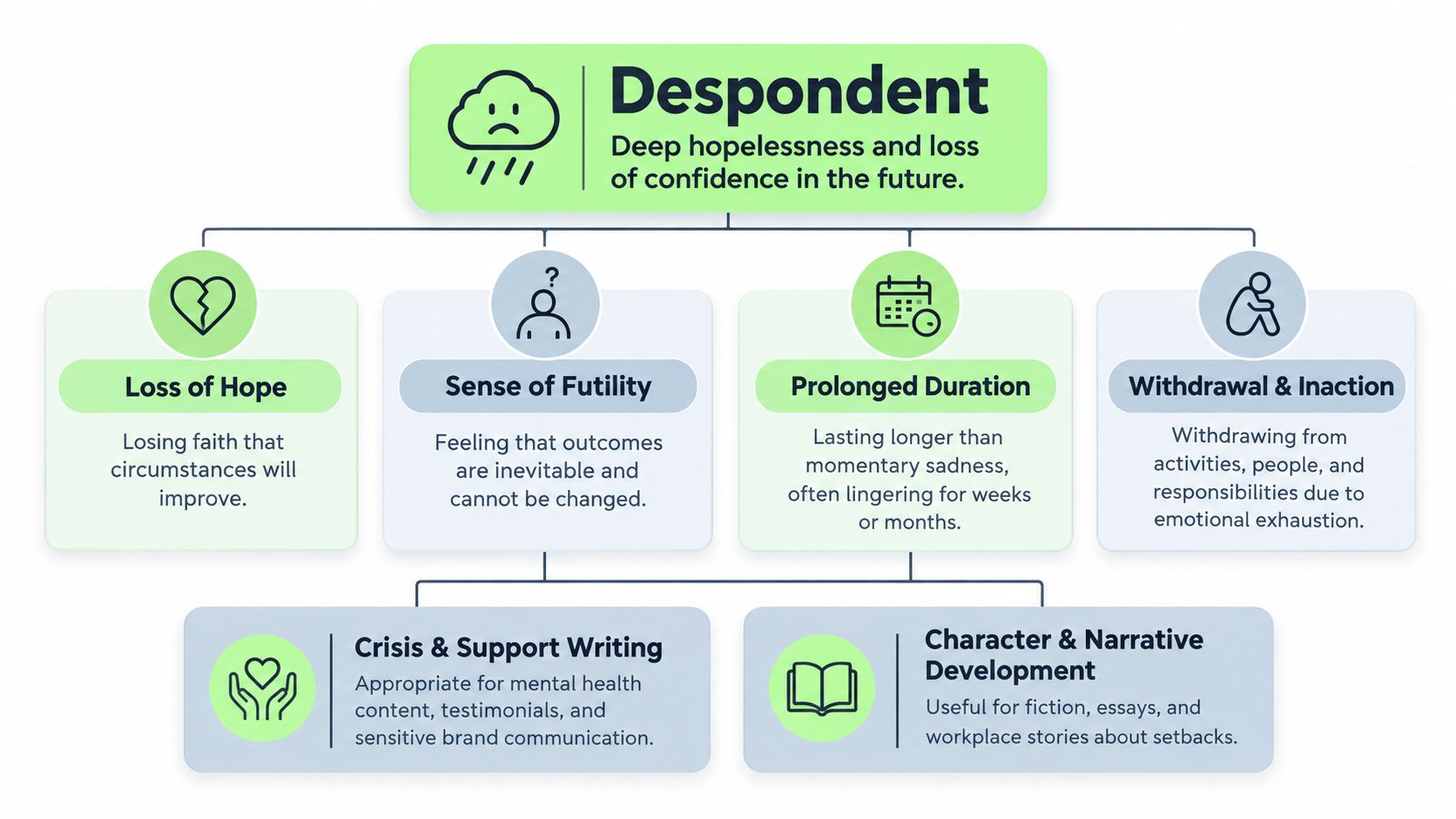
9. Despondent
Intensity: Very high
Register: Formal or serious
Typical context: Hopelessness, resignation, and loss of confidence in the future
Despondent goes beyond sadness. It suggests that a person can't see a worthwhile path forward. A dejected employee may recover after feedback. A despondent person may believe that trying again is pointless.
“The student was sad after failing the exam” describes the emotion. “The student became despondent after repeated failures and stopped believing that studying could change the result” shows a deeper loss of hope. The context matters because despondent is a strong word.
It can suit mental health awareness writing, support narratives, serious fiction, and accounts of major setbacks. It shouldn't be used casually for a missed bus or an ordinary bad day. It also shouldn't be used as a diagnosis. A word can describe how someone appears or feels without identifying a medical condition.
Pair severity with support
When writing about despondency, include concrete signs and a path toward help. A character may stop answering messages, abandon a routine, or speak as though the future is already decided. Then give the passage a responsible direction. That might mean a trusted friend reaches out, a support service becomes available, or the person takes one manageable next step.
For guidance on choosing precise wording in other contexts, compare this alternative word for vast. The same principle applies here. A synonym should identify the exact relationship between the person and the situation, not merely make the sentence sound more dramatic.
10. Disconsolate
Intensity: Extremely high
Register: Formal, literary, or dramatic
Typical context: Sadness that resists comfort or consolation
Disconsolate describes someone who seems beyond comfort. Reassurance doesn't reach them. The word suggests emotional isolation and profound distress, so it deserves careful use.
“She was sad after the argument” is ordinary and flexible. “She sat disconsolate after the loss, unable to respond even when her friends offered comfort” presents a much more severe state. The sentence also explains why the word fits. Without that context, disconsolate may sound inflated.
This term appears most naturally in serious psychological narratives, dramatic literature, crisis-related writing, and accounts of severe loss. It can describe a character, but writers should avoid presenting an intensely distressed person as permanently unreachable. Emotional states can feel impossible while still changing over time.
Write with care
Show what comfort fails to reach. The person may reject a phone call, stare at an unopened gift, or repeat that nothing can help. Then include support information or a glimmer of connection when the subject involves real distress. If someone may be in immediate danger, direct them toward local emergency services or a qualified mental health professional.
Don't use disconsolate to decorate a minor scene. Its strength comes from the resistance to consolation. If the feeling is only quiet and reflective, melancholy is more accurate. If it follows a clear disappointment, dejected may be enough.
10 Shades of Sadness Comparison
| Emotion | Complexity 🔄 | Resources ⚡ | Expected outcome 📊 | Ideal use cases | Key advantage & tip ⭐💡 |
|---|---|---|---|---|---|
| Glum, Quiet, withdrawn sadness | Medium, subtle behavioral cues required | Low–Medium, specific sensory/body-language details | Subtle realism; risk of appearing passive if vague | Character development, workplace/family scenes, behavioral notes | ⭐ Relatable understatement; 💡 show concrete behaviors and underlying cause |
| Dejected, Discouragement, reduced energy | Medium, needs trigger and agency balance | Low–Medium, small actions or failures to cite | Conveys loss of motivation and quiet withdrawal | Workplace setbacks, recovery narratives, reflective fiction | ⭐ Realistic complexity; 💡 pair with a specific triggering event and small efforts |
| Wistful, Bittersweet longing/nostalgia | Medium–High, avoid clichés, keep nuance | Medium, concrete imagery and sensory detail | Poignant longing that can feel sentimental if vague | Brand nostalgia, personal essays, reflective/creative work | ⭐ Emotionally sophisticated; 💡 ground yearning in specific moments or objects |
| Melancholy, Thoughtful, pensive sadness | High, requires reflective depth and restraint | Medium, philosophical framing plus imagery | Thoughtful, literary tone that risks pretension | Literary essays, creative nonfiction, mature brand storytelling | ⭐ Adds psychological depth; 💡 balance introspection with concrete imagery |
| Forlorn, Abandonment-tinged loneliness | High, must balance isolation and relatability | Medium, sensory details of emptiness | Highly evocative loneliness; can seem melodramatic | Poetry, character-driven narratives, isolation awareness | ⭐ Evokes strong empathy; 💡 ground in specific moments of disconnect, avoid self-pity |
| Somber, Serious, grave solemnity | Medium, match tone to stakes carefully | Medium, contextual evidence and measured language | Conveys gravity and credibility; can feel overwrought | Institutional statements, historical narratives, formal essays | ⭐ Signals importance; 💡 ensure tone is earned with concrete context |
| Sorrowful, Deep grief or regret | Medium, needs specificity to avoid sentimentality | Medium, memories, sensory detail, context | Universally resonant grief; risk of cliché | Obituaries, memorials, personal essays, historical pieces | ⭐ Broad emotional resonance; 💡 use specific sensory details and avoid formulaic phrases |
| Mournful, Formal grieving and lamentation | High, ceremonial tone and respect required | High, personal details, cultural/contextual sensitivity | Dignified public grief; may overwhelm if misapplied | Eulogies, commemorations, elegies, institutional memorials | ⭐ Conveys respectful weight; 💡 include specific memories and cultural context, avoid hollow language |
| Despondent, Deep hopelessness, futility | High, convey authenticity without alienation | Medium–High, specific experiences and support framing | Intense sense of resignation; may overwhelm readers | Mental-health content, crisis communications, candid testimonials | ⭐ Conveys serious depth; 💡 follow with actionable hope or resources and specific details |
| Disconsolate, Hopelessness resistant to comfort | Very High, requires extreme sensitivity and realism | High, expert/clinical context, support resources | Portrays profound, resistant despair; risks melodrama | Clinical narratives, crisis intervention writing, dramatic literature | ⭐ Signals severe distress; 💡 pair with support info, show why consolation fails, consult sensitivity guidelines |
Choosing the Right Word on Purpose
Choosing among different words for sad becomes easier when you treat each word as a tool with a specific job. Start by naming the intensity. Is the feeling a low mood, a reaction to failure, a private longing, a serious grief, or a state that seems resistant to comfort? This first decision removes many options.
Next, check the register of the piece. Glum and low sound natural in everyday speech. Melancholy, forlorn, and wistful suit literary or reflective prose. Somber, mournful, and disconsolate carry formal or ceremonial weight. A word can be accurate in meaning but wrong for the voice. “I'm disconsolate about the canceled dinner” sounds theatrical unless the exaggeration is intentional.
Then identify the cause. Use dejected after a setback, wistful when someone longs for what is absent, forlorn when isolation shapes the sadness, and mournful when grief is expressed publicly. Use sorrowful for deep sadness connected to loss or regret. Use despondent only when the person has lost confidence in a better future.
Put the word into a real sentence and read it aloud. Ask four questions:
- Does the intensity fit? Would a reader think the event is more severe than it really is?
- Does the register fit? Would this person naturally use the word?
- Does the cause fit? Does the synonym explain why the sadness exists?
- Does the sentence show anything? Add an action, image, or detail if the word is carrying too much alone.
For example, “The team was sad after three failed attempts” becomes more precise as “The team was discouraged after three failed attempts.” The word identifies a loss of confidence without implying grief or hopelessness. “The room was sad” might become “The room had a somber atmosphere after the announcement,” because the sentence concerns a shared setting rather than one person's emotion.
Keep a personal list as you write. Add the words you reach for often, then note the context each one serves. A manuscript glossary can help you maintain consistent terminology while drafting, and this guide to manuscript terminology from BarkerBooks offers a useful reminder that precise labels make revision easier.
A precise word usually carries more emotion than a stack of adjectives. Quietly glum is not the same as deeply sorrowful, and neither is automatically better. Choose the word that tells the truth about the moment, then let the surrounding details do the rest.
Humantext.pro offers AI paraphrasing and sentence rewriting tools that can create alternative wording while preserving meaning, which is useful when revising sentences built around “sad.” Visit Humantext.pro to check AI-assisted drafts and refine emotional language so it reads naturally, clearly, and with the right level of intensity.
مستعد لتحويل محتواك المولد بـ AI إلى كتابة طبيعية شبيهة بالبشر؟ Humantext.pro يُحسّن نصك فوراً، مضموناً أن يُقرأ بشكل طبيعي وأصيل. جرب أداة أنسنة AI المجانية اليوم →
مقالات ذات صلة

AI Detector Essay Checker: A Step-by-Step Guide
Learn to use an AI detector essay checker with practical steps for students and teachers. Verify text authenticity, interpret scores, and humanize AI content

10 Websites That Humanize AI Writing in 2026
Compare 10 websites that humanize ai writing by features, pricing, privacy, language support, and best use cases for writers, agencies, and educators.
AI Generated Text Detection: How It Actually Works
Explore AI generated text detection methods, accuracy limits, and how to choose the right tool for publishers, educators, and compliance workflows.

