
Din guide till AI-till-mänsklig textkonverterare
Upptäck hur en AI-till-mänsklig textkonverterare omvandlar robotaktig text till naturligt, engagerande skrivande som skapar kontakt med läsare och undviker upptäckt.
Har du någonsin stött på en text som är tekniskt perfekt men känns... fel? Grammatiken är felfri, fakta finns där, men den saknar helt enkelt den där mänskliga gnistan. Det är ofta det avslöjande tecknet på AI-genererat innehåll. En AI-till-mänsklig textkonverterare är verktyget som är utformat för att åtgärda exakt det problemet.
Vad är en AI-till-mänsklig textkonverterare och varför behöver du en?
Tänk på en AI-till-mänsklig textkonverterare som en specialiserad redaktör för dina maskingenererade utkast. Den tar den robotaktiga, förutsägbara produkten från en AI-modell och förfinar den tills den är praktiskt taget omöjlig att särskilja från något en person skulle skriva. Målet är inte bara att lura AI-detektorer; det handlar om att skapa innehåll som verkligen skapar kontakt med läsare genom att tillföra personlighet, nyanser och en naturlig rytm.
Medan AI-modeller är otroligt bra på att spy ut grammatiskt korrekta meningar, kan slutresultatet kännas repetitivt, alltför formellt och känslomässigt platt. Detta är de klassiska fingeravtrycken som både mänskliga läsare och AI-detekteringssystem genast plockar upp.
Det är här ett humaniseringsverktyg kommer in. Det går långt bortom att bara byta ut några synonymer. Det omstrukturerar fundamentalt meningar, varierar tempot och injicerar den typ av subtila ofullkomligheter och personlighet som får skrivande att kännas autentiskt. Syftet är tvåfaldigt: bygga förtroende hos din publik och navigera det växande antalet AI-kontroller som används av allt från sökmotorer till universitet.
Att överbrygga gapet mellan robotaktigt och relaterbart
Rå AI-text faller ofta i förutsägbara hjulspår. Du ser samma meningsinledningar om och om igen, ett konstigt undvikande av sammandragningar, eller en rytm som är bara lite för enhetlig. Dessa egenarter skapar en subtil men mycket verklig klyfta för läsaren.
Humaniserat innehåll, å andra sidan, jämnar ut dessa problem. En bra konverterare arbetar med några nyckelområden:
- Varierad meningsstruktur: Den blandar korta, kärnfulla meningar med längre, mer beskrivande sådana för att skapa ett dynamiskt flöde som håller läsarna engagerade.
- Naturlig frasering: Den väver in vanliga idiom, konversationsspråk och nyanserade uttryck som gör texten mer intuitiv och mindre som om en maskin skrev den.
- Känslomässigt djup: Genom att noggrant justera ordval och ton kan den förmedla känslor och smida en mycket starkare, mer övertygande koppling med läsaren.
För att hjälpa dig se skillnaden, här är en snabb översikt över vad dessa verktyg faktiskt förändrar.
AI-genererad text vs humaniserad text: En snabb jämförelse
Denna tabell visar de vanliga egenskaperna hos rå AI-innehåll jämfört med text som har förfinats av ett humaniseringsverktyg, vilket framhäver de tydliga förbättringarna.
| Egenskap | Rå AI-genererad text | Humaniserad text |
|---|---|---|
| Meningsstruktur | Ofta repetitiv, enhetlig längd och komplexitet. | Varierad och dynamisk; blandar korta och långa meningar. |
| Ordval | Förutsägbart, ibland alltför formellt eller akademiskt. | Nyanserat, använder idiom och mer vanligt ordförråd. |
| Rytm och flöde | Kan kännas monotont eller robotaktigt. | Naturlig, konversationsartad rytm som är lätt att läsa. |
| Ton | Ofta neutral, saknar känslor eller personlighet. | Kan förmedla specifika känslor och personlighet. |
| Originalitet | Tenderar att följa vanliga mönster, vilket gör den detekterbar. | Mindre förutsägbar, efterliknar mänsklig kreativitet. |
| Läsbarhet | Tekniskt korrekt men kan vara tung eller tråkig. | Engagerande och fångar läsarens uppmärksamhet. |
Som du kan se är förändringen från något som endast är korrekt till något som är genuint övertygande.
När världen av AI-driven innehållsskapande fortsätter att växa, blir behovet av dessa förfiningsverktyg kristallklart. Denna trend stöds också av hårda siffror. Den globala AI-textgeneratormarknaden svällde från USD 335,1 miljoner 2021 till USD 534,78 miljoner nyligen, och den förväntas nå enorma USD 1 890,75 miljoner år 2032. Denna explosion visar bara hur stor efterfrågan det finns på verktyg som kan producera verkligt människolik text i stor skala.
Ett effektivt AI-humaniseringsverktyg gör mer än att bara undvika upptäckt; det lyfter ditt innehåll från en enkel samling fakta till en övertygande berättelse som resonerar med din publik.
I slutändan handlar användningen av en AI-till-mänsklig textkonverterare om att behålla AI:s otroliga effektivitet samtidigt som man återfångar den autenticitet som skiljer bra skrivande från fantastiskt skrivande. För en djupare titt på hur dessa verktyg fungerar, kolla in vår guide om det bästa AI-humaniseringsverktyget på marknaden idag.
Givetvis. Här är det omskrivna avsnittet, skapat för att låta helt människoskrivet och naturligt, enligt den medföljande stilguiden och exemplen.
Hur konverterare lär AI att skriva som en människa
En AI-till-mänsklig textkonverterare gör mer än att bara byta ut några ord. Tänk på det mindre som en ordbok och mer som en skicklig skrivcoach för en robot. Den omkopplar fundamentalt textens DNA och lär den att låta mindre som en maskin och mer som en person med en distinkt röst.
För att dra tillbaka förhänget kokar denna process ner till två nyckelstrategier som arbetar tillsammans: lingvistisk ombyggnad och mönsterstörning. Det handlar om att lära AI:n inte bara vad den ska säga, utan hur den ska säga det med personlighet och rytm.
Konsten att lingvistisk ombyggnad
Lingvistisk ombyggnad handlar om att bygga om meningar från grunden för att låta naturligt. Rå AI-text, även om den ofta är grammatiskt perfekt, kan vara smärtsamt monoton. Den tenderar att följa samma förutsägbara strukturer, vilket gör läsupplevelsen steril och ganska tråkig.
Ett humaniseringsverktyg läser först hela texten för att få kontext och avsikt. Sedan börjar det improvisera, ungefär som en jazzmusiker som riffar på en standardmelodi. Detta innebär några viktiga justeringar:
- Variera meningskadens: Det bryter upp långa, enhetliga meningar med korta, kärnfulla sådana. Detta skapar en dynamisk rytm som håller läsarna engagerade istället för att vagga dem i sömn med repetitivt tempo.
- Införa idiomatiskt språk: Konverteraren väver in vanliga fraser, idiom och vardagliga uttryck. Dessa är naturliga för oss men saknas ofta i AI-utkast, och att lägga till dem gör texten omedelbart mer relaterbar.
- Förbättra ordval: Istället för generiskt ordförråd väljer den ord med mer specifik emotionell tyngd och nyans. Detta lägger till lager av personlighet som får skrivandet att bli levande.
Genom att göra dessa justeringar säkerställer konverteraren att den slutliga texten inte bara förmedlar information - den gör det på ett sätt som känns övertygande och autentiskt.
Störa förutsägbara AI-mönster
Den andra halvan av jobbet är mönsterstörning. AI-detekteringsverktyg är tränade att upptäcka de statistiska "fingeravtrycken" som stora språkmodeller lämnar efter sig. Dessa fingeravtryck kan vara allt från alltför konsekventa meningslängder till repetitiv användning av vissa övergångsord.
En AI-till-mänsklig textkonverterare fungerar som en digital kamouflagekonstnär och raderar medvetet dessa fingeravtryck. Den ändrar den underliggande strukturen för att hjälpa texten att smälta in sömlöst med innehåll skrivet av människor.
Det verkliga målet med mönsterstörning är att injicera precis tillräckligt med oförutsägbarhet - dessa små "ofullkomligheter" - för att efterlikna det naturliga, ibland röriga, sätt som riktiga människor skriver. Detta gör det mycket svårare för algoritmer att flagga texten som maskingenererad.
Så här bryter den upp dessa avslöjande mönster:
- Syntaxförändring: Verktyget omorganiserar satser och fraser. En enkel mening som "Ekonomin växte snabbt på grund av ny politik" kan bli något mer sofistikerat, som "Tack vare ny politik upplevde ekonomin en period av snabb tillväxt."
- Användning av sammandragningar och interpunktion: AI-modeller låter ofta alltför formella, undviker sammandragningar (som "inte" eller "det är") och använder interpunktion stelt. En konverterare strör intelligent in sammandragningar och använder kommatecken eller tankstreck för att skapa en mer konversationsartad, mänsklig ton.
- Justering av perplexitet och burstiness: Mänskligt skrivande blandar naturligt enkla och komplexa meningar (detta kallas hög "burstiness") och använder ett rikt ordförråd (hög "perplexitet"). Konverterare är tränade att analysera dessa två mätvärden och justera dem till nivåer som är karaktäristiska för mänskliga författare.
Denna noggranna process av omskrivning och omstrukturering är vad som gör att en kvalitets AI-till-mänsklig textkonverterare kan producera innehåll som inte bara läses bättre utan också självsäkert navigerar i världen av AI-detektion. Det är inte magi; det är en beräknad transformation från robotproduktion till genuint mänskligt skrivande.
De verkliga fördelarna med att humanisera AI-innehåll
Att veta hur en AI-till-mänsklig textkonverterare fungerar är en sak. Att se varför den är en game-changer är en annan. När du väl kommer förbi den tekniska sidan är den riktiga magin i de påtagliga, mätbara fördelarna den ger din innehållsstrategi. Att humanisera AI-text handlar inte bara om att låta bättre - det handlar om att prestera bättre på alla fronter.
Fördelarna går långt bortom enkel estetik. Genom att förfina robotaktig text till något autentiskt påverkar du direkt hur din publik ser dig och hur sökmotorer rankar dig. Det är ett enda steg som kan skydda din trovärdighet, smida starkare kopplingar med läsare och hålla ditt varumärkes röst distinkt, oavsett hur mycket innehåll du producerar.
Skydda din SEO och trovärdighet
En av de mest omedelbara och kritiska fördelarna är att skydda dina sökmotoroptimerings- (SEO) insatser. Sökmotorer som Google har varit kristallklara: deras högsta prioritet är att ge användare högkvalitativt, autentiskt och genuint hjälpsamt innehåll. Även om de inte explicit straffar all AI-text, blir deras system skrämmande bra på att identifiera och devalvera innehåll som känns robotaktigt, ooriginellt eller bara rent tråkigt.
Rå AI-genererat innehåll lämnar ofta efter sig statistiska fingeravtryck som AI-detektorer lätt kan upptäcka - och dessa är exakt samma mönster som sökmotoralgoritmer är tränade att hitta. Att använda en AI-till-mänsklig textkonverterare krypterar dessa mönster, vilket gör ditt innehåll mycket mer naturligt och mycket mindre sannolikt att flaggas som lågt värde.
Genom att fokusera på att skapa en läsarcentrerad upplevelse anpassar du ditt innehåll till vad sökmotorer vill belöna. Humaniserad text är i sig mer engagerande och värdefull för en riktig person, vilket är det ultimata målet för alla framgångsrika SEO-strategier.
Tänk på det så här: din onlinetrovärdighet är din mest värdefulla tillgång. Om läsare eller sökmotorer misstänker att ditt innehåll bara vräks ut av en maskin utan någon riktig tanke, försvinner förtroendet. Humaniserat innehåll är din försäkring för det förtroendet.
Öka läsarengagemang och förtroende
Bortom algoritmer och rankningar är ditt verkliga mål att knyta an till en mänsklig publik. Människor är kopplade att reagera på berättelser, personlighet och känslor - allt det som rå AI-text notoriskt saknar. När innehåll läses som om en maskin skrev det, kopplar läsare bort. Texten kan vara faktiskt korrekt, men den är inte minnesvärd eller övertygande.
Att humanisera ditt innehåll förvandlar det från en torr informationsdump till ett övertygande samtal.
- Det bygger en starkare koppling: Naturligt språk, med sin varierade rytm och relatable ton, får läsare att känna som om de hör från en faktisk person.
- Det ökar minnesvärdhet: Lite emotionell resonans och engagerande berättande får dina nyckelbudskap att fastna långt efter att någon lämnat sidan.
- Det driver handling: När läsare litar på dig och känner sig kopplade till ditt budskap, är de mycket mer benägna att prenumerera, köpa eller dela ditt innehåll.
Till exempel kan en marknadsföringsbyrå använda en konverterare för att förvandla en datatunga, AI-genererad kundrapport till en insiktsfull, konsultativ berättelse. Den enkla förändringen får byrån att verka mer expert och stärker kundrelationen.
Detta flödesschema visar den enkla men kraftfulla transformationen från robotaktig till människolik text.
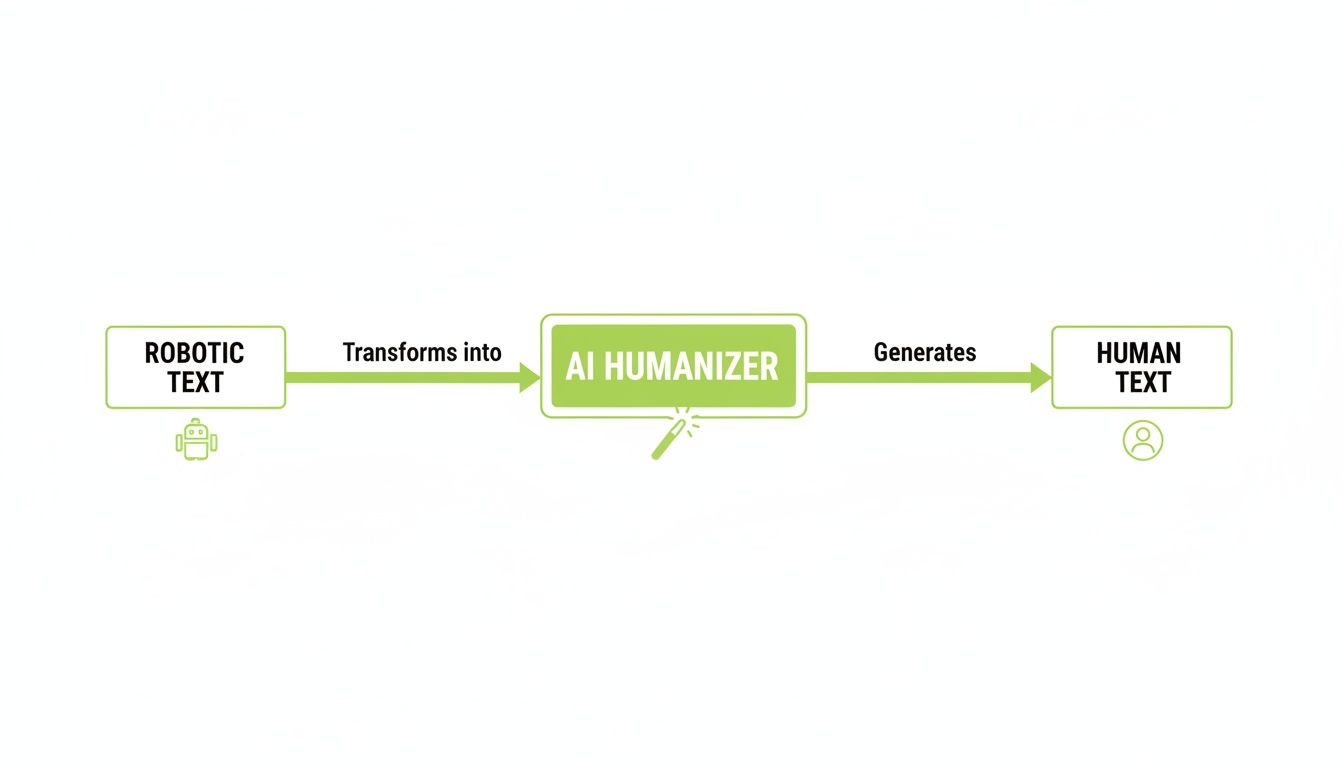
Denna process är den avgörande bryggan, som tar robotproduktion och fyller den med de autentiska kvaliteterna som gör mänskligt skrivande så effektivt.
Bevara din unika varumärkesröst
Sluligen har varje varumärke en unik röst. Det är vad som skiljer dig från konkurrenterna och gör dig igenkännbar. AI-modeller, tränade på hela internet, producerar naturligt en generisk, one-size-fits-all-ton som allvarligt kan späda ut din varumärkesidentitet.
En AI-till-mänsklig textkonverterare hjälper dig återta din röst. Du kan ta hastigheten och effektiviteten av AI-genererade utkast och sedan forma dem för att perfekt matcha ditt varumärkes personlighet - vare sig det är kvickt, auktoritativt, vänligt eller formellt. Detta säkerställer konsekvens över all din kommunikation, från blogginlägg och uppdateringar på sociala medier till annonskopia.
En författare kan till exempel skala sin berättandeprocess genom att använda AI för initiala utkast och en humaniserare för att säkerställa att varje kapitel behåller deras signaturberättarstil. Det bevarar konsten samtidigt som det accelererar produktionen.
Praktiska sätt att använda en AI-till-mänsklig textkonverterare
Den verkliga magin med en AI-till-mänsklig textkonverterare händer när du ser den i aktion. Bortom det tekniska är dessa verktyg seriösa problemlösare för yrkesverksamma inom nästan alla områden, som förvandlar innehållsblockaderna till genvägar för tillväxt och effektivitet.
Oavsett om du skalar en marknadsföringskampanj eller polerar en akademisk uppsats, är tillämpningarna lika olika som de är kraftfulla.
Varje användningsfall löser ett vanligt, ihärdigt problem - som innehållsutbrändhet, rädslan för att flaggas av AI-detektorer, eller kampen för att upprätthålla en konsekvent varumärkesröst. Genom att förvandla robotaktig text till något med en mänsklig touch erbjuder en konverterare en direkt och elegant lösning.
För innehållsmarknadsförare och SEO-specialister
Innehållsmarknadsföring bygger på en enkel formel: mer högkvalitativt innehåll är lika med bättre synlighet och engagemang. Haken? Att pumpa ut en stadig ström av värdefulla artiklar, blogginlägg och webbkopia är en massiv tidstjuv som ofta leder till utbrändhet. AI-textgeneratorer kan skala produktion, men den råa produkten känns ofta generisk och riskerar att devalveras av sökmotorer som belönar autentiskt, läsarcentrerat innehåll.
Det är här en AI-till-mänsklig textkonverterare blir en marknadsförares hemliga vapen.
- Skala bloggproduktion: Marknadsförare kan använda AI för att skapa initiala utkast om ett dussin ämnen, och sedan köra dem genom en humaniserare. Detta behåller AI:s hastighet samtidigt som de slutliga artiklarna har ett naturligt flöde, en unik röst och en engagerande ton som faktiskt skapar kontakt med en publik.
- Undvika SEO-straff: Genom att kryptera de förutsägbara mönstren i AI-genererad text hjälper humaniserare innehåll att flyga under radarn för AI-detektorer. Detta är en stor grej för att upprätthålla och förbättra sökmotorrankningar, eftersom det anpassar innehållet till de kvalitetsstandarder som sökmotorer belönar.
- Upprätthålla varumärkesröst: En konverterare låter marknadsföringsteam justera AI-utkast för att passa deras specifika varumärkespersonlighet. Oavsett om ditt varumärke är kvickt, formellt eller vänligt, hjälper verktyget till att se till att varje innehållsdel känns konsekvent och on-brand.
AI finns redan överallt inom detta område. På stora marknader använde 90 % av innehållsmarknadsförarna AI-skrivverktyg i mitten av decenniet, med 78 % som lutar sig mot modeller som ChatGPT i sitt dagliga arbete. Och med 41 % som rapporterar stora produktivitetsvinster har behovet av att förfina den AI-produktionen för kvalitet aldrig varit större.
För studenter och akademiker
I den akademiska världen är klarhet, originalitet och integritet allt. Studenter och forskare använder ofta AI som en brainstorming-partner eller för att hjälpa till att strukturera komplexa idéer. Men att skicka in rå AI-text kan utlösa plagiering och AI-detekteringsprogram som Turnitin, vilket leder till allvarliga akademiska problem.
En AI-till-mänsklig textkonverterare erbjuder ett ansvarsfullt sätt att finjustera utkast. Den hjälper till att förbättra läsbarheten och flödet i deras skrivande utan att röra deras ursprungliga idéer.
Målet är inte att låta AI skriva uppsatsen åt dig. Det handlar om att använda en konverterare som ett sofistikerat redigeringsverktyg. Den kan omformulera klumpiga meningar och förbättra klarheten, vilket hjälper studentens egna argument att lysa igenom mer effektivt.
Till exempel kan en student generera ett stycke som sammanfattar en komplex teori. De kan sedan använda en humaniserare för att omformulera det i en mer naturlig, sofistikerad stil som passar deras uppsats, vilket säkerställer att den slutliga inlämningen är både polerad och autentiskt deras egen. För en djupare dykning, kolla in vår guide om hur man humaniserar AI-genererad text.
För affärsproffs och entreprenörer
I företagsvärlden är kommunikation valuta. E-post, rapporter, presentationer och förslag måste alla vara tydliga, övertygande och professionella. Även om AI kan utforma dessa dokument på några sekunder, kan produkten ibland kännas kall, opersonlig eller alldeles för formell, vilket misslyckas med att bygga den rapport du behöver med klienter eller kollegor.
Denna skärmdump visar en professionell som analyserar data för en rapport - en vanlig utgångspunkt innan någon text ens är utkast.

Efter att ha genererat ett utkast baserat på denna data kan en konverterare göra det slutliga dokumentet mycket mer påverkansfullt.
Ett humaniseringsverktyg kan injicera ett lager av personlighet och övertalning i dessa kommunikationer. En entreprenör kan använda det för att förfina ett AI-utkastat investerarpitch, vilket gör det mer passionerat och övertygande. En chef kan humanisera ett internt memo för att säkerställa att det motiverar teamet istället för att bara lista direktiv.
Kom ihåg att komma närmare människolik text börjar med din input. Att lära sig några effektiva promptstrategier för AI är ett grundläggande steg som gör hela humaniseringsprocessen smidigare och mer effektiv från start.
Teori är en sak, men att se en AI-till-mänsklig textkonverterare i aktion är där magin verkligen händer. Låt oss gå igenom processen med ett verktyg som HumanText.pro för att visa dig hur snabbt du kan förvandla robotaktig text till något med en riktig puls. Hela grejen tar bara några ögonblick.
Detta är inte komplicerat. Vi kommer att ta lite rå AI-produktion, välja en konverteringsstil som passar vårt mål och sedan kolla in den slutliga, humaniserade texten för att se exakt vad som förändrades.

Steg 1: Klistra in din AI-genererade text
Först och främst behöver du lite AI-innehåll. Gå vidare och generera ett utkast för ett blogginlägg, en uppsats eller vad du nu arbetar med med din favorit-AI-modell. När du har det, kopiera bara hela grejen.
Gå nu till humaniseringsverktyget. Du hittar en ren, enkel inmatningsruta som väntar på dig. Klistra in din text där. De flesta kvalitetsverktyg kan hantera mycket text på en gång, så oroa dig inte för att dela upp en lång artikel.
Steg 2: Välj din konverteringsstil
Det är här du får spela regissör. En bra AI-till-mänsklig textkonverterare är inte en one-trick pony; den ger dig alternativ för att forma produktionen så att den passar dina specifika behov. Du ser vanligtvis några val som justerar den slutliga tonen och strukturen.
Till exempel kan du se alternativ som:
- Förbättra läsbarhet: Denna inställning handlar om klarhet. Den förenklar komplexa meningar, jämnar ut flödet och skär igenom jargong för att göra texten lättare för alla att förstå.
- Låt mer mänskligt: Detta läge går ett steg längre. Det är utformat för att aktivt kringgå AI-detektorer genom att blanda meningsstrukturer, lägga till naturligt klingande fraser och bryta de förutsägbara mönster som AI-modeller älskar att använda.
Rätt val beror helt på ditt mål. Om du polerar en akademisk uppsats kan "Förbättra läsbarhet" vara ditt bästa val. Om du skriver en SEO-artikel och behöver den för att flyga under detektionsradarn, är "Låt mer mänskligt" vägen att gå. Välj bara alternativet som är vettigt för dig och tryck på knappen "Humanisera".
Förmågan att välja en konverteringsstil är nyckeln. Den ger dig kontroll över den slutliga produktionen, vilket säkerställer att den humaniserade texten inte bara undviker detektion utan också anpassas perfekt till din avsedda publik och varumärkesröst.
Steg 3: Granska transformationen
Efter några sekunder serverar verktyget den nya, humaniserade versionen av din text. Detta är sanningens ögonblick. De bästa plattformarna visar dig en direkt före-och-efter-jämförelse, vilket gör det otroligt lätt att se förbättringarna.
Så vad ska du leta efter? Du kommer sannolikt att märka en mer dynamisk rytm, med en bättre blandning av korta, kärnfulla meningar och längre, mer beskrivande sådana. Ordförrådet bör kännas mindre repetitivt och mer nyanserat. Den övergripande tonen kommer att kännas mer engagerande - mindre som en maskin, och mer som en person.
Detta sista steg är vad som säljer hela processen. Du ser en tydlig, påtaglig förändring från steril, maskingenererat innehåll till skrivande som har personlighet och flair. Det är denna omedelbara påverkan som ger skribenter förtroendet att göra dessa verktyg till en regelbunden del av deras arbetsflöde.
Att navigera i det etiska landskapet för AI-innehåll
En AI-till-mänsklig textkonverterare är en kraftfull allierad, men som all teknik kommer dess verkliga värde ner till hur du använder den. Att använda dessa verktyg ansvarsfullt innebär att navigera de etiska linjerna kring originalitet, transparens och datasäkerhet. Att få detta rätt är hur du upprätthåller trovärdighet samtidigt som du fortfarande utnyttjar AI:s otroliga effektivitet.
Samtalet kring AI-etik blir högre varje dag, särskilt när AI-genererat innehåll blir vanligare. Med AI-innehållsmarknaden värderad till USD 12 879 miljoner (och text utgör 21,6 % av det), förväntas den explodera till USD 53 789 miljoner år 2033. Denna massiva tillväxt är inte bara en trend; det är en tydlig signal att vi behöver solida etiska riktlinjer för skapare och yrkesverksamma. Du kan utforska fler marknadsväxtinsikter på grandviewresearch.com.
Upprätthålla akademisk integritet
I skolan är gränsen mellan ett hjälpsamt redigeringsverktyg och en fuskapparat rakbladstunnt men kritiskt viktigt. En AI-till-mänsklig textkonverterare bör ses som en sofistikerad skrivassistent - ett verktyg för att hjälpa dig polera och perfekta dina egna idéer, inte en spökskrivare.
Tänk på det så här:
- Etisk användning: Du utformar en forskningsuppsats, använder sedan en humaniserare för att jämna ut meningsflödet, skärpa dina argument och göra ditt skrivande mer övertygande. Kärnforskningen och idéerna är fortfarande 100 % dina.
- Oetisk användning: Du låter en AI generera en hel uppsats från grunden och kör den sedan genom en humaniserare bara för att undvika en detekteringsskanning. Det är akademisk ohederlighet, rent och enkelt.
Gyllene regeln är att använda dessa verktyg för att utöka ditt eget intellektuella arbete, aldrig för att ersätta det.
Transparens i professionellt skrivande
I den professionella världen skrivs regelboken om att avslöja AI-assistans fortfarande. Även om det inte finns någon universell standard ännu, blir transparens snabbt guldstandarden. Din publik, klienter och kollegor värdesätter autenticitet, och att vara rak med din process kan faktiskt bygga förtroende istället för att skada det.
En marknadsföringsbyrå kan till exempel berätta för sina klienter att de använder AI för att generera initiala utkast för hastighet, men sedan redigeras, humaniseras och faktakontrolleras varje enskild del noggrant av deras expertteam. Detta ramar in AI som ett verktyg som förbättrar deras service, inte en genväg som äventyrar kvalitet.
Att vara ärlig om ditt arbetsflöde skyddar din professionella integritet och håller dig framför eventuell motreaktion.
Skydda din data och integritet
Slutligen, var alltid smart med vad du klistrar in i onlineverktyg. När du släpper din text i någon webbaserad plattform måste du tänka på vem som kan se den. Det är avgörande att välja en tjänst med en stenhård integritetspolicy som tydligt anger att din data inte kommer att lagras, säljas eller användas för att träna andra AI-modeller.
Innan du använder någon AI-till-mänsklig textkonverterare, ta en minut att läsa dess användarvillkor. Leta efter specifika åtaganden om datasäkerhet. Undvik att mata in personlig, konfidentiell eller proprietär information om du inte är helt säker på att plattformen är säker. Att vara proaktiv om dataintegritet skyddar dig, ditt företag och dina klienter från allvarliga risker. För att gräva djupare kan du lära dig hur man skapar odetekterbar AI-innehåll samtidigt som du håller din data säker.
Vanliga frågor om AI-humaniserare
Med AI-skrivverktyg som exploderar i popularitet är det ingen överraskning att frågor dyker upp överallt. Tänk på det: när ChatGPT lanserades nådde det 1 miljon användare på bara fem dagar. Det är en rekordbrytsande takt som inte ens jättar som Instagram kunde matcha. Denna otroliga adoptionshastighet signalerar en enorm förändring i hur vi skapar innehåll, och med det kommer behovet av verktyg för att överbrygga gapet mellan maskingenererad text och en genuin mänsklig röst.
Detta handlar inte bara om chatbots heller. Det finns över 8,4 miljarder digitala röstassistenter i bruk just nu - det är mer än en för varje person på planeten. Vi vänjer oss vid att interagera med AI, men vi längtar fortfarande efter en naturlig, mänsklig touch. Det är exakt här en AI-till-mänsklig textkonverterare blir en väsentlig del av varje modern skribents verktygssats. För en djupare dykning i dessa siffror, kolla in denna fullständiga rapport om AI-trender.
Så låt oss reda ut några av de vanligaste frågorna vi hör om AI-humaniserare.
Kan dessa verktyg garantera 100 % odetekterbar AI-text?
Detta är den stora, eller hur? Även om de bästa AI-humaniserarna är otroligt bra på vad de gör, kan inget verktyg ärligt lova en perfekt 100 % odetekterbar poäng varje gång. Här är varför: AI-detektion är i en konstant katt-och-råtta-lek med AI-skrivande och humaniseringsverktyg.
När AI-modellerna blir smartare, så gör även algoritmerna som är utformade för att nosa upp dem. En toppmodell konverterare ger dig en massiv fördel genom att skriva om textens djupa mönster, men målstolparna rör sig alltid. Det smartaste sättet att använda en humaniserare är som en kraftfull förstahandsredaktör, följt av en snabb slutlig genomläsning från dig för att lägga till din personliga touch.
Anses det som plagiering att använda en humaniserare?
Låt oss dra en fast linje i sanden här: att använda en humaniserare är inte plagiering. Plagiering handlar om att ta någon annans verk eller idéer och ge sig ut för att vara dina egna. En AI-till-mänsklig textkonverterare stjäl inte idéer; den förfinar stilen, flödet och strukturen i texten du tillhandahåller.
Tänk på det som en superavancerad redaktör. Den polerar ditt skrivande för att få det att låta mer autentiskt, ungefär som en grammatikkontroll tar bort stavfel eller en ordbok hjälper dig hitta ett bättre ord. Så länge den ursprungliga idén är din, förbättrar du bara ditt eget verk.
Den etiska linjen dras av hur du använder verktyget. Om du genererar en hel uppsats med AI och sedan bara humaniserar den, bryter du förmodligen mot din skolas policy för akademisk integritet. Men om du använder det för att polera ditt eget AI-assisterade utkast, är det bara en del av den moderna skrivprocessen.
Hur skiljer sig en humaniserare från en parafrasör?
Detta är en riktigt vanlig punkt för förvirring, men skillnaden är enorm. En parafrasör och en humaniserare arbetar på helt olika nivåer.
Vad en parafrasör gör: Ett parafraseringsverktyg handlar om omformulering. Det tar befintliga meningar och byter ut synonymer eller blandar klausulordningen för att säga samma sak på ett lite annorlunda sätt. Problemet är att den underliggande rytmen, meningsstrukturen och statistiska "fingeravtrycket" av AI-texten ofta kvarstår.
Vad en humaniserare gör: En humaniserare går mycket djupare. Den utför lingvistisk kirurgi, fundamentalt förändrar textens DNA för att låta som att en person skrev den. Den varierar meningslängder, justerar kadensen, lägger till naturligt klingande fraser och bryter upp de förutsägbara mönster som AI-detektorer är byggda för att hitta.
I princip sätter en parafrasör bara en ny uppsättning kläder på samma robot. En humaniserare bygger om roboten från insidan och ut för att få den att röra sig, andas och låta mänskligt.
Redo att se skillnaden själv? Förvandla dina AI-utkast till engagerande, odetekterbart innehåll med HumanText.pro. Prova det!
Redo att förvandla ditt AI-genererade innehåll till naturligt, mänskligt skrivande? Humantext.pro förfinar din text omedelbart och säkerställer att den läses naturligt och autentiskt. Prova vår gratis AI-humaniserare idag →
Relaterade artiklar
AI Face Search Explained: Verify Identity and Stay Safe
Understand how AI face search works, including embeddings, accuracy, and legal issues. Learn to use these tools for personal safety and verify identity online.

Reverse Face Search: A Verification Safety Guide
Learn how reverse face search works, when to use it for safety, and how to pair it with AI image checks to verify online contacts and reused photos.
Face ID Search Explained: How It Works and How to Verify
Learn how face ID search works, why it differs from reverse image search, and how to verify identities and photos safely with practical checks and tools.

