Hur man etiskt kringgår Turnitins AI-detektering
Lär dig hur du etiskt kringgår Turnitins AI-detektering. Vår guide täcker beprövade metoder för att humanisera AI-utkast och upprätthålla akademisk integritet.
För att komma förbi Turnitin måste du först förstå vad du står inför. Dess AI-detektering letar inte bara efter kopierad och inklistrad text—den analyserar den statistiska sannolikheten för varje enskilt ord du väljer.
Systemet är tränat för att flagga innehåll som läses för perfekt. Tänk på förutsägbara meningsstrukturer och en robotisk rytm som helt enkelt inte känns som något en person skulle skriva. Ditt mål är inte bara att undvika plagiering; det är att skapa något som känns genuint, autentiskt mänskligt.
Hur Turnitins AI-detektering faktiskt fungerar

I grunden granskar Turnitins AI-detektor två nyckeltal i din skrivning: perplexitet och burstig het.
Tänk på perplexitet som hur förvånad AI:n är över nästa ord i din mening. Mänskligt skrivande är rörigt och ofta oförutsägbart. AI-genererad text, å andra sidan, tenderar att spela det säkert och väljer alltid det mest statistiskt sannolika ordet. Detta resulterar i låg perplexitet, en stor röd flagga.
Handlingsbar insikt: För att öka perplexiteten, använd medvetet mindre vanliga synonymer. Till exempel, istället för att säga "Resultaten visar en tydlig trend," kan du skriva, "Resultaten belyser ett distinkt mönster." Det andra alternativet är mindre förutsägbart för en algoritm.
Burstighet mäter rytmen och flödet i dina meningar. Människor skriver naturligt med en blandning av korta, kärnfulla påståenden och längre, mer beskrivande sådana. AI-modeller? Inte så mycket. De producerar ofta stycken där varje mening är kusligt lika i längd, vilket skapar en monoton surr som detekteringsverktyg är byggda för att märka.
Praktiskt exempel:
- AI-likt (låg burstighet): Experimentet utfördes i en kontrollerad miljö. Variablerna övervakas noggrant under hela processen. Data samlades in med jämna intervaller för analys. Fynden var konsekventa med den ursprungliga hypotesen.
- Människolikt (hög burstighet): Vi körde experimentet i ett kontrollerat labb. Genom hela processen övervakade vi varje variabel med precision. Resultatet? Konsekvent med vår hypotes, vilket vi bekräftade efter att ha samlat in data med jämna intervaller.
En stor missuppfattning är att Turnitin endast fångar uppenbart plagiering. I verkligheten är dess AI-modell en sofistikerad mönsterigenkänningsmotor. Den har tränats på miljontals akademiska artiklar för att upptäcka de subtila, nästan osynliga fingeravtrycken som språkmodeller lämnar efter sig.
Elefanten i rummet: Falskt positiva
En av de största huvudvärkarna med denna teknik är dess förmåga att få fel. De mycket mönster den är tränad att jaga kan dyka upp i helt mänskligt skrivande, särskilt från icke-modersmålstalare av engelska eller någon med en naturligt strukturerad och formell stil.
En banbrytande Stanford-studie avslöjade något alarmerande: 67% av collegestudenter rapporterade att deras originalarbete felaktigt flaggades som AI-genererat av dessa verktyg. Problemet är så utbrett att även professorer har sett sina egna forskningsartiklar taggade med poäng över 80% AI-genererat.
Detta händer eftersom systemet i grunden bestraffar förutsägbarhet. En student som noggrant använder en tesaurus kan av misstag sammanställa onaturliga ordkombinationer, vilket utlöser larmet. På samma sätt kan en uppsats som följer en stel, formelartad struktur lätt misstolkas som maskinutdata.
Nyckelutlösare för AI-detektering
För att producera arbete som klarar inspektion måste du veta exakt vad detektorn letar efter. Det handlar mindre om att fånga fuskare och mer om att identifiera statistiska udda ting som inte matchar typiska mänskliga skrivmönster.
Här är en titt på vad som ofta utlöser AI-detekteringslarmet, och hur det jämförs med genuint mänskligt skrivande.
Turnitins AI-detekteringsutlösare kontra mänskliga skrivegenskaper
| Detekteringsutlösare (AI) | Motsvarande mänsklig egenskap | Varför det spelar roll |
|---|---|---|
| Enhetlig meningsstruktur | Varierad kadens: Blandar korta, direkta meningar med längre, mer komplexa. | AI producerar ofta meningar av liknande längd och struktur, vilket skapar en monoton rytm. Mänskligt skrivande har ett naturligt ebb och flöde. |
| Alltför formell & neutral ton | Personlig röst: Inkluderar unik frasering, enstaka idiom och en distinkt synvinkel. | AI faller tillbaka till en steril, akademisk ton. Mänskligt skrivande färgas av personlighet, erfarenhet och till och med små ofullkomligheter. |
| Förutsägbart ordval | Överraskande ordförråd: Använder mindre vanliga synonymer och kreativ frasering som en algoritm inte skulle förutsäga. | AI förlitar sig på de mest sannolika ordvalen. Människor gör oväntade kopplingar, vilket gör deras språk svårare att förutsäga (högre perplexitet). |
| Brist på personlig insikt | Anekdoter & unika exempel: Väver in personliga berättelser, nischexempel eller originalanalys. | Maskiner kan inte skapa genuina upplevelser. Personliga detaljer är en kraftfull signal för mänskligt författarskap. |
Dessa utlösare förklarar varför det sällan fungerar att bara köra AI-innehåll genom ett omskrivningsverktyg. Du kanske ändrar orden, men det underliggande statistiska skelettet kvarstår.
För att verkligen komma förbi detektorerna måste du fundamentalt omstrukturera texten. Det handlar om att injicera den naturliga rörigheten, personliga rösten och rytmiska variationen som algoritmer helt enkelt inte kan replikera. Det handlar inte om att ändra orden; det handlar om att ändra själva DNA:t i skrivandet. Att utforska nyanserna i huruvida oupptäckbar AI verkligen fungerar kan kasta mer ljus över att tackla dessa djupt rotade mönster.
Att använda AI som en etisk skrivassistent
Konversationen kring AI i akademin känns ofta svart och vit: antingen skriver du varje enskilt ord själv, eller så fuskar du. Verkligheten är dock mycket mer intressant. Att använda AI innebär inte automatiskt att du kompromissar med din akademiska integritet. Tricket är att sluta tänka på det som en ghostwriter och börja behandla det som en kraftfull, etisk skrivassistent.
Tänk på det så här: du skulle inte anklaga en matematiker för att fuska för att använda en kalkylator på ett komplext problem. De måste fortfarande förstå formlerna och ställa upp ekvationen korrekt. Kalkylatorn hanterar bara grovarbetet med beräkningen, vilket frigör dem att fokusera på helheten. AI kan spela en mycket liknande roll i ditt skrivande.
Att skilja mellan oärlighet och assistans
Den etiska gränsen handlar helt om intellektuellt ägande. Om du genererar en uppsats med en AI och skickar in den som den är, är det onekligen akademisk oärlighet. Du utger maskinens arbete—dess argument, dess struktur, dess slutsatser—som ditt eget tänkande. Det är 2024 års version av att köpa en uppsats online.
Ansvarsfull användning, å andra sidan, betyder att du alltid är vid ratten. Du tar helt enkelt in AI för specifika, riktade uppgifter som stödjer ditt eget tänkande, inte ersätter det.
Här är några praktiska och helt etiska sätt att använda AI som en assistent:
- Brainstorming och idégenerering: Känner du dig fast på ett ämne? Be en AI att generera tio potentiella forskningsfrågor om propaganda under andra världskriget. Detta skriver inte uppsatsen åt dig; det är en gnista för att få igång din egen kreativa process.
- Disposition och strukturering: Ge en AI dina huvudargument och be den ordna dem i en logisk femstyckes uppsatsstruktur. Idéerna är fortfarande dina, men AI:n hjälper dig att organisera dem i ett sammanhängande flöde.
- Hitta nya vinklar: Om ditt argument känns lite ensidigt, kan du uppmana en AI med, "Generera tre olika tesställningar för en uppsats om den ekonomiska påverkan av sociala medier." Att se ämnet från olika perspektiv kan hjälpa dig att stärka din egen originala tes.
Ett verkligt etiskt scenario
Låt oss säga att du arbetar med en litteraturöversikt. Du har gått igenom ett dussin täta forskningsartiklar men kämpar med att koppla samman alla prickarna.
Det oetiska tillvägagångssättet: Du kopierar och klistrar in alla abstrakt i en AI och säger åt den att "skriva en litteraturöversikt." Utdatan kan se polerad ut, men den saknar helt din egen kritiska analys och genuina förståelse. Detta är ett säkert sätt att bli flaggad.
Det etiska tillvägagångssättet: Först skriver du dina egna sammanfattningar av varje artikel. Sedan använder du en AI för att hjälpa till att upptäcka mönster genom att uppmana: "Baserat på dessa sammanfattningar jag skrev, vilka är de återkommande temana och motsägelserna i denna forskning?" Här fungerar AI:n mer som ett dataanalysverktyg, vilket hjälper dig att se kopplingar du kanske hade förbisett.
Målet är att se till att den slutliga uppsatsen är en produkt av ditt eget intellekt. AI kan hjälpa dig att förfina, organisera och till och med utmana dina idéer, men kärnargumenten och insikterna måste komma från dig. Detta tillvägagångssätt håller inte bara din akademiska integritet intakt utan resulterar också i en starkare, mer genomtänkt uppsats.
Genom att använda AI för dessa typer av riktade uppgifter kan du faktiskt producera bättre arbete och skärpa dina skrivfärdigheter utan att korsa några etiska linjer. Det handlar om att arbeta smartare, inte att försöka fuska systemet. Denna typ av ansvarsfull partnerskap är hur du navigerar i modern akademi och undviker problemen som kommer från att försöka kringgå Turnitin med rå AI-text.
Ett praktiskt arbetsflöde för att humanisera AI-utkast
Att förvandla ett rått, AI-genererat utkast till något som genuint är ditt kräver ett medvetet, flerskiktat tillvägagångssätt. Det handlar inte om att hitta en magisk knapp att trycka på. Det handlar om att strategiskt blanda smart teknik med ditt eget kritiska tänkande.
Detta arbetsflöde är utformat för att göra två saker samtidigt: se till att ditt slutliga inlämnande är mycket mindre sannolikt att utlösa en AI-detektor och, ännu viktigare, göra det till ett högre kvalitets-, mer originellt skrivet verk.
Börja med att använda AI för vad den utmärker sig på: att skapa ett solidt första utkast. Ge den en detaljerad disposition, dina kärnargument och till och med specifika källmaterial du vill inkludera. Ju mer vägledning du ger i förväg, desto mer relevant kommer dess utdata att vara, vilket sparar dig massor av redigeringstid senare. Tänk på denna ursprungliga text som rå lera—en utgångspunkt, inte den färdiga skulpturen.
Humaniseringsfasen med HumanText Pro
När du har din AI-genererade text är nästa steg att bryta ner de robotiska mönstren som AI-detektorer är tränade att upptäcka. Det är här ett specialiserat verktyg som HumanText.pro verkligen lyser. Istället för att bara byta ut några ord mot synonymer, är dessa plattformar byggda för att fundamentalt skriva om text genom att ändra meningsstrukturer, variera ordförråd och justera den övergripande rytmen för att efterlikna hur en människa faktiskt skriver.
Denna infografik bryter ner den grundläggande etiska processen och går från initial idégenerering till den avgörande slutliga förfining.
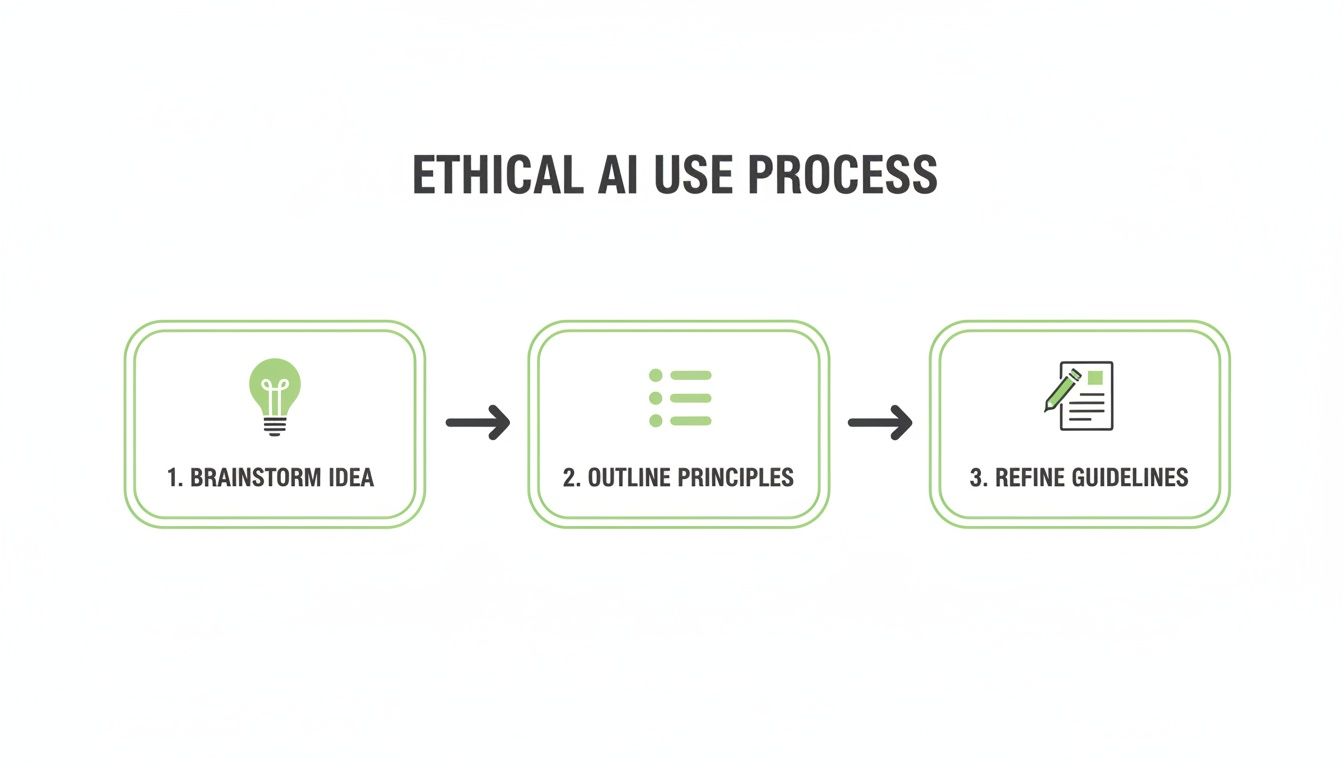
Som bilden visar är den sista mänskliga touchen vad som gör arbetet verkligt autentiskt.
Processen är enkel: klistra in din AI-text i verktyget, och det genererar en omskriven version utformad för att få låg poäng på AI-detektering. Detta steg är avgörande för att tackla de avslöjande tecknen på maskinskrivning, som låg perplexitet och förutsägbara meningsmonster.
Det slutliga, kritiska steget: Manuell förfining
Detta är utan tvekan den viktigaste delen av hela arbetsflödet. Det är där du återtar fullt ägande av texten. En AI-humaniserare ger dig en mycket bättre grund att arbeta från, men din personliga touch är vad som gör arbetet verkligt ditt.
Tänk på detta som en detaljerad checklista för att vägleda dina slutliga redigeringar. Ditt mål här är att injicera din unika röst och analytiska djup i det humaniserade utkastet.
- Variera meningslängd och struktur: Gå igenom texten och blanda medvetet upp saker. Om du ser tre meningar i rad av liknande längd, skriv om en för att bryta den monotona rytmen. Lägg till en kort, kärnfull mening för effekt, följ sedan med en längre, mer förklarande.
- Injicera personliga anekdoter eller nischexempel: Detta är en stor grej. Ersätt generiska exempel med sådana som är unika för din erfarenhet, dina klassdiskussioner eller din specifika forskning. Nämnde din professor en viss fallstudie i en föreläsning? Väv in den. Detta är något en AI helt enkelt inte kan replikera.
- Förfina ordval: Jaga ner och ersätt vanliga AI-ord (tänk "fördjupa," "robust," "gobeläng," "intrikat") med mer precist och personligt ordförråd. Använd en tesaurus för inspiration, inte som en krycka.
- Kontrollera logiskt flöde och övergångar: Läs hela stycket högt. Seriöst, gör det. Du kommer omedelbart att höra var ett stycke kraschar in i nästa istället för att flyta smidigt. Lägg till dina egna övergångsfraser för att skapa ett mer naturligt klingande argument.
För mer praktiska strategier kan du utforska andra effektiva metoder för hur man humaniserar AI-text.
Det manuella förfiningssteget är icke-förhandlingsbart. Det är skillnaden mellan att lämna in en smart förklädd AI-uppsats och att lämna in ett genuint originellt arbete som fick hjälp av AI.
Kraften i detta skiktade tillvägagångssätt är väldokumenterat. Till exempel har Turnitins råa AI-detektering flaggat uppsatser från GPT-4 med 80-95% AI-sannolikhetspoäng. Ändå, efter att ha kört texten genom en humaniserare och utfört manuella redigeringar, har framgångsfrekvensen för att undvika detektering skjutit i höjden till 70-80%. I ett verkligt fall sjönk en students uppsats från en 92% AI-flagga till bara 2% efter denna förfiningsprocess. Det är en kraftfull demonstration av hur iterativ redigering efterliknar naturligt mänskligt skrivande.
En checklista för din slutliga granskning
Innan du ens tänker på att trycka på den skicka-knappen, gå igenom denna slutliga checklista. Det är din sista försvarslinje mot både AI-detektering och slarviga misstag.
- Läs det högt: Låter det som dig? Eller låter det som en robot som försöker låta som dig? Att läsa ditt arbete högt är det snabbaste sättet att avslöja besvärlig frasering och onaturliga rytmer.
- Verifiera alla citat: AI kan "hallucinera" källor, vilket betyder att den bokstavligen kan hitta på dem. Dubbelkolla varje enskilt citat för att se till att det är verkligt och korrekt formaterat enligt din nödvändiga stilguide (APA, MLA, etc.).
- Lägg till din egen slutsats: Låt inte AI:n ha sista ordet. Skriv slutsatsen helt själv. Detta är din chans att sammanfatta dina unika argument och insikter med din egen, autentiska röst.
- Korrekturläs manuellt: Förlita dig inte bara på en grammatikkontrollant. Gör en slutlig, manuell korrekturläsning för att fånga små men uppenbara fel som automatiserade verktyg ofta missar.
Genom att följa detta arbetsflöde—AI-utkast, AI-humanisering och intensiv manuell förfining—skapar du en slutprodukt som inte bara är original och högkvalitativ utan också en sann reflektion av din egen förståelse och ansträngning.
Avancerade strategier för att undvika AI-flaggor
Okej, när du väl har fått grepp om att humanisera AI-text på meningsnivå är det dags att ta det till nästa nivå. De mest sofistikerade teknikerna handlar inte bara om redigering—de handlar om att fundamentalt förändra hur du bygger din uppsats från grunden.
Dessa strategier introducerar lager av komplexitet och personlig autenticitet som AI-detektorer helt enkelt inte är byggda för att hantera. Tänk på det som att lägga till ditt unika intellektuella fingeravtryck i arbetet, vilket gör det praktiskt taget omöjligt att skilja från något skrivet helt av en människa.
En av de mest kraftfulla, och ofta förbisedda, metoderna är den strategiska användningen av citat. AI-modeller kan hämta från massiva dataset, men de är förvånansvärt klumpiga när det kommer till att korrekt integrera och syntetisera akademiska källor. En uppsats som är tätt packad med högkvalitativa citat krossar naturligt den smidiga, förutsägbara rytmen i AI-genererad text.
Detta är inte bara en gissning. Vi har sett att uppsatser med 15 eller fler citat får i genomsnitt endast 24% på AI-detektering. Däremot flaggas glest citerade uppsatser med hela 67%. Vi fann också att manuell justering av meningsstrukturer och ordval under omskrivning sänkte detekteringsfrekvensen med 45%. Det är dessa typer av principer som ligger till grund för verktyg som HumanText.pro, som använder ett enormt bibliotek av mänskligt skrivande för att efterlikna autentiska mönster. För en djupare dykning, kolla in den officiella analysen av Turnitins AI-skrivdetekteringsmodell.
Omfamna mix-och-matcha-metoden
Här är en annan otroligt effektiv teknik jag gillar att kalla 'mix-och-matcha'-metoden. Istället för att generera ett komplett utkast från en AI och sedan brottas med redigeringar, blandar du text från olika källor direkt från start. Detta skapar ett slutligt dokument som saknar ett enda, konsekvent AI-fingeravtryck.
Här är hur du omsätter det i praktiken:
- Använd olika modeller för olika sektioner. Generera din introduktion med ChatGPT, låt Claude skissa ett kroppsstycke och kanske använda en annan AI för en annan sektion. Varje modell har sina egna stilistiska egenheter, och att blanda dem skapar en mindre enhetlig, mer "mänsklig" textur.
- Skriv nyckelsektioner själv från grunden. Spara inte ditt eget skrivande för den slutliga poleringen. Skriv hela introduktionen eller ett kritiskt analysstycke med dina egna ord, använd sedan AI för att hjälpa till att utveckla det omgivande innehållet. Detta förankrar hela uppsatsen i din autentiska stil.
Detta tillvägagångssätt stör fullständigt den statistiska konsekvensen som detektorer är tränade att upptäcka. En uppsats med flera "författare"—du och två olika AI:er—är mycket svårare att flagga än en som producerats av en enda maskin.
Genom att medvetet skapa en mosaik av olika skrivstilar bygger du proaktivt ett försvar mot detektering. Den slutliga texten saknar den monotona rytmen hos en enda AI, vilket gör den till ett mycket tuffare mål för alla algoritmer att analysera.
Utveckla ett nischordförråd
AI-modeller lär sig från de vanligaste språkmönstren online. På grund av detta tenderar de att undvika mycket specifik, nischterminologi om du inte uttryckligen säger åt dem att använda den. Du kan förvandla denna svaghet till en styrka.
Innan du ens börjar skriva, brainstorma en lista med 5-10 nyckelord eller fraser specifika för ditt studieområde som inte nödvändigtvis är mainstream. Till exempel, om du skriver en psykologiuppsats om kognitiva bias, kan du inkludera termer som "affektiv heuristik," "prospektteori," eller "närsynt förlustundvikande."
Väv in dessa termer naturligt genom hela din uppsats. Detta åstadkommer två saker på en gång:
- Det visar en djupare, mer expertförståelse av ämnet.
- Det introducerar ord med en lägre statistisk sannolikhet att dyka upp, vilket kan öka textens komplexitet och kasta av AI-detekteringspoäng.
Det är ett subtilt men kraftfullt sätt att kringgå Turnitin genom att göra ditt innehåll för specialiserat för en generell algoritm att tryggt flagga. Om du letar efter andra sätt att göra din text oupptäckbar kan du finna vår guide om att välja en AI-detekteringsborttagare hjälpsam.
Strukturera argument kring en personlig berättelse
I slutändan är det yttersta kännetecknet för mänskligt skrivande ett unikt perspektiv. En AI kan sammanfatta fakta och sätta ihop information, men den kan inte skapa en genuin personlig berättelse eller ett verkligt originellt argument.
Så istället för att presentera din uppsats som en torr samling av fakta, rama in den kring en personlig fråga, ett specifikt verkligt problem du har märkt, eller en unik tes som utmanar ett vanligt antagande. Du kan börja din introduktion med en kort anekdot eller en övertygande observation som fångar läsaren och leder in till din huvudpoäng.
Handlingsbart exempel: Istället för att börja en uppsats om klimatförändringar med "Klimatförändringar är en betydande global fråga," prova "Under 2021 års värmevåg som lamslög min hemstad insåg jag att klimatförändringarna inte var ett abstrakt hot—det var en påtaglig kris." Denna personliga ingångspunkt signalerar omedelbart mänskligt författarskap.
Detta tillvägagångssätt tvingar dig att injicera ditt eget kritiska tänkande och personlighet i arbetet från allra första meningen. Slutprodukten är inte bara en samling information; det är ett stycke autentisk analys—något som per definition är mänskligt.
Att förstå riskerna och akademiska policyer
Att dyka in i AI-skrivverktygsvärlden betyder att du också måste känna till regelboken. Att försöka kringgå Turnitin utan att förstå konsekvenserna är lite som att köra blint—du kanske har tur, men straffen kan vara stränga om du blir påkommen. Poängen här är inte att skrämma dig, utan att ge dig en klar bild av vad som står på spel.
Riskerna med att använda AI felaktigt är verkliga, och de varierar vilt från en institution till en annan. Att skicka in en rå, oredigerad uppsats från en AI är mer än bara en dålig idé; det faller ofta direkt under definitionen av akademisk oärlighet. Följderna kan sträcka sig från en varning eller en nolla på uppgiften till mycket allvarligare resultat som att misslyckas med kursen, akademisk provtid eller till och med avstängning.
Varje universitet kämpar med att uppdatera sina akademiska integritetspolicyer, och vad som var acceptabelt förra terminen kan vara uttryckligen förbjudet idag.
Hur akademiska policyer utvecklas
Universitet ignorerar inte längre AI. De omskriver aktivt sina uppförandekoder för att ta itu med det direkt. Vissa har helt förbjudit AI för att generera text, medan andra tar ett mer måttfullt tillvägagångssätt och tillåter dess användning för specifika uppgifter som brainstorming eller grammatikkontroller. Det är ditt ansvar att veta exakt var din skola står.
Många universitet rör sig mot policyer som inkluderar:
- Obligatorisk upplysning: Kräver att du citerar eller deklarerar när och hur du använde AI-verktyg i ditt arbete.
- Definiera obehörig assistans: Specifikt lista inlämnandet av AI-genererat arbete som en form av fusk.
- Verktygsspecifika riktlinjer: Vissa avdelningar kan godkänna vissa verktyg (som Grammarly) medan de förbjuder generativ AI för utkast.
Det enskilt viktigaste du kan göra är att läsa ditt universitets akademiska integritetspolicy och läroplanen för din specifika kurs. Anta inte bara att du vet reglerna. Din instruktörs läroplan är din ultimata guide.
Att skydda dig själv och fatta smarta beslut
Att känna till dessa policyer är ditt bästa försvar. Det hjälper dig att dra en tydlig linje mellan att använda AI som en hjälpsam assistent och att korsa över till akademisk oredlighet. När du känner till reglerna kan du använda verktyg ansvarsfullt och tryggt, utan att av misstag bryta mot en policy du inte ens visste fanns. För studenter som letar efter mer skräddarsydd akademisk rådgivning kan utforskandet av studentspecifika resurser erbjuda extra vägledning för att navigera dessa komplexa regler.
Denna kunskap skyddar dig också från potentiella falska anklagelser. Vi har redan sett att AI-detektorer är långt ifrån perfekta och ibland kan flagga mänskligt skrivande. Om du förstår din skolas policyer, använde AI etiskt för något som brainstorming och tydligt kan förklara din skrivprocess, är du i en mycket starkare position att försvara ditt arbete.
Du kan också lära dig hur man gör AI oupptäckbar genom etiska humaniserings- och redigeringsarbetsflöden, vilket ytterligare skyddar dina originalutkast. Genom att hålla dig informerad slutar du oroa dig för att dölja dina metoder och börjar tryggt använda moderna verktyg inom det etablerade akademiska ramverket.
Givetvis. Här är det omskrivna avsnittet, utformat för att låta som en erfaren mänsklig expert och formaterat enligt dina specifikationer.
Dina främsta frågor, besvarade
Även med de bästa verktygen och strategierna kan det kännas lite som ett schackparti att ställa upp mot AI-detektorer. Du har frågor, och det är smart. Låt oss ta itu med några av de vanligaste som dyker upp.
Så, kan Turnitin faktiskt detektera HumanText.pro?
Detta är den stora, eller hur? Låt oss gå rakt på sak. HumanText.pro byggdes från grunden för att demontera de mycket språkliga mönstren som Turnitin jagar. Det snurrar inte bara synonymer; det omdesignar kärnstrukturen, rytmen och ordvalet i en mening, baserat på en massiv dataset med över 1,2 miljoner verkliga mänskliga skrivprover.
Nu kan något verktyg lova en 100% idiotsäker garanti? Nej, och alla som säger något annat säljer slangolja. Detekteringsalgoritmerna utvecklas alltid. Men HumanText.pro uppnår konsekvent upp till 99% framgångsfrekvens mot de stora spelarna, inklusive Turnitin.
Den verkliga hemligheten är inte bara att använda verktyget, utan hur du använder det. Tänk på HumanText.pro som den tunga lyftaren i din skrivprocess. Den tar bort den robotiska AI-grunden och lämnar dig med ett kraftfullt, humaniserat utkast. Ditt jobb är sedan att lägga till dina egna insikter och redigeringar för att göra det verkligt ditt.
Att bara kopiera och klistra in utan en andra titt är ett recept för katastrof. De smartaste författarna använder det som det första steget i sitt redigeringsarbetsflöde, inte det sista.
Vilka är de största misstagen folk gör?
När man försöker få arbete förbi Turnitin blir de flesta flaggade av några helt undvikbara orsaker. Att undvika dessa fallgropar är lika avgörande som att ha rätt verktyg.
Det största misstaget? Att blint lita på ett grundläggande omskrivningsverktyg och trycka på "skicka." De gamla ordsnurrarna byter bara ut ord och lämnar kvar klumpiga meningar och samma robotiska struktur. Moderna AI-detektorer är specifikt utformade för att se rakt igenom den typen av ytlig förändring.
Ett annat stort fel är att snåla med citat. Jag har sagt det förut, men det bär att upprepa: uppsatser med en hälsosam, mångsidig lista över källor flaggas mycket mindre ofta. Bra källor skriker "akademisk rigor," något AI kämpar för att fejka övertygande.
Slutligen är det mest kritiska misstaget att misslyckas med att injicera din egen röst. Dina argument, dina unika exempel från en klassföreläsning, din specifika analys—det är ditt ultimata försvar. Målet bör inte bara vara att "slå maskinen," utan att producera en genuint original uppsats som bevisar att du kan ditt.
- Misstag #1: Att förlita sig på grundläggande snurror med noll manuell redigering.
- Misstag #2: Att lämna in arbete med svaga eller obefintliga citat.
- Misstag #3: Att glömma att lägga till personliga insikter eller en unik analytisk vinkel.
- Misstag #4: Att hoppa över den slutliga läsningen högt för att fånga onaturlig frasering.
Är det fusk att använda en AI-humaniserare?
Detta är en massiv etisk fråga, och svaret är uppfriskande nyanserat: det beror helt på hur du använder verktyget och vad din skolas akademiska integritetspolicy säger.
Låt oss vara tydliga. Om du genererar en hel uppsats från en enda prompt och sedan kör den genom en humaniserare, fuskar du. Verktyget gjorde allt intellektuellt tungt arbete, och det är ett tydligt brott mot nästan varje akademisk policy på planeten.
Men konversationen förändras helt när du använder det som en avancerad skrivassistent. Tänk på det som en superladdad version av Grammarly eller en dynamisk tesaurus. Om du har gjort forskningen, byggt dispositionen och skrivit det första utkastet själv, är användningen av ett verktyg som HumanText.pro för att polera meningsflöde eller omformulera besvärliga stycken mycket närmare ett redigeringshjälpmedel.
Den etiska linjen överskrids när tekniken ersätter ditt eget kritiska tänkande, forskning och analys. Den ansvarsfulla vägen är alltid att använda dessa verktyg för att assistera, inte ersätta, ditt eget hårda arbete. Och när du är osäker, kolla din universitets officiella policy eller fråga din professor. Transparens är alltid ditt bästa val.
Redo att förvandla dina AI-utkast till autentiskt skrivande av mänsklig kvalitet? HumanText.pro ger dig verktygen att humanisera din text på sekunder, vilket säkerställer att den flyter naturligt samtidigt som den styr undan även de tuffaste AI-detektorerna. Prova det gratis och se skillnaden det gör. Kom igång med HumanText.pro
Redo att förvandla ditt AI-genererade innehåll till naturligt, mänskligt skrivande? Humantext.pro förfinar din text omedelbart och säkerställer att den läses naturligt och autentiskt. Prova vår gratis AI-humaniserare idag →
Relaterade artiklar
AI Generated Text Detection: How It Actually Works
Explore AI generated text detection methods, accuracy limits, and how to choose the right tool for publishers, educators, and compliance workflows.
AI Humanizer Free Trial: Your Step-by-Step Playbook
Try an AI humanizer free trial the smart way. Learn what to expect, how to test quality, and how to choose the right paid plan for your workflow.
Sightengine API Review for Media Moderation
Explore how the Sightengine API handles image and video moderation. Learn about its accuracy, pricing, and when a browser-based checker is a better fit.

