L'IA non rilevabile funziona? Una risposta basata sulle evidenze
L'IA non rilevabile funziona? Abbiamo testato gli umanizzatori di IA contro i migliori rilevatori come Turnitin e ZeroGPT. Scopri i risultati reali e impara quando utilizzare questi strumenti.
Sì, l'IA non rilevabile funziona... a volte. Ma è ben lontana dall'essere una soluzione miracolosa. Questi strumenti possono spesso ingannare i verificatori di IA di base modificando il testo per farlo suonare più umano. Il problema è che vengono frequentemente individuati da sistemi più avanzati come Turnitin, rendendoli un azzardo enorme per qualsiasi cosa importante.
La realtà dietro le affermazioni dell'IA non rilevabile

Quando uno strumento promette di rendere i tuoi contenuti IA completamente invisibili, una buona dose di scetticismo è il tuo miglior alleato. La semplice verità è che "non rilevabile" è più un obiettivo di marketing che una realtà costante. Sebbene questi umanizzatori di IA possano camuffare con successo testi scritti da bot in alcuni casi, la loro efficacia è molto variabile.
Pensala come un costante gioco del gatto col topo. Non appena gli umanizzatori di IA trovano nuovi modi per imitare la scrittura umana, i rilevatori di IA si aggiornano con algoritmi più intelligenti per individuare esattamente quelle tecniche. Questo crea una corsa agli armamenti tecnologica dove nessuna delle due parti mantiene il vantaggio a lungo.
Cosa determina il successo o il fallimento
Le prestazioni di un umanizzatore di IA dipendono davvero dalla sofisticazione del rilevatore che sta cercando di ingannare. Un verificatore gratuito online potrebbe essere facilmente raggirato, ma gli strumenti pesanti utilizzati per l'integrità accademica o la SEO sono tutta un'altra storia. Analizzano schemi linguistici profondi che la semplice parafrasi non riesce a nascondere.
Quindi, l'IA non rilevabile funziona? La risposta onesta è: dipende.
Il successo dipende da alcuni fattori chiave:
- La qualità dell'umanizzatore: I modelli più avanzati producono testi migliori e dal suono più naturale. I semplici riscrittori automatici non hanno alcuna possibilità.
- La potenza del rilevatore di IA: Un verificatore di base è molto più facile da superare rispetto ai sistemi utilizzati dalle università o dai motori di ricerca.
- La natura del testo originale: Una bozza IA grezza e non modificata è molto più difficile da camuffare rispetto a un articolo che ha già un certo apporto umano.
Per darti un quadro più chiaro, ecco un riepilogo generale di come questi strumenti si comportano generalmente con diversi tipi di contenuto.
Panoramica rapida sulle prestazioni dell'umanizzatore di IA
Questa tabella offre un'istantanea di come gli strumenti di IA non rilevabile si comportano in diversi scenari, dandoti una panoramica rapida della loro efficacia.
| Tipo di contenuto | Tasso medio di successo nell'eludere il rilevamento | Caso d'uso principale |
|---|---|---|
| Post di blog semplici | 60-80% | Buono per superare rilevatori basici e gratuiti online. |
| Saggi accademici | 20-40% | Molto rischioso; fatica contro verificatori accademici avanzati. |
| Testi di marketing | 50-70% | Efficace per le bozze iniziali ma necessita di revisione umana. |
| Contenuti tecnici complessi | 30-50% | Spesso compromette la precisione tecnica e la fluidità. |
Come puoi vedere, i risultati sono contrastanti. Sebbene possano essere utili per compiti a basso rischio, il pericolo di rilevamento rimane significativo, soprattutto per i contenuti accademici e tecnici.
In questa battaglia in corso, nessuno strumento può offrire una garanzia infallibile al 100%. Il rischio di rilevamento rimane sempre, soprattutto man mano che la tecnologia di rilevamento si evolve a un ritmo vertiginoso.
In definitiva, devi stabilire aspettative realistiche. Questi strumenti possono essere assistenti utili per perfezionare una bozza maldestra o stimolare idee quando hai il blocco dello scrittore. Ma affidarsi a loro come a una bacchetta magica per nascondere completamente i contenuti generati dall'IA è una scommessa che potrebbe non ripagare, specialmente quando la posta in gioco è alta.
Come i rilevatori di IA scoprono i contenuti generati dall'IA

Per capire davvero come operano gli strumenti di "IA non rilevabile", devi prima comprendere contro cosa stanno combattendo. Pensa a un rilevatore di IA come a un detective linguistico, che cerca impronte sulla "scena del crimine" di un blocco di testo. Non sta leggendo per comprendere il significato come farebbe un umano; è una macchina costruita per riconoscere le impronte statistiche lasciate da un'altra macchina.
Questi rilevatori vengono addestrati su montagne di dati, un mix di testo scritto da umani e testo generato dall'IA. Questo processo insegna loro a individuare gli schemi sottili, quasi invisibili, che tradiscono l'origine del testo. Due degli indizi più importanti che cercano sono la perplessità e l'irregolarità.
L'indizio della prevedibilità
La perplessità è un termine elegante per indicare quanto sia prevedibile un testo. La scrittura umana è disordinata. È sorprendente. Usiamo modi di dire bizzarri, prendiamo percorsi panoramici con le nostre frasi e in generale manteniamo le cose interessanti. I modelli di IA, al contrario, sono ossessionati dalla probabilità. Di solito scelgono la parola statisticamente più probabile dopo quella precedente, il che rende la loro scrittura incredibilmente fluida ma anche dolorosamente prevedibile.
- Bassa perplessità (stile IA): Il testo scorre, certo, ma le scelte lessicali sono sicure e insipide. Ad esempio: "Il sole è molto luminoso e la giornata è molto calda."
- Alta perplessità (stile umano): Il linguaggio è più creativo e si prende più rischi. Ad esempio: "Il sole batteva con un bagliore implacabile, cuocendo la giornata in una foschia soffocante."
Un punteggio di bassa perplessità è un enorme campanello d'allarme per qualsiasi rilevatore di IA. È come una firma falsificata che è semplicemente un po' troppo perfetta — le mancano i difetti naturali dell'originale.
Il testo generato dall'IA ha spesso un ritmo meccanico. La sua uniformità nella scelta delle parole e nella struttura delle frasi è un indizio statistico che i rilevatori avanzati sono specificamente addestrati a identificare.
Il ritmo della scrittura umana
Poi c'è l'irregolarità, che riguarda la variazione nella lunghezza e nella struttura delle frasi. Gli umani scrivono a raffiche. Possiamo sparare qualche frase corta e incisiva, per poi proseguire con una lunga e tortuosa per sviluppare un'idea complessa. Questo crea un ritmo naturale e irregolare.
I modelli di IA sono spesso terribili in questo. Tendono a produrre frasi di lunghezza simile, una dopo l'altra, creando un flusso monotono e robotico. Quella mancanza di variazione è un'altra impronta chiave che i rilevatori cercano. I dettagli tecnici di come questi modelli riconoscono i contenuti possono essere piuttosto complessi. Se vuoi approfondire, esplorare concetti come l'Ottimizzazione per motori generativi (GEO) può offrirti indizi preziosi sulla meccanica che sta dietro a tutto questo.
Quindi, quando un umanizzatore di IA promette contenuti "non rilevabili", quello che sta davvero cercando di fare è simulare quel caos umano. Scambia parole prevedibili con altre meno comuni e spezza frasi uniformi per imitare il nostro stile naturale e disordinato. La grande domanda è: lo fa abbastanza bene da ingannare il detective?
Mettere alla prova l'IA non rilevabile
Parole, parole. Per scoprire davvero se l'"IA non rilevabile" funziona, bisogna vedere come si comportano questi strumenti nel mondo reale. Abbiamo deciso di tagliare corto con l'esagerazione del marketing e sottoporre un popolare umanizzatore di IA a una vera sfida contro alcuni dei migliori rilevatori: Turnitin, ZeroGPT e Originality.ai.
Il nostro metodo era semplice ma incredibilmente rivelatore. Prima, abbiamo generato testo 100% creato dall'IA. Poi abbiamo fatto passare quel contenuto puramente robotico attraverso l'umanizzatore e abbiamo sottoposto l'output "umanizzato" ai rilevatori. I risultati sono stati un serio bagno di realtà.
I dati concreti sulle prestazioni dell'umanizzatore
Anche dopo essere stato elaborato da un umanizzatore di IA, il contenuto veniva comunque segnalato come generato dall'IA un impressionante 61% delle volte. Questo non era un quasi-successo; era un chiaro fallimento. Dimostra che anche strumenti di riscrittura sofisticati non riescono facilmente a cancellare le impronte statistiche — come strutture di frasi prevedibili o scelte lessicali insipide — che i rilevatori avanzati sono progettati per trovare.
Questo alto tasso di rilevamento per contenuti puramente IA racconta una storia cruciale. Se speri di prendere una bozza grezza da ChatGPT e renderla invisibile con un solo clic, le probabilità sono contro di te.
La verità che fa riflettere è che nessun umanizzatore di IA può offrire un travestimento perfetto. I nostri test mostrano un tasso di fallimento significativo, dimostrando che anche il testo "umanizzato" spesso conserva artefatti di IA rilevabili.
Una storia diversa con i contenuti ibridi
Ma non ci siamo fermati lì. Abbiamo anche testato un approccio ibrido, mescolando 50% di testo scritto da umani con 50% di contenuto generato dall'IA prima di farlo passare attraverso l'umanizzatore. I risultati qui erano drasticamente diversi e indicano un modo molto più intelligente di utilizzare questi strumenti.
Quando abbiamo elaborato questo contenuto da fonti miste, il tasso di rilevamento è crollato a solo il 37%.
Questo ci dice che gli umanizzatori di IA funzionano molto meglio come assistenti alla revisione che come ghostwriter. La loro vera forza non è creare contenuti non rilevabili da zero, ma perfezionare e levigare testi che hanno già una base umana. Possono aiutare a smussare frasi goffe o riformulare una frase per migliorarne la fluidità — potenziando il tuo sforzo invece di sostituirlo.
I dati tracciano un percorso chiaro. Se sei interessato a esplorare le tue opzioni, la nostra guida su come trovare uno strumento di IA non rilevabile gratuito e affidabile può aiutarti. In definitiva, la strategia vincente è mantenere un umano nel processo, dove la tecnologia supporta — ma non sostituisce mai — la creatività e la supervisione genuine.
I rischi reali del rilevamento IA nella SEO e nel mondo accademico
Allora, l'"IA non rilevabile" funziona davvero? La domanda si complica molto di più quando ci sono conseguenze reali in gioco. Non si tratta solo di superare un test tecnico.
In ambiti ad alto rischio come l'ottimizzazione per i motori di ricerca (SEO) e il mondo accademico, non riuscire a ingannare un rilevatore di IA non è un piccolo intoppo. Le sanzioni possono essere severe, danneggiando i tuoi ricavi, la tua reputazione e persino la tua futura carriera.
Per chiunque gestisca un sito web o si occupi di contenuti, i rischi colpiscono direttamente i risultati economici. Il sistema di contenuti utili di Google è progettato per premiare contenuti autentici e guidati da esperti. Se il tuo testo generato dall'IA viene segnalato come spam o di bassa qualità, anche dopo averlo "umanizzato", potresti vedere un calo massiccio nei posizionamenti di ricerca e nel traffico organico.
L'alto costo di essere scoperti
Nel mondo accademico, la posta in gioco è probabilmente ancora più alta. Gli studenti che usano umanizzatori di IA per spacciare testo generato come proprio stanno entrando in un campo minato di accuse di disonestà accademica.
Le conseguenze non sono uno scherzo. Possono andare da un voto insufficiente su un compito al fallimento dell'intero corso, la sospensione o persino l'espulsione dall'università.
E questo non è un evento raro. I rilevamenti di imbrogli con IA nel mondo accademico sono aumentati del 40% anno su anno, il che indica che le università stanno stringendo la morsa. Per qualsiasi studente tentato di usare questi strumenti per il lavoro scolastico, è fondamentale capire che il danno potenziale al tuo curriculum accademico è un prezzo molto più alto della comodità che ottieni. Un percorso più intelligente è imparare come rendere i contenuti IA non rilevabili editando eticamente e aggiungendo le tue intuizioni personali, non semplicemente passandoli attraverso uno strumento automatizzato.
Questo grafico mostra come diversi tipi di contenuto si comportano contro i rilevatori di IA.
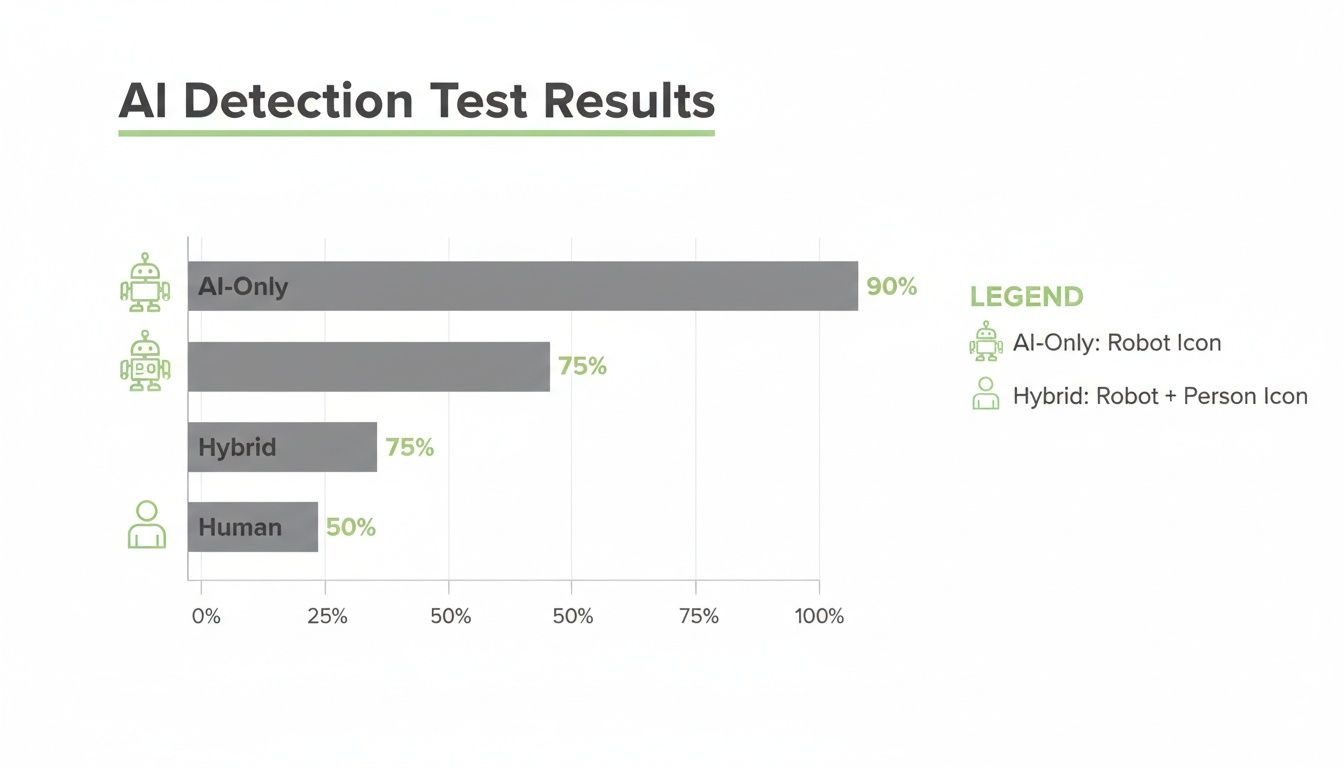
Come puoi vedere, combinare l'IA con la revisione umana aiuta, ma non è ancora un modo infallibile per evitare di essere segnalati.
Rilevatori in evoluzione e penalizzazioni SEO
Il rilevamento dell'IA non è più solo una questione da aula; è un fattore importante per aziende e professionisti del marketing. Un impressionante 78% dei professionisti del marketing ora usa l'IA per alimentare i propri contenuti, ma si trovano di fronte a potenti rilevatori come Turnitin e GPTZero che scansionano milioni di documenti ogni giorno.
L'impatto finanziario può essere diretto e doloroso. Google ha già penalizzato siti per contenuti IA spam con cali di traffico tra il 30 e il 50%.
Il vero problema è che questa è una corsa agli armamenti tecnologica. I rilevatori di IA diventano costantemente più intelligenti. Strumenti come GPTZero ora dichiarano oltre il 99% di accuratezza su saggi completi, e si parla di Google che sviluppa filigrane invisibili per il testo IA. Affidarsi unicamente a un umanizzatore sta diventando una scommessa sempre più rischiosa per il tuo brand o la tua carriera accademica.
Per comprendere davvero l'aspetto SEO, è utile capire cosa cercano i motori di ricerca nei contenuti generati dall'IA. Approfondire le specificità dei fattori di classificazione di ChatGPT può darti un quadro più chiaro di come questi contenuti vengono effettivamente valutati.
Usare gli umanizzatori di IA in modo intelligente
Dati tutti i rischi e le limitazioni, la domanda non è davvero "L'IA non rilevabile funziona?" ma piuttosto "Come posso usare questi strumenti senza scottarmi?" L'unica risposta affidabile è abbandonare l'idea di una soluzione con un clic e adottare un flusso di lavoro con l'umano nel processo.
Dimentica di trattare un umanizzatore di IA come un ghostwriter che hai assunto per fare il lavoro al posto tuo. Pensalo come un assistente intelligente — il suo compito è aiutarti a riformulare, levigare e perfezionare le tue idee, non inventarle da zero.
Questo approccio ti mantiene al posto di comando. Tu sei l'autore, l'esperto e chi ha l'ultima parola. L'IA offre solo suggerimenti, aiutandoti a superare il blocco dello scrittore o a sbrogliare una frase maldestra. Questo è l'unico modo per usare questi strumenti in modo efficace.
Da ghostwriter ad assistente
Vedere lo strumento come un assistente cambia tutto. Non è più una macchina a cui chiedi di impersonarti, ma un collaboratore che aiuta la tua voce unica a emergere più chiaramente. Questo cambio di prospettiva non è solo più etico — produce una scrittura decisamente migliore.
Il tuo obiettivo è usare l'umanizzatore di IA per potenziare il tuo lavoro, non per sostituirlo. Approfondiamo altri modi per farlo nella nostra guida completa sull'uso di un umanizzatore di IA per diversi tipi di contenuto.
Il modo più intelligente di usare un umanizzatore di IA è trattarlo come un correttore ortografico potenziato. Può individuare formulazioni goffe e suggerire alternative migliori, ma non può aggiungere intuizioni genuine, esperienza personale o dati unici. Solo tu puoi farlo.
Consigli pratici per umanizzare in modo intelligente
Integrare questo approccio incentrato sull'umano nel tuo processo di scrittura è semplice. Invece di copiare e incollare semplicemente l'output umanizzato, usalo come punto di partenza per le tue modifiche.
Ecco alcuni modi per farlo bene:
Sii chirurgico con le tue modifiche: Non riversare l'intero documento nello strumento. Piuttosto, individua frasi o brevi paragrafi specifici che suonano rigidi o robotici. Usa l'umanizzatore per ottenere alcune idee di riformulazione diverse, poi scegli la migliore o scrivine una tua.
Inserisci le tue storie: Dopo che lo strumento ha fatto il suo lavoro, torna indietro e intreccia manualmente un aneddoto personale, una statistica sorprendente dalla tua ricerca o un caso di studio unico. Queste sono le impronte umane che l'IA non può falsificare e i rilevatori non possono segnalare.
Varia manualmente la struttura delle frasi: Prendi l'output dell'umanizzatore come ispirazione, ma poi riprendi il controllo. Spezza attivamente le frasi lunghe, combina quelle corte e riordina le espressioni tu stesso. Questo crea il ritmo naturale e variegato che definisce la scrittura umana.
Questo modello ibrido — dove la tecnologia ti offre opzioni e un umano fornisce la sostanza e la rifinitura finale — è il modo più affidabile per creare contenuti di alta qualità. Ti dà la velocità dell'IA senza sacrificare l'autenticità che lettori, motori di ricerca e università apprezzano davvero. Mantenendo il controllo, ottieni davvero il meglio di entrambi i mondi.
Allora, qual è il vero verdetto su questi strumenti di "IA non rilevabile"?
Dopo aver analizzato i dati, condotto i test ed esaminato la questione da ogni angolazione, possiamo finalmente rispondere alla grande domanda: questi strumenti funzionano davvero?
La risposta è un chiaro, ma sfumato, sì. Possono assolutamente aiutare il tuo testo a superare alcuni rilevatori di IA, qualche volta. Ma il sogno di uno strumento 100% non rilevabile che non fallisce mai? Quello è più un'esca di marketing che una realtà su cui puoi contare.
È utile pensarla come un costante gioco del gatto col topo. Non appena un umanizzatore migliora nell'imitare la scrittura umana, i rilevatori diventano più intelligenti nell'individuare i trucchi. Nessuno strumento può promettere una garanzia permanente e inattaccabile che non verrai mai segnalato. Per questo, se dovresti usarne uno si riduce a una semplice domanda: cosa c'è in gioco?
Quando usarli (e quando scappare)
Pensa all'uso di questi strumenti in termini di rischio. Alcuni compiti di scrittura sono a basso rischio, mentre altri potrebbero fare o disfare un progetto, un voto o persino la tua reputazione.
Scenari a basso rischio: Vai pure. Usali per sessioni di brainstorming, creare qualche idea per post sui social media o elaborare una prima bozza per iniziare. In queste situazioni, sono fantastici per risparmiare tempo, e se l'output viene segnalato, chi se ne importa? Non ci sono conseguenze reali.
Scenari ad alto rischio: Stai alla larga. Per contenuti aziendali critici, articoli SEO importanti, lavori accademici o relazioni professionali, il rischio è semplicemente troppo alto. Il danno potenziale dell'essere segnalati — che sia un colpo ai tuoi posizionamenti di ricerca o un serio danno alla tua integrità accademica — è molto più costoso del tempo che risparmieresti.
Il verdetto è piuttosto chiaro: gli strumenti di IA non rilevabile si usano meglio come copilota, non come pilota automatico.
L'unica strategia veramente affidabile è mantenere un umano al comando. Usa l'IA per velocizzare il tuo flusso di lavoro, ma assicurati sempre che il prodotto finale sia filtrato attraverso la tua competenza, plasmato dalla tua voce unica e approvato dal tuo giudizio critico.
È così che ottieni il meglio di entrambi i mondi. Puoi sfruttare l'efficienza dell'IA senza rinunciare alla fiducia, credibilità e valore che solo un vero essere umano può fornire.
Domande frequenti
Addentrarsi nel mondo degli umanizzatori di IA può sicuramente far sorgere qualche domanda. Abbiamo raccolto alcune risposte chiare e dirette alle domande più comuni, aiutandoti a comprendere sia gli aspetti pratici che etici dell'uso di questi strumenti.
Turnitin può rilevare contenuti IA umanizzati?
La risposta breve è sì, spesso può farlo. Mentre un umanizzatore di base potrebbe ingannare un semplice verificatore gratuito online, un sistema sofisticato come Turnitin è tutta un'altra storia. Utilizza un'analisi linguistica avanzata che va ben oltre il semplice controllo di formulazioni goffe.
Turnitin cerca le impronte statistiche sottili che i modelli di IA lasciano dietro di sé — cose come strutture di frasi prevedibili o una varietà lessicale inferiore a quella umana. Anche dopo l'"umanizzazione", questi schemi possono persistere. Nessuno strumento può offrire una garanzia del 100% di superare un sistema così potente, quindi affidarsi a uno per un lavoro accademico è una scommessa seria.
È etico usare gli umanizzatori di IA?
Questa è un'ottima domanda, e la risposta si riduce a una cosa: l'intenzione. Sei onesto su come stai usando lo strumento?
Usare un umanizzatore per levigare la tua bozza, sbrogliare una frase maldestra o superare il blocco dello scrittore va perfettamente bene. Pensalo come un correttore grammaticale o un thesaurus super-potenziato. È un modo etico per aiutarti a esprimere le tue idee più chiaramente.
Dove si supera il limite è quando lo usi per far passare lavoro interamente generato dall'IA come tuo, specialmente in un contesto scolastico o lavorativo. Questo significa travisare l'origine del lavoro e quasi certamente viola le politiche di integrità accademica o le linee guida sui contenuti della tua azienda.
Quali sono le migliori alternative?
Invece di cercare un pulsante magico per eludere il rilevamento, la strategia più efficace è riportare una persona reale nel processo. Questo approccio "umano nel processo" è la tua migliore opzione per contenuti genuini e di qualità.
Ecco come si presenta in pratica:
- Riscrittura manuale: Tratta l'output dell'IA come una prima bozza grezza. Poi, rileggilo e riscrivilo completamente con la tua voce e il tuo stile.
- Inserisci intuizioni personali: Aggiungi le tue storie, esempi unici dalla tua esperienza o dati originali. Questo è qualcosa che un'IA semplicemente non può inventare.
- Concentrati sulla fluidità: Spezza manualmente le frasi. Combina quelle corte e incisive con quelle più lunghe e descrittive per creare un ritmo naturale che gli strumenti automatizzati faticano a replicare.
Questi metodi non solo riducono il tuo rischio di rilevamento — portano a una scrittura molto migliore e di maggior valore.
Pronto a vedere come un umanizzatore di IA di primo livello può velocizzare eticamente il tuo processo di scrittura? Prova Humantext.pro per trasformare le tue bozze in testo naturale e coinvolgente che mantiene la tua voce unica e supera i rilevatori con fino al 99% di successo. Inizia gratuitamente.
Pronto a trasformare i tuoi contenuti generati dall'IA in testi naturali e simili a quelli umani? Humantext.pro perfeziona istantaneamente il tuo testo, assicurandosi che risulti naturale e autentico. Prova gratuitamente il nostro umanizzatore IA oggi →
Articoli Correlati
AI Face Search Explained: Verify Identity and Stay Safe
Understand how AI face search works, including embeddings, accuracy, and legal issues. Learn to use these tools for personal safety and verify identity online.
Reverse Face Search: A Verification Safety Guide
Learn how reverse face search works, when to use it for safety, and how to pair it with AI image checks to verify online contacts and reused photos.

Face ID Search Explained: How It Works and How to Verify
Learn how face ID search works, why it differs from reverse image search, and how to verify identities and photos safely with practical checks and tools.

