
AI Detector Accuracy Comparison 2026: Unbiased Review
Our AI Detector Accuracy Comparison 2026 finds top tools hit 72-94% on raw AI text but fall below 8% on humanized drafts. See what that means for you.
You used AI to get unstuck. Maybe it outlined your essay, tightened your blog draft, or helped you turn rough notes into readable prose. Now the hard part is not the writing. It is the uncertainty.
A detector might label the draft as AI-written even after you revised it. A teacher might rely on a score you cannot audit. A content team might reject work because one tool says “likely AI” while another says “human.” That tension is why ai detector accuracy comparison 2026 matters. The useful question is no longer “Can detectors catch raw AI output?” The useful question is “What happens after a person edits that output?”
Most reviews stop too early. They test clean copy pasted text from a model and call it a day. Workflows are messier. Students rewrite paragraphs. Writers change examples. Marketers use systems to automate content creation, then edit for brand voice. People also use rewriting and refining workflows that sit in the gray zone between drafting help and full generation. If you want a practical frame for that scenario, this piece on why “undetectable” claims deserve scrutiny adds context.
The gap between lab performance and real use is where detector brittleness shows up. That is the gap this analysis focuses on.
The 2026 AI Detection Arms Race You Need to Understand
So how reliable are AI detectors in 2026? Our direct verdict: they are reasonably useful for untouched machine output, and weak as stand-alone proof for revised text. If a draft has passed through real editing, no tool in the comparison below should be treated as evidence on its own. A student finishing an essay at midnight with AI-assisted outlines often sees mixed signals when running checks — one tool flags risk, another clears it, and confidence does not return. That pattern now shows up across classrooms, agencies, and content teams.
Reliability also depends on what you mean by the word. A tool is reliable when it behaves consistently across five situations: raw AI text, edited AI text, fully human text, short passages, and repeated runs on the same input. That is why two “reliable” tools can disagree sharply on the same paragraph — each is measuring a different slice of the problem. When evaluating ai text detection reliability 2026, remember that a score depends on text length, genre, language, editing history, and the model used to produce it (European Commission transparency quick facts).
Before trusting any tool, run it through this checklist:
- False positive rate: How often does human writing get flagged? Under 2% is defensible; above 10% is a liability.
- Performance on edited text: If the publisher does not report this, the top-line number is marketing.
- Minimum text length: Many tools become unreliable below roughly 250-500 words.
- Stability across repeat tests: Paste the same text three times. Wildly different scores mean the result is noise.
Competition is not detector versus model
It is detector versus workflow.
A detector is not just trying to identify output from ChatGPT, Claude, Gemini, or Llama. It is trying to identify output after a person has:
- Rewritten openings to sound less generic
- Changed sentence rhythm to match their own style
- Merged sources and notes into a single draft
- Cut repetition that often makes raw AI easier to spot
That matters because the strongest detector on untouched output may become much less reliable after even modest revision.
Key takeaway: If your use case involves edited text, a detector’s raw-AI score tells only part of the story.
Why this matters for writers and students
For students, a detector score can affect grading, appeals, and trust. For freelance writers, it can affect whether work is accepted. For SEO teams, it can shape publishing policy even when the final article has been heavily edited by humans.
The arms race in 2026 is not just technical. It is procedural. Schools and publishers increasingly need evidence beyond a detector result, while writers need a clearer understanding of what those scores can and cannot support. Reliability also changes after human editing, which is especially important for students, freelance writers, SEO teams, and publishers using AI-assisted drafts. A document may begin as AI-generated, pass through several rounds of factual correction and stylistic revision, and eventually contain a mixture of machine-suggested and human-authored language. A binary label then becomes misleading: the relevant question may be whether AI assistance was used, how extensively it changed the text, and whether the final publication meets disclosure or academic-integrity rules (Article 50 transparency obligations).
That is why a useful comparison has to test the breaking points, not just the easy cases.
Our 2026 Testing Methodology Explained
The fastest way to misunderstand ai text detection accuracy 2026 is to treat one benchmark as universal truth. Detector performance changes with prompt style, model family, editing depth, and text length. A credible review has to make those variables visible.

What we actually tested
Our comparison draws on published 2026 benchmark results, and the sample design matters more than the headline numbers. The TextShift benchmark tested 500 text samples spanning GPT-4, Claude 3.5, Gemini 1.5, and Llama 3 output. A student almost never submits untouched output. A content marketer almost never publishes a raw generation. If a benchmark weights clean generations heavily, it is measuring the least representative case and calling the result “accuracy.”
Why does edited and humanized text matter so much? Because editing destroys the exact statistical fingerprints detectors use. When a person swaps sentence rhythm, cuts filler, and adds their own examples, the perplexity and burstiness signatures flatten toward human baseline. Any comparison that hides this is useless for deciding whether to trust a flag.
What counts as a fair comparison when benchmarks come from external sources? Three things: identical test text across tools, reported false positive rates, and disclosed method. Where a metric was not separately reported, we say so in the table rather than estimating it — an honest gap beats an invented one.
What this review can and cannot prove
It can show how each tool performed on a defined set of samples under disclosed conditions. It cannot prove that a specific submission was or was not AI-assisted, and it cannot promise the same numbers on your text, because your text differs in length, domain, and editing history. Treat every figure below as a relative ranking under controlled conditions, not a guarantee.
In our review, the most useful comparison point was not the top-line accuracy number but how sharply each tool fell on edited text. That drop, not the leaderboard position, is what should drive how you use these products.
Independent benchmark reporting in 2026 points in the same direction. In the TextShift benchmark, ensemble systems outperformed single-model detectors; TextShift reported 99.18% accuracy using a 10-model RoBERTa + TriBoost ensemble with less than 2% false positive rate, while single-model tools averaged 80-90% accuracy and free variants reached 15%+ false positives (TextShift benchmark details). More signal sources tend to handle variation better.
The four metrics that matter
- Overall accuracy asks whether the tool correctly labels text as AI or human across the full test set.
- Precision asks whether flagged text was AI.
- Recall asks how much AI text the detector caught.
- False positive rate asks how often human writing gets mislabeled.
These metrics do different jobs. A detector can look strong on recall by flagging aggressively, then create trust problems by misclassifying human work. Another tool can keep false positives low and still miss edited AI.
A practical reading of benchmark design
| Question | Why it matters |
|---|---|
| Did the test include raw AI and edited AI? | Users rarely submit untouched output |
| Did the benchmark report false positives? | Human writing gets harmed when this is hidden |
| Did the dataset include multiple model families? | GPT, Claude, Gemini, and Llama produce different signatures |
| Was the method transparent? | You cannot interpret scores without knowing the setup |
Practical tip: If a review shows only “accuracy” and never mentions false positives or edited text, assume it is incomplete.
The biggest methodological shift in 2026 is simple. Benchmarks that include adversarial or humanized text tell you more about real-world risk than benchmarks limited to clean generations.
AI Detector Accuracy Results A Head-to-Head Comparison
The headline from the strongest public comparisons is not that one detector solved the problem. It is that performance splits sharply between raw AI and humanized text.
Early in the process, the ranking looks reassuring. Once editing enters the picture, the confidence should drop.
2026 AI Detector Accuracy Comparison
| Detector | Overall Accuracy | Raw AI Detection Rate | Humanized AI Detection Rate | False Positive Rate (on Human Text) |
|---|---|---|---|---|
| Originality.ai | 96.2% | Not separately listed in this benchmark | 7.8% | 3.8% |
| Humanize AI Pro Detector | 95.6% | 94.1% | Not separately listed in this benchmark | Not separately listed in this benchmark |
| Copyleaks | 94.6% | 93.4% | 6.2% | Not separately listed in this benchmark |
| Turnitin | 91.1% | 86.3% | 5.1% | Not separately listed in this benchmark |
| GPTZero | Not separately listed in this benchmark | 84.7% | 4.3% | Not separately listed in this benchmark |
| ZeroGPT | Not separately listed in this benchmark | Not separately listed in this benchmark | 3.1% | Not separately listed in this benchmark |
| Scribbr | 82.7% | 72.8% | Not separately listed in this benchmark | Not separately listed in this benchmark |
The table above draws from the 2026 leaderboard benchmark, which reported Originality.ai at 96.2% overall accuracy with a 3.8% false positive rate, alongside steep drops on humanized text across all major tools: 7.8% for Originality.ai, 6.2% for Copyleaks, 5.1% for Turnitin, 4.3% for GPTZero, and 3.1% for ZeroGPT (2026 AI detector accuracy leaderboard).
Reliability tiers, not a winner’s podium
Reading the table as a ranking misses the point. The three practical tiers are:
- Usable for raw-output screening: Humanize AI Pro Detector (94.1%) and Copyleaks (93.4%) catch the vast majority of untouched generations, while Originality.ai's raw detection rate is not separately listed in this benchmark. If your workflow involves checking drafts you suspect were pasted straight from a chatbot, these are the tools that justify the check.
- Weak on humanized text: Every tool in the table — including the leaders — detects under 8% of humanized content. None of them gives you enforcement power over a revised draft. Treat any “high confidence” flag on edited text as unreliable.
- Too limited for decision-making: ZeroGPT and Scribbr trail on both accuracy and edited-text detection. As rough screeners for obvious patterns they may help; as the basis for an accusation, they should never be used.
What stood out to us is how little the tier ordering changes anything downstream: once editing depth reaches a realistic level, the best and worst tools converge toward the same failure point.
Turnitin: what the 2026 numbers do and do not support
Turnitin’s credibility is institutional, not technical. Schools trust the name, and that trust creates risk. The benchmark shows 91.1% overall accuracy and 86.3% raw AI detection, which is solid screening performance, but the 5.1% detection rate on humanized text means institutional familiarity does not equal reliable authorship proof. A Turnitin score cannot tell you whether a student wrote a revised draft, only whether the current text resembles untouched model output. When the flag is high on a heavily edited submission, that is a signal to start a conversation and review process evidence (drafts, version history, the student’s ability to explain the argument), never evidence on its own. Treat Turnitin as a trigger for review, and let human evidence close the case. This distinction, detector scores as a signal rather than proof of misconduct, is central to evaluating turnitin ai detector accuracy 2026 responsibly.
Why cross-tool disagreement is itself a signal
If two credible detectors return 85% AI and 15% AI on the same passage, one of them is wrong — and you cannot know which. That disagreement is diagnostic. It tells you the text sits near a decision boundary where pattern evidence is thin: it may be lightly edited AI, statistically tidy human writing, or too short to judge. Where two tools disagree on the same passage, treat the result as unstable rather than as a verdict.
The model-specific challenge
Benchmarks also show that some model families are harder to detect than others. The same 2026 leaderboard reports average raw detection rates of 91% for ChatGPT-4o, 87% for Claude 3.5, 84% for Gemini Pro, and 79% for Llama 3, while older GPT-3.5 content reached 95%+. Detector quality is not static because model outputs are not static.
What readers usually miss
A detector can be good at identifying raw AI while being poor at identifying submitted work, because submitted work has usually been touched by a person. The practical implication is different for each audience:
- Students should keep drafts, notes, and revision history.
- Teachers should treat detector output as one clue, not a verdict.
- Editors should use detectors to triage, then review style, sourcing, and process evidence.
- Agencies should standardize policy across more than one tool if detection checks are required.
A useful decision frame
If your goal is to catch copied, untouched AI output, top detectors can help.
If your goal is to infer authorship after revision, detector certainty drops fast. In that context, the most honest reading of ai generated text detection accuracy 2026 is not “which tool wins?” It is “which tool fails more gracefully, and under what conditions?”
Why AI Detectors Fail Common Blind Spots and False Positives
A detector does not “understand” authorship the way a teacher or editor does. It looks for patterns.
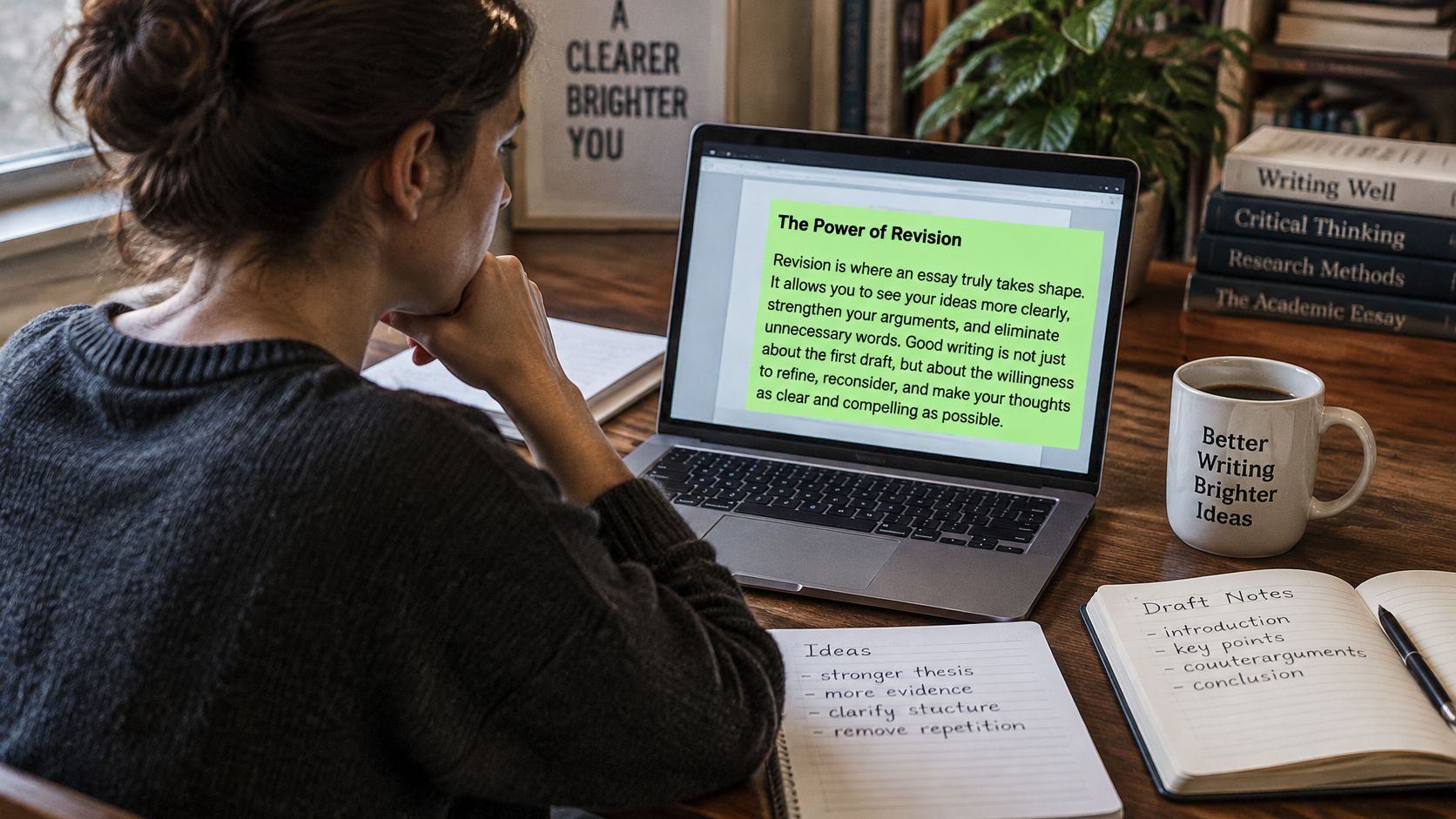
That usually means statistical cues such as perplexity and burstiness. In plain English, detectors often ask whether the text is too predictable, too even, or too clean in ways that resemble model output. That approach works better when the text is untouched. It gets brittle when a person rewrites it.
The brittleness problem
Research summarized in 2026 shows the category’s central weakness clearly. Top tools reached 96-98% precision on clean raw AI text, then dropped to 60-70% precision on adversarial or humanized content. The same research notes that free detectors can hit 10-15%+ false positive rates, with added risk for non-native English writers and short texts under 250-500 words, where accuracy becomes “almost nonexistent” (analysis of AI detector accuracy limits).
Those numbers explain why small edits can have an outsized effect. If a detector keys off repetitive sentence shape, then changing rhythm can break the pattern. If it keys off lexical predictability, then swapping in less common phrasing or mixing sentence lengths may lower the AI score without changing the meaning.
Three common blind spots
- Edited drafts: Once a writer cuts filler, changes examples, and rewrites transitions, the detector may lose the statistical fingerprints it relies on.
- Short submissions: A short response does not give the model enough material for stable pattern analysis.
- Non-native English: Writing that is grammatically correct but structurally repetitive can resemble AI in ways that raise unfair flags.
These are not fringe cases. They are normal cases.
The false positive problem is bigger than it looks
Many users focus on false negatives. They ask, “Can someone beat the detector?” Institutions should worry just as much about false positives. A false positive changes the burden of proof. Suddenly the student or writer has to prove they authored their own work.
That is where the base rate fallacy matters. Even a highly accurate detector can create more wrongful flags than correct accusations when AI misuse is rare. The mistake is not in the arithmetic. It is in confusing a strong benchmark number with a strong real-world accusation tool.
Practical rule: The lower the prevalence of misconduct in your setting, the less a detector-only judgment should carry.
Why “human-sounding” is not the same as human-authored
A detector can be fooled by text that merely avoids obvious machine regularities. That does not prove the text is human-authored. It proves the detector’s lens is narrow.
That distinction matters for policy. If a school or publisher wants to know who wrote something, it needs process evidence. Think drafts, sources, edit history, cited materials, and the writer’s ability to explain choices.
This walkthrough is useful if you want a visual summary of where detector logic breaks down:
What to do instead
A better review process combines signals:
| Signal | What it helps with |
|---|---|
| Detector output | Fast first-pass triage |
| Draft history | Shows progression and revision |
| Source notes | Connects claims to research process |
| Oral follow-up | Confirms understanding and ownership |
The weakness of detectors is not that they never work. It is that they work unevenly, and users often apply them as if they were definitive.
How to Interpret AI Detector Scores Intelligently

Three questions deserve direct answers before any interpretation advice:
Is there a reliable AI text detector? No detector is reliable in the way a calculator is. The strongest tools are consistent screeners for untouched output and inconsistent indicators for everything else. Reliability is conditional on text length, editing depth, and how many tools agree.
Can AI text be reliably detected? Untouched AI text, often yes. Heavily edited or mixed-authorship text, not reliably — the benchmark drops in this review show that plainly.
What level of confidence is reasonable in 2026? Low confidence for short or heavily edited text, moderate confidence only when several tools agree on long untouched text, and never a single score as final proof.
A detector score is a signal, not a sentence. If a tool says “60% AI-generated,” that does not mean 60% of the words came from AI. It means the system sees patterns it associates with machine writing and has medium confidence in that classification.
Read the score as probability, not fact
Most detector interfaces collapse uncertainty into a single number. You need to mentally reopen that uncertainty.
A medium score often means one of several things: lightly edited AI, heavily edited AI, a human draft with statistical overlap, or a text sample too narrow for the model to judge confidently.
Use a simple verification routine
- Run a second detector. If the two tools disagree sharply, the result is unstable.
- Inspect highlighted passages. Some detectors mark specific lines. Review those lines yourself.
- Check the text length. Very short passages are more error-prone.
- Look for process evidence. Drafts, notes, citations, and revision history matter more than a single score.
In our review, disagreement between tools was often more informative than any single score, highlighting why relying on just one metric is risky.
What teachers and editors should ask
Rather than asking “Did AI write this?” ask narrower questions:
- Does the author understand the argument?
- Can they explain the source trail?
- Does the draft show revision over time?
- Do the flagged passages look suspicious on human review?
That shift moves you away from binary thinking and toward evidence-based judgment.
What students and writers should keep
If you regularly use AI assistance, protect yourself with documentation.
- Version history: Save earlier drafts.
- Research notes: Keep links, annotations, and rough outlines.
- Manual revisions: Show where you changed structure or examples.
- Own reasoning: Be ready to explain why the piece says what it says.
Interpreting detector output intelligently means resisting the urge to let a dashboard think for you.
Why edited text belongs in the test
If you are evaluating a draft and want a quick workflow for first-pass screening, this guide to check-if-text-is-ai-written is useful because it frames detector output as one signal among several rather than a final verdict.
Using HumanText.pro for Ethical AI-Assisted Writing
The core problem is now clear. People use AI in workflows, but detectors are strongest on the least realistic case: untouched machine output. That creates a mismatch between how people write and how institutions try to verify writing.

One response is to ban AI entirely. In practice, that does not reflect how students, writers, and teams work. A more realistic approach is ethical AI-assisted writing. Use AI for ideation, organization, summarization, or rough drafting. Then make the final piece your own through revision, fact-checking, and voice-level editing.
What an ethical workflow looks like
- Start with your intent. Know the claim, assignment, or business goal before you generate anything.
- Use AI for low-risk tasks. Outlines, alternative phrasings, counterarguments, and structure are safer than asking for a final submission-ready draft.
- Rewrite for ownership. Add your examples, reasoning, evidence, and style.
- Verify facts manually. AI is not a source.
- Keep artifacts. Save drafts and notes.
That process does two things at once. It improves the writing, and it makes authorship easier to defend.
Where rewriting tools fit
Some users work with rewriting systems after generating a rough draft. Used responsibly, those tools can help remove mechanical phrasing, improve flow, and reduce the rigid cadence that detectors often target.
Among those options, HumanText.pro rewrites AI text to sound natural and human. Its Ultra plan specifically includes preserving the original meaning, eliminating AI phrasing, and delivering 100% unique text. If you want a broader practical walkthrough, this humanizing workflow guide explains the editing logic behind it.
The ethical question is not whether software touched the draft. The ethical question is whether the final submission reflects your own understanding, judgment, and accountability.
When this is appropriate and when it is not
There is a meaningful difference between assistance and deception.
Appropriate uses include polishing your own draft, clarifying awkward AI-generated scaffolding, and rewriting text so it better matches your natural style after you verify the content.
Inappropriate uses include submitting work you do not understand, bypassing explicit classroom rules, or using a rewritten draft to misrepresent authorship. For a deeper argument on exactly this boundary — why a detector score should be treated as a signal rather than fraud-proof evidence of misconduct — the perspective via IamVera.AI pairs well with the Turnitin discussion above.
Practical standard: If you cannot explain the argument, defend the evidence, or reproduce the reasoning without the tool, the workflow has crossed the line.
Advice for different readers
Students
Use AI to brainstorm or organize. Then rebuild the piece around your own reasoning. Keep outlines, source notes, and drafts in case your process is questioned.
Freelance writers
Treat AI as a speed layer, not an authorship substitute. The client cares about accuracy, tone, and originality. Your edit pass should be where value becomes evident.
SEO and content teams
Build policy around review, not panic. A rigid “detector says no” workflow will reject good edited work and still miss advanced AI-assisted output. Editorial standards, sourcing rules, and revision accountability are more durable.
Researchers and academics
Language assistance is not the same as idea generation. If AI helps clarify wording, make sure the argument, citations, and interpretation remain fully defensible.
Frequently Asked Questions
How reliable are AI detectors in 2026?
Reliable enough to screen untouched AI output with meaningful accuracy — the top tools land between 72.8% and 94.1% on raw generations according to the table — but not reliable as stand-alone proof on revised text, where detection rates collapse to single digits. Reliability is best judged per use case, not per brand.
Is there a reliable AI text detector?
For raw output, tools like Originality.ai and Copyleaks are consistent screeners, though only Originality.ai's 3.8% false positive rate is reported in the cited benchmarks. For edited, short, or mixed-authorship text, no detector is reliable enough to act on alone. Any tool claiming otherwise is overstating its own benchmark.
Can AI text be reliably detected after editing?
Usually not. Benchmarks reviewed here show detection rates under 8% once text has been humanized, because editing destroys the statistical patterns detectors depend on. Heavily revised AI-assisted writing is effectively invisible to current tools.
What false positive rate is acceptable?
Below 2% is defensible for anything tied to consequences, since false accusations harm real people. Free tools can exceed 10-15%, with extra risk for non-native English writers and texts under 250-500 words. If a vendor does not publish this number, treat its accuracy claim as incomplete.
Will there ever be a reliable AI detector?
A detector that is reliable across all text types is unlikely, because the signals it measures (perplexity, burstiness) overlap between polished human writing and machine output, and they fade with editing. Ensemble systems paired with process evidence may offer a more grounded path forward, though this remains an opinion rather than a guaranteed forecast.
Should Turnitin scores alone decide academic misconduct cases?
No. The 2026 numbers show strong raw-output detection but a steep drop on humanized text, meaning a score cannot establish who wrote a revised draft. Use it to trigger a review, then evaluate drafts, version history, and the student’s ability to explain the work.
If you use AI in your drafting process and want a cleaner, more natural final draft before submission or publication, Humantext.pro is one option to review. Use it carefully, verify every factual claim yourself, and make sure the finished piece reflects your own reasoning, sources, and voice.
Ready to transform your AI-generated content into natural, human-like writing? Humantext.pro instantly refines your text, ensuring it reads naturally and authentically. Try our free AI humanizer today →
Related Articles
Illuminarty Explained: Accuracy, Limits and How to Verify
Illuminarty explained: what its AI image detector checks, reported accuracy, known limits, and how to verify results before you publish.
AI Content Rewriter Guide: What It Does and How to Choose
Learn what an AI content rewriter changes, how it differs from paraphrasers and humanizers, and how to choose and verify one for natural output.
AI Disclosure Requirements You Must Meet in 2026
AI disclosure requirements under the EU AI Act hit on 2 August 2026. See who labels what, the exceptions, and a workflow you can run now.

