Reescritor de IA indetectable: Crea contenido de IA natural y de alta calidad
Reescritor de IA indetectable: Descubre estrategias para producir contenido original y legible con IA manteniendo un toque humano.
Un reescritor de IA verdaderamente "indetectable" hace más que simplemente cambiar palabras. Funciona transformando fundamentalmente el texto generado por IA en algo que se siente como si hubiera sido escrito por una persona real, permitiendo que pase desapercibido ante las herramientas de detección de IA.
Se trata de cambiar los patrones lingüísticos fundamentales. El reescritor ajusta las estructuras de las oraciones, varía las opciones de palabras y elimina las firmas robóticas que los detectores están entrenados para identificar. El resultado final no es solo aceptable; es natural y auténtico.
Por Qué Importa el Contenido de IA Indetectable

Todos están tratando de aprovechar la IA por su increíble velocidad, pero seamos honestos: el resultado genérico y a menudo torpe es un problema enorme. Los creadores de contenido, estudiantes y especialistas en marketing enfrentan el mismo problema: ¿cómo usar el poder de la IA sin producir texto que se sienta sin vida o sea marcado por algún algoritmo?
Esto es exactamente por lo que hacer que el contenido de IA sea "indetectable" se ha vuelto tan importante.
El problema central es el rastro predecible que dejan los modelos de IA. Los detectores de IA están diseñados para olfatear estas huellas digitales, que usualmente incluyen:
- Estructuras de oraciones uniformes: La IA a menudo cae en un ritmo monótono, con oraciones que tienen aproximadamente la misma longitud y complejidad. Por ejemplo, podría producir: "El SEO es importante. Ayuda a los sitios web a posicionarse. Un buen posicionamiento genera tráfico. El tráfico es bueno para el negocio."
- Baja variación lingüística: Tiene el hábito de reutilizar frases comunes y apegarse a un vocabulario limitado, haciendo que el texto se sienta rancio y repetitivo. A menudo verás las mismas palabras de transición como "Además," "Adicionalmente," y "Por lo tanto" usadas repetidamente.
- Opciones de palabras predecibles: El lenguaje puede carecer del toque sutil o las combinaciones de palabras sorprendentes que un escritor humano podría usar naturalmente, optando por la palabra estadísticamente más común cada vez.
El Problema con la Detección de IA
Ser marcado por un detector de IA puede crear verdaderos dolores de cabeza, desde penalizaciones académicas para estudiantes hasta problemas de SEO para especialistas en marketing. El problema es que estas herramientas están lejos de ser perfectas.
Incluso mientras se vuelven más sofisticadas, estudios recientes muestran que solo identifican correctamente el contenido de IA aproximadamente el 58.3% del tiempo. Ese nivel de inconsistencia crea una tonelada de incertidumbre para cualquiera que trate de integrar la IA en su flujo de trabajo.
Aquí es donde una herramienta de reescritor de IA indetectable de alta calidad se convierte en un cambio radical. No es solo un parafraseador básico que intercambia algunas palabras aquí y allá. Un verdadero humanizador de IA reconstruye el texto desde cero.
Introduce longitudes de oraciones variadas, un vocabulario más rico y el tipo de flujo natural que define la escritura humana. Este proceso no solo te ayuda a evadir la detección; mejora dramáticamente la calidad y legibilidad del contenido. Para ver esto en acción, revisa nuestro análisis profundo sobre cómo hacer que el contenido de IA sea indetectable.
Punto Clave: El objetivo aquí no es solo engañar a un software. Se trata de refinar un borrador tosco de IA en contenido pulido y auténtico que realmente conecte con un lector humano y cumpla con estándares profesionales o académicos. Un reescritor de IA indetectable es el puente entre la eficiencia de la IA y la calidad humana genuina.
Para hacer esto más claro, veamos los problemas específicos que encuentran los detectores de IA y cómo los resuelve un humanizador.
Desafíos de Detección de IA y Soluciones de Humanización
Aquí tienes una descripción rápida de las señales comunes del texto de IA y las técnicas correspondientes utilizadas por reescritores de IA avanzados para hacer el contenido indetectable.
| Patrón Común de Texto de IA (El Problema) | Técnica de Humanización (La Solución) | Ejemplo Práctico |
|---|---|---|
| Comienzos y estructuras de oraciones repetitivos. | Variar los inicios de oraciones y mezclar oraciones simples, complejas y compuestas. | Antes: "El sistema funciona bien. Procesa datos rápido. Es muy eficiente." Después: "Con su rápido procesamiento de datos, el sistema demuestra una eficiencia notable." |
| Opciones de palabras demasiado predecibles (baja perplejidad). | Introducir sinónimos menos comunes y vocabulario más matizado para aumentar la impredecibilidad. | Antes: "El gerente estaba contento con los buenos resultados." Después: "El gerente estaba eufórico por los resultados excepcionales." |
| Longitud de oraciones consistente (baja explosividad). | Alternar entre oraciones cortas y contundentes y otras más largas y descriptivas. | Antes: "El reporte fue terminado. Los datos eran precisos. Las conclusiones eran claras." Después: "El reporte está listo. Con sus datos altamente precisos, las conclusiones que presenta son innegablemente claras." |
| Falta de voz personal o perspectiva única. | Reestructurar el texto para permitir la fácil adición de anécdotas, opiniones y análisis. | Antes: "El servicio al cliente es un aspecto importante del negocio." Después: "Déjame decirte, nada hunde un negocio más rápido que un servicio al cliente terrible—lo he visto pasar." |
Al abordar directamente estos patrones robóticos, la herramienta correcta puede producir contenido que no solo pase los detectores sino que sea genuinamente mejor de leer.
Para hacer que tu contenido generado por IA cruce la línea de meta, tienes que saber contra qué te enfrentas. Los detectores de IA no son mágicos. Son solo máquinas de reconocimiento de patrones altamente sofisticadas, entrenadas con montañas de texto escrito por humanos y máquinas.
No leen por significado ni aprecian tu giro inteligente de frase. En cambio, están cazando pistas estadísticas—las huellas digitales que la IA deja atrás.
Piénsalo así: la escritura humana es maravillosamente desordenada. Está llena de opciones extrañas, estructuras de oraciones caóticas y un ritmo natural. La escritura de IA, por el contrario, a menudo es demasiado perfecta. Es limpia, uniforme y predecible, dejando atrás un rastro estéril que herramientas como Originality.ai y Turnitin están construidas para encontrar.
El Lenguaje Secreto de la Detección de IA: Perplejidad y Explosividad
Dos términos que escucharás mucho son perplejidad y explosividad. Si puedes entender estos dos conceptos, comprenderás exactamente cómo las mejores herramientas humanizadoras hacen su magia.
- Perplejidad es solo una forma elegante de medir qué tan predecible es un texto. Los modelos de IA están entrenados para elegir la siguiente palabra estadísticamente más probable, lo que hace que su escritura sea increíblemente fluida pero también... aburrida y predecible. Los humanos, por otro lado, hacen opciones de palabras raras y sorprendentes todo el tiempo. Esto hace que nuestra escritura sea menos predecible y le da una puntuación de perplejidad más alta.
- Explosividad se trata del ritmo y flujo de tus oraciones. Los humanos naturalmente lo mezclamos. Escribimos oraciones cortas y contundentes. Luego las seguimos con otras largas y serpenteantes. La IA a menudo lucha con esto, produciendo párrafo tras párrafo de oraciones que tienen aproximadamente la misma longitud. Esta falta de variación, o baja "explosividad", es una señal reveladora.
Un detector de IA procesa los números de estas métricas. Si la perplejidad es baja (demasiado predecible) y la explosividad es plana (demasiado uniforme), las alarmas del detector comienzan a sonar.
Un Enfrentamiento del Mundo Real
Veamos cómo se desarrolla esto con un ejemplo real. Aquí hay un párrafo típico directamente de un modelo de IA.
Texto Estándar Generado por IA:
"El marketing digital es un componente crítico para el éxito empresarial en la era moderna. Abarca varias estrategias para alcanzar clientes en plataformas digitales. Estas estrategias incluyen optimización de motores de búsqueda, marketing de contenidos y publicidad en redes sociales. Las empresas deben usar estos métodos para mantenerse competitivas."
¿Sientes ese ritmo robótico? Cada oración es una declaración simple y declarativa de longitud similar. Las opciones de palabras están bien, pero son completamente esperadas. Este es un caso clásico de baja perplejidad y baja explosividad.
Ahora, así es como una persona podría abordar el mismo tema:
Texto Escrito por Humanos:
"En el mercado de hoy, si no eres visible en línea, ¿acaso existes? Esa es la realidad brutal que aborda el marketing digital. Es más que solo una palabra de moda; es una caja de herramientas llena de todo, desde SEO hasta campañas inteligentes en redes sociales que captan la atención. Ignorarlo no es solo una oportunidad perdida—es una forma segura de quedarse atrás."
La diferencia es como el día y la noche. La pregunta de apertura, las longitudes de oraciones variadas y el vocabulario más fuerte ("realidad brutal," "forma segura") crean una energía totalmente diferente. Un detector de IA detectaría la mayor perplejidad y explosividad aquí y probablemente lo marcaría como humano. Puedes encontrar más análisis profundos sobre esto en nuestra guía sobre cómo evadir ZeroGPT y detectores similares.
El Punto Ciego: Aquí está la debilidad en el modelo de detección de IA: son brillantes en matemáticas pero terribles con matices. Esperan perfección robótica. Al agregar intencionalmente de vuelta las imperfecciones y variabilidad muy humanas que están entrenados para encontrar, un reescritor de IA inteligente puede deslizarse justo a través de su punto ciego.
Esto es exactamente por qué las herramientas básicas de parafraseo casi siempre fallan. Solo intercambian algunas palabras pero dejan la estructura de oraciones de IA predecible subyacente completamente intacta. Un verdadero humanizador no solo parafrasea—reconstruye oraciones desde cero para imitar el estilo hermoso, desordenado e impredecible de la escritura humana auténtica.
Aquí tienes un flujo de trabajo práctico y repetible para hacer que el texto generado por IA pase desapercibido. Se trata menos de un botón mágico y más de superponer la velocidad de la IA con el ojo crítico de un humano para obtener algo que sea genuinamente pulido e indetectable.
Todo comienza antes de que siquiera le pidas a la IA que escriba una sola palabra. Basura entra, basura sale—es igual de cierto para la IA.
Comienza con Prompts de IA Más Inteligentes
Los prompts genéricos te dan contenido genérico y fácilmente marcado. Si pides "un párrafo sobre SEO," vas a obtener una definición de libro de texto que grita IA. Tienes que guiarla con más personalidad y especificidad desde el principio.
Aquí hay un prompt mucho mejor:
"Escribe una introducción de 150 palabras para un artículo sobre SEO. Quiero un tono escéptico pero curioso, como si estuvieras hablando con un dueño de pequeña empresa que ha oído del SEO pero piensa que es demasiado complicado. Mezcla oraciones cortas y contundentes con una más larga. Comienza con una pregunta relacionable."
Esto inmediatamente fuerza a la IA a abandonar sus configuraciones predeterminadas—ese tono plano y estructura de oraciones uniforme. El primer borrador ya está a medio camino de sonar humano.
Deja que un Reescritor de IA Haga el Trabajo Pesado
¿Tienes tu primer borrador? Genial. Ahora, pásalo por una herramienta construida específicamente para humanizarlo. Aquí es donde traes una plataforma como HumanText.pro. Olvídate de los parafraseadores básicos que solo intercambian algunas palabras. Un verdadero humanizador de IA reconstruye el texto desde cero, cambiando sus patrones lingüísticos fundamentales.
Es increíblemente sencillo. Pegas tu texto, y la herramienta lo reescribe para imitar el ritmo natural y las opciones de palabras de un escritor humano.
Este paso se trata de eficiencia. Podrías pasar horas tratando de reescribir manualmente cada oración, ajustándola para aumentar lo que los detectores llaman "perplejidad" y "explosividad". Un reescritor avanzado hace eso en segundos.
Veámoslo en acción.
- Texto Original de IA: "La optimización de motores de búsqueda es el proceso de mejorar un sitio web para aumentar su visibilidad para búsquedas relevantes. El objetivo principal del SEO es posicionarse más alto en las páginas de resultados de motores de búsqueda. Esto lleva a más tráfico orgánico."
- Versión Humanizada: "¿Alguna vez te has preguntado cómo algunos sitios web aparecen mágicamente en la parte superior de Google? Eso es SEO en pocas palabras—se trata de afinar tu sitio para captar la atención del motor de búsqueda. El objetivo real es escalar esos rankings, lo que finalmente atrae más visitantes sin pagar por anuncios."
La segunda versión es instantáneamente más conversacional. No se lee como una entrada de diccionario, lo que la hace mucho más atractiva para una persona y mucho menos obvia para un detector.
Agrega tu Toque Humano Irreemplazable
Un reescritor de IA es una bestia, pero no es el paso final. Ese último 10-20% del trabajo es donde tú entras, agregando la capa final de autenticidad que ninguna máquina puede falsificar. Aquí es donde transformas el texto de indetectable a genuinamente genial.
Durante esta pasada manual, enfócate en cosas que una IA no puede simplemente inventar:
- Historias Personales: "Recuerdo luchar con SEO para mi primera tienda en línea, completamente abrumado por las palabras clave hasta que me enfoqué en solo una cosa..."
- Perspectivas o Datos Únicos: "Mientras la mayoría de artículos se enfocan en Google, hemos visto un salto del 35% en tráfico de Bing para nuestros clientes B2B este último trimestre."
- Voz de Marca: Inyecta las frases específicas, humor o punto de vista que hace que tu contenido suene como tú. Por ejemplo, si tu marca es juguetona, cambia "utilizar redes sociales" por "ser inteligente en TikTok."
Esta también es tu oportunidad de verificar cualquier afirmación que haya hecho la IA y asegurar que el mensaje esté perfectamente alineado con tus objetivos. Piénsalo como tomar algo que suena humano y hacerlo sentir humano inyectando experiencia real.
Ejecuta una Verificación Final Contra Múltiples Detectores
El último punto de control es la verificación. No solo cruces los dedos y esperes que pase—pruébalo. Pasar el texto final por un par de detectores de IA te da la confianza de que tu proceso realmente funciona.
Los detectores esencialmente buscan patrones estadísticos predecibles, que es exactamente lo que todo este flujo de trabajo está diseñado para romper.
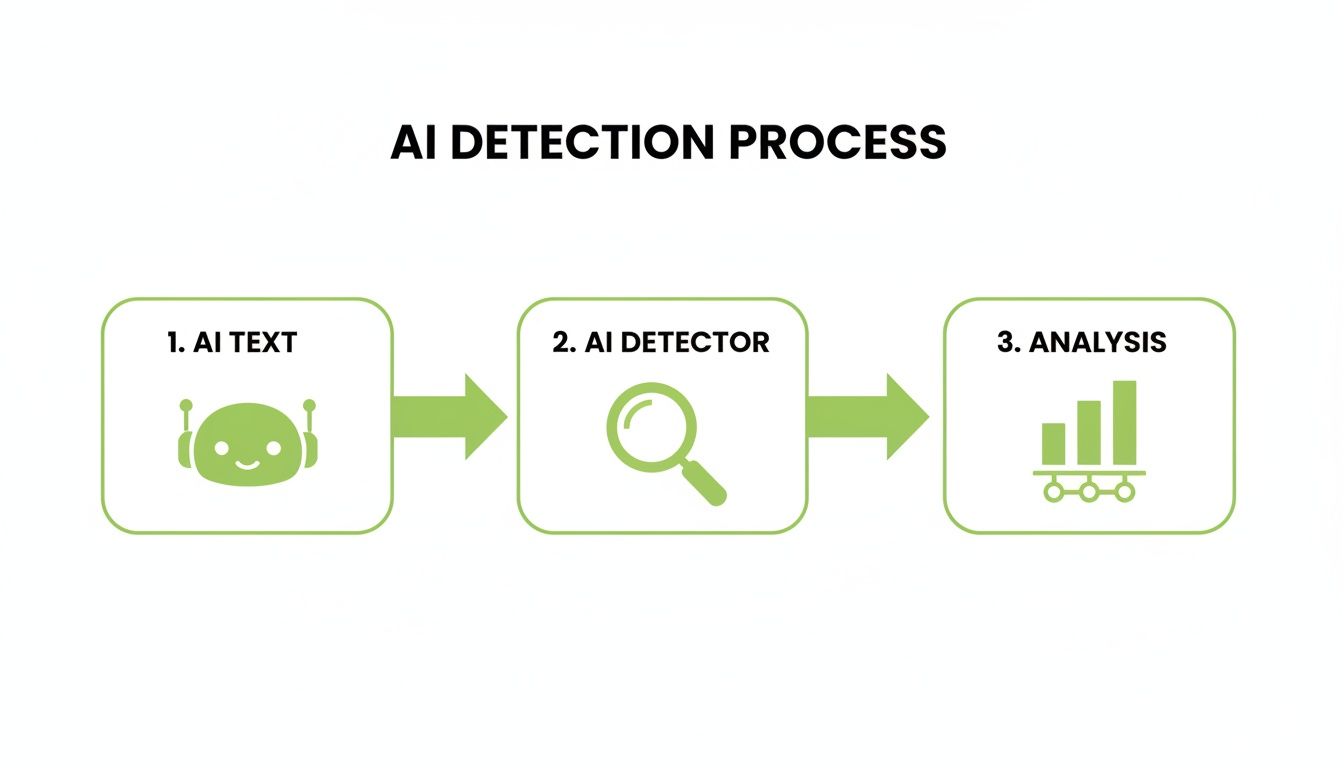
Consejo Profesional: Siempre usa al menos dos herramientas de detección diferentes para tu verificación final. Algunas son mejores captando ciertas huellas de IA que otras. Si tu texto obtiene luz verde de múltiples verificadores respetables, puedes estar confiado de que está listo.
Siguiendo este sistema de cuatro partes—prompting más inteligente, humanización avanzada, una revisión personal y verificación final—obtienes lo mejor de ambos mundos. Obtienes la velocidad de la IA equilibrada con la autenticidad y matiz que solo un humano puede proporcionar. Es un enfoque estructurado que asegura que tu contenido no solo sea seguro de los detectores, sino realmente valioso para tus lectores.
Eligiendo la Herramienta de Reescritura de IA Correcta
Entonces, necesitas humanizar algo de texto de IA. Una búsqueda rápida te arroja un millón de herramientas, desde parafraseadores gratuitos de navegador hasta plataformas pagadas, todas prometiendo el mundo. Pero aquí está la realidad: hay una diferencia enorme entre un simple cambiador de palabras y una herramienta realmente construida para crear un resultado de reescritor de IA indetectable.
Conocer esa diferencia es crítico si quieres que tu contenido genuinamente pase por escritura humana.
Un parafraseador básico, como muchas de las opciones gratuitas por ahí, solo patina en la superficie. Es esencialmente un tesauro elegante, intercambiando palabras y reorganizando partes de oraciones. Aunque eso podría estar bien para un parafraseo rápido, deja el ritmo robótico y la estructura predecible del texto de IA original completamente intactos. Los detectores de IA modernos marcarán eso en un segundo.
Un humanizador de IA avanzado, por otro lado, hace un desglose y reconstrucción completos. Se mete en el ADN lingüístico del texto, reestructurándolo desde cero para imitar patrones de escritura humana reales.
Más Allá del Simple Intercambio de Sinónimos
La salsa secreta está en las características que atacan directamente lo que los detectores de IA están entrenados para encontrar. Un humanizador poderoso no solo cambia palabras; altera fundamentalmente la predictibilidad y flujo del texto. Antes de decidirte por una herramienta, ayuda entender de qué son capaces las diversas herramientas generadoras de texto de IA.
Necesitas una herramienta que pueda manipular estas dos métricas clave:
- Perplejidad: Este es solo un término elegante para impredecibilidad. La escritura humana es naturalmente un poco caótica y llena de opciones de palabras inesperadas. La escritura de IA es lo opuesto—es estadísticamente segura y aburrida. Un buen humanizador inyecta vocabulario más variado para elevar esta puntuación.
- Explosividad: Esto mide la variación en longitud y estructura de oraciones. Los humanos naturalmente mezclamos oraciones cortas y contundentes con otras más largas y descriptivas. Un verdadero humanizador romperá la longitud de oración monótona y uniforme que grita "¡generado por IA!"
Perspectiva Accionable: Al probar un nuevo reescritor de IA, pasa un párrafo corto y robótico de IA a través de él. Luego, analiza el resultado tú mismo. ¿Solo cambió "importante" por "significativo," o reformuló completamente la oración, cambió su longitud y le dio una cadencia más natural? La segunda opción es lo que estás buscando.
Privacidad de Datos y Calidad del Modelo de Lenguaje
Otros dos factores son no negociables: la tecnología detrás de la herramienta y la política de privacidad de la empresa. La calidad del modelo de lenguaje en el que está construida la herramienta tiene un impacto directo en la calidad de tu texto final. Una herramienta entrenada en un conjunto de datos masivo y diverso de escritura humana real siempre va a producir contenido que suene más natural.
Igual de importante es qué pasa con tus datos. Piénsalo: estás pegando tu ensayo, el artículo de un cliente o un reporte confidencial en una caja de texto en línea. ¿A dónde va? Una plataforma confiable tendrá una política de privacidad cristalina que declare explícitamente que tu contenido no se almacena, usa para entrenar su IA o se comparte con nadie más. Para cualquiera trabajando con información sensible, esto es decisivo.
Comparando tus Opciones: Un Desglose Claro
Para hacer la elección más fácil, pongamos un parafraseador estándar lado a lado con un humanizador de IA especializado construido para indetectabilidad. Las diferencias son bastante marcadas.
Si quieres profundizar en plataformas específicas, nuestra guía sobre el mejor convertidor de texto de IA a humano es un gran siguiente paso.
Comparación de Características: Parafraseador Básico vs. Humanizador de IA Avanzado
Cuando miras las funciones principales, puedes ver por qué uno consistentemente vence a los detectores mientras el otro se queda corto.
| Característica | Parafraseador Básico (ej., Quillbot) | Humanizador de IA Avanzado (ej., HumanText.pro) |
|---|---|---|
| Función Principal | Intercambia sinónimos y reordena cláusulas. | Re-ingenieriza estructura de oraciones, perplejidad y explosividad. |
| Evasión de Detección | A menudo falla contra detectores modernos como Turnitin o GPTZero. | Alta tasa de éxito (hasta 99%) evadiendo detectores de primera línea. |
| Calidad de Resultado | Puede sonar incómodo o preservar el tono robótico original. | Produce texto natural y fluido que se lee como si fuera escrito por un humano. |
| Privacidad de Datos | Las políticas varían; algunos pueden usar tus datos para entrenar sus modelos. | Prioriza la privacidad del usuario con políticas claras contra almacenar o compartir contenido. |
| Caso de Uso | Parafraseo rápido para tareas no críticas. | Crear contenido indetectable para ensayos, SEO y escritura profesional. |
En última instancia, elegir la herramienta correcta se reduce a lo que necesitas lograr.
Si eres un estudiante preocupado por un escaneo de Turnitin o un especialista en marketing de contenido tratando de posicionar artículos de alta calidad, invertir en una herramienta especializada de reescritor de IA indetectable no es solo una buena idea—es esencial. Es la única forma de transformar confiablemente un borrador genérico de IA en algo genuinamente auténtico y efectivo.
Consejos Avanzados para Contenido Verdaderamente Auténtico
Usar un gran reescritor de IA como HumanText.pro te lleva 90% del camino hacia contenido indetectable. Hace el trabajo pesado, arreglando las estructuras de oraciones robóticas y las opciones de palabras predecibles. ¿Pero ese último 10%? Ese es tu trabajo.
Aquí es donde cambias de solo evitar la detección a crear contenido que genuinamente conecte con las personas. Se trata de fusionar la velocidad de la IA con tu experiencia humana irreemplazable.
Agrega tus Propios Datos y Perspectivas
Los modelos de IA están entrenados en el internet público, lo que significa que son maestros regurgitando conocimiento común. La forma más rápida de hacer tu contenido único es agregar algo que la IA nunca podría saber: tus propios datos.
Piensa en a qué tienes acceso. Resultados de estudios de caso internos, una estadística sorprendente de un reporte de industria de nicho, o incluso datos de una encuesta rápida que hiciste en LinkedIn. Estos puntos de datos únicos son oro puro.
Por ejemplo, una IA podría escupir algo genérico como:
"Muchas empresas encuentran el SEO valioso para el crecimiento."
Pero puedes transformarlo con una perspectiva específica y propia:
"El último trimestre, nuestros clientes de e-commerce vieron un aumento del 42% en leads orgánicos después de que enfocamos sus blogs exclusivamente en palabras clave de cola larga."
Ese número concreto instantáneamente agrega una capa de credibilidad que los detectores de IA no están construidos para encontrar y que tus lectores recordarán.
Teje Historias Personales y Anécdotas
Los hechos son olvidables. Las historias se quedan. Esta es probablemente la herramienta más poderosa en tu kit de humanización porque la IA no tiene experiencias personales, errores embarazosos o victorias ganadas con esfuerzo. Tú sí.
Una anécdota corta y relevante crea un gancho inmediato y marca el contenido como únicamente tuyo.
Para el blog de un especialista en marketing: En lugar de solo listar pasos, podrías comenzar con, "Probé esta táctica exacta para un cliente pequeño el mes pasado, y honestamente, la primera semana fue un fracaso total. Esto es lo que aprendí de ese fallo..."
Para el ensayo de un estudiante: Un estudiante escribiendo sobre teoría económica podría agregar una historia personal rápida sobre cómo la inflación afectó el presupuesto de comestibles de su familia, haciendo que un concepto abstracto se sienta real y tangible.
Este tipo de vulnerabilidad y experiencia de primera mano construye confianza como nada más. Es una capa auténtica que ningún algoritmo puede esperar replicar.
Clava la Cadencia con un Pulido Manual Final
Después de que la IA haya hecho su trabajo, necesitas hacer una cosa simple: leer toda la pieza en voz alta. Este truco clásico de edición es la forma más rápida de captar cualquier incomodidad o ritmos no naturales que la máquina perdió.
Escucha el flujo de las palabras. ¿Suena como algo que una persona real realmente diría?
La Lista de Verificación del Toque Humano: Antes de publicar, haz una pasada final rápida con estas preguntas:
- ¿Esto suena como yo? Si no, ajusta el tono y la elección de palabras.
- ¿Hay una perspectiva única aquí? Si todo es genérico, agrega una opinión contraria o una perspectiva personal.
- ¿Agregué algo valioso que la IA no pudo? Asegúrate de haber incluido un punto de datos específico, una historia personal o una perspectiva única.
Esta revisión manual final es donde perfeccionas la cadencia. Rompe una oración larga en dos cortas y contundentes. Combina un par de oraciones simples para crear un pensamiento más sofisticado. Este último toque de pulido le da al texto un ritmo natural y humano que es tanto atractivo para los lectores como invisible para los detectores.
Preguntas Frecuentes Sobre Reescritores de IA
Una vez que comienzas a usar IA para ayudar con tu escritura, inevitablemente surgen algunas preguntas importantes. Descifrar el lado práctico y ético de las cosas es crucial para usar herramientas como plataformas de reescritor de IA indetectable con confianza. Aclaremos algunas de las preguntas más comunes que vemos.
¿Es Ético Usar un Reescritor de IA para Evadir la Detección?
Honestamente, todo se reduce a tu intención.
Si eres estudiante, enviar texto generado por IA como tuyo es deshonestidad académica, simple y llanamente. En ese contexto, estas herramientas solo deberían usarse para refinar y mejorar tus propias ideas o borradores asistidos por IA—no para hacer pasar el trabajo de la máquina como tuyo.
Pero en entornos profesionales como marketing o creación de contenido, las reglas son diferentes. Un reescritor de IA es solo otra herramienta de eficiencia, no diferente de un corrector gramatical o un analizador de titulares. El objetivo es producir contenido de primera calidad y legible que se ajuste a la voz de tu marca. La única vez que cruzarías una línea ética es si estuvieras tergiversando la autoría para engañar a alguien o eludir reglas de la industria.
Perspectiva Accionable: Para profesionales, una buena regla general es la prueba de "valor agregado". Pregúntate: "¿Usé esta herramienta para crear una pieza de contenido mejor y más útil para mi audiencia, o solo para tomar atajos?" Si has agregado perspectivas únicas, datos y tu propia experiencia, la estás usando éticamente.
¿Pueden los Detectores de IA Ser Alguna Vez 100 Por Ciento Precisos?
Es extremadamente improbable. Los detectores de IA funcionan detectando patrones estadísticos comunes en texto generado por máquinas. Pero mientras los modelos de IA se vuelven más inteligentes, se vuelven aterradoramente buenos imitando la escritura humana—rarezas, errores y todo. Esto crea un juego perpetuo de gato y ratón donde la tecnología de detección y la tecnología de humanización siempre están tratando de superarse mutuamente.
Debido a esto, un detector verdaderamente infalible es un sueño casi imposible. Siempre tendrás el riesgo de falsos positivos (marcar escritura humana como IA) y falsos negativos (dejar que texto de IA se deslice). Mientras los humanizadores se vuelven mejores reflejando la hermosa complejidad del lenguaje humano, las señales estadísticas que los detectores cazan se vuelven más débiles y mucho menos confiables.
¿Usar un Reescritor de IA Dañará el SEO de mi Sitio Web?
No, no si lo haces bien. De hecho, puede realmente ayudar.
A Google no le importa si un humano o una IA escribió tu contenido; solo le importa si el contenido es de alta calidad y valioso para el lector. El mayor riesgo de SEO con el resultado crudo de IA es que a menudo es genérico, repetitivo y carece completamente de experiencia del mundo real.
Cuando usas un reescritor de IA de calidad para hacer tu texto más atractivo, natural y único, estás mejorando directamente su calidad. Esto ayuda a que tu contenido se alinee con las directrices E-E-A-T de Google (Experiencia, Expertise, Autoridad y Confiabilidad). El truco es asegurar que la pieza final sea genuinamente útil para una persona, no solo ajustada para engañar a un algoritmo.
¿Cuál es la Diferencia Real Entre un Parafraseador y un Humanizador de IA?
Esta es una distinción crítica, y es donde la mayoría de la gente se tropieza. Un parafraseador básico es una herramienta superficial. Solo intercambia sinónimos y reorganiza estructuras de oraciones. Por eso a menudo falla contra detectores modernos—no cambia el ritmo predecible y robótico del texto de IA original.
Un humanizador de IA avanzado hace algo mucho más profundo. Re-ingenieriza fundamentalmente el ADN lingüístico del texto para que se lea como si un humano lo hubiera escrito.
- Aumenta la perplejidad usando opciones de palabras menos predecibles.
- Mejora la explosividad variando la longitud y estructura de las oraciones.
No solo está cambiando las palabras; está cambiando el estilo y flujo mismo para hacer el contenido verdaderamente indetectable y mucho más convincente para tu audiencia.
¿Listo para ver lo que un verdadero humanizador de IA puede hacer? Toma tus borradores de IA y conviértelos en contenido indetectable y de alta calidad que conecte con los lectores. Prueba HumanText.pro y siente la diferencia. Comienza gratis y asegúrate de que tu escritura siempre suene auténticamente humana.
¿Listo para transformar tu contenido generado por IA en una escritura natural y humana? Humantext.pro refina instantáneamente tu texto, asegurando que se lea de forma natural y auténtica. Prueba nuestro humanizador de IA gratis hoy →
Artículos Relacionados

AI Face Search Explained: Verify Identity and Stay Safe
Understand how AI face search works, including embeddings, accuracy, and legal issues. Learn to use these tools for personal safety and verify identity online.

Reverse Face Search: A Verification Safety Guide
Learn how reverse face search works, when to use it for safety, and how to pair it with AI image checks to verify online contacts and reused photos.

Face ID Search Explained: How It Works and How to Verify
Learn how face ID search works, why it differs from reverse image search, and how to verify identities and photos safely with practical checks and tools.

