Cómo usar IA para reescribir texto y crear contenido impecable
Aprende cómo usar IA para reescribir texto con esta guía completa. Domina los prompts, humaniza tu contenido y evita la detección de IA para obtener resultados auténticos.
Usar IA para reescribir texto es mucho más que un atajo: es una forma poderosa de mejorar tu claridad, cambiar tu tono y superar el bloqueo del escritor. Piensa en ello como un compañero creativo que puede reformular instantáneamente tus ideas, haciéndolas más sólidas y convincentes para cualquier audiencia que intentes alcanzar.
Por qué la IA está cambiando la forma en que reescribimos contenido
Todo el panorama de la creación de contenido está cambiando bajo nuestros pies. Lo que solía llevar horas de reformulación manual minuciosa ahora se puede hacer en segundos. Pero esto no se trata solo de moverse más rápido; se trata de desbloquear nuevos niveles de eficiencia y creatividad para todos, desde estudiantes puliendo un ensayo hasta profesionales del marketing generando campañas.
Esta tecnología ha evolucionado afortunadamente mucho más allá de los torpes "generadores de artículos" del pasado, que generalmente solo producían oraciones incómodas y sin sentido. Los reescritores de IA modernos realmente entienden el contexto, los matices y la intención. Se han convertido en un asistente genuino en el proceso de escritura.
El aumento en la adopción de IA
Los números cuentan la historia. Para 2025, se estima que el 90% de los profesionales del marketing de contenidos planean incorporar IA en su flujo de trabajo, un enorme salto desde el 64.7% en 2023. Esto no es solo publicidad; está impulsado por resultados reales.
Las organizaciones que han adoptado esta tecnología reportan crear contenido 59% más rápido y producir 77% más de él. Está claro que la IA se está haciendo cargo del trabajo repetitivo de redacción, liberando a los escritores humanos para que se centren en el panorama general: estrategia, creatividad y refinamiento.
Más que una simple herramienta de reformulación
Un reescritor de IA es una herramienta versátil que hace mucho más que simplemente cambiar palabras. Puede ayudarte a:
- Superar bloqueos creativos: Convierte un esquema desordenado o algunos puntos clave en un primer borrador coherente con el que realmente puedas trabajar.
- Adaptar tono y estilo: Transforma sin esfuerzo un informe formal y rígido en una publicación de blog relajada, o simplifica un párrafo académico complejo para una audiencia general.
- Mejorar la claridad: Desenreda oraciones enrevesadas y elimina la jerga, haciendo tu mensaje cristalino y fácil de entender.
- Escalar tu contenido: Genera múltiples versiones únicas de un artículo para diferentes plataformas sin tener que empezar desde cero cada vez.
La verdadera magia de los reescritores de IA es usarlos como punto de partida, no como línea de meta. Te dan una base sólida que un humano puede pulir, agregando la perspectiva única y el toque personal que una máquina simplemente no puede replicar.
Este cambio está remodelando fundamentalmente las estrategias de contenido en todos los ámbitos. Para profundizar más, un seminario web destaca un flujo de trabajo de IA para que los profesionales del marketing creen contenido en lotes, mostrando cuán integradas se están volviendo estas herramientas.
Por supuesto, el paso final y crucial siempre es "humanizar" el resultado de la IA. Aquí es donde entras tú, asegurándote de que el texto sea auténtico, atractivo y listo para tu audiencia.
Cómo preparar tu texto para un reescritor de IA
El viejo dicho "basura entra, basura sale" nunca ha sido más cierto que con la IA. La calidad de tu texto reescrito depende casi por completo de la calidad de lo que alimentas al modelo.
Piénsalo de esta manera: no puedes simplemente tirar un montón de ingredientes en el mostrador y esperar una comida con estrella Michelin. Tienes que prepararlos. Limpiar y estructurar tu texto fuente es lo más importante que puedes hacer para obtener un resultado fantástico de cualquier reescritor de IA.
Simplemente pegar un muro gigante de texto y presionar "reescribir" es una forma segura de obtener un desastre soso, genérico o simplemente confuso. Necesitas darle a la IA algunas barreras con las que trabajar. El trabajo de preparación adecuado cierra la brecha entre lo que está en tu cabeza y cómo la máquina lo interpreta.
No alimentes a la IA con una novela
Uno de los mayores errores que comete la gente es intentar meter demasiada información en la IA de una vez. Si estás trabajando con un artículo extenso o un informe denso, no copies y pegues todo.
En su lugar, divídelo en fragmentos más pequeños y lógicos. He descubierto que el punto ideal suele estar alrededor de 500-800 palabras por sección. Esto permite que la IA realmente se centre en la idea central de ese fragmento específico, lo que lleva a una reescritura mucho más detallada y coherente. También es una excelente manera de aprender cómo escribir publicaciones de blog más rápido al enfocar tus esfuerzos de reescritura en una sección a la vez.
Limpia la jerga y la ambigüedad
Los modelos de IA son increíblemente inteligentes, pero no son lectores de mentes. Pueden tropezar fácilmente con lenguaje vago o jerga hiper-específica de la industria que no han visto un millón de veces. Antes de enviar tu texto, haz una revisión rápida para simplificar y aclarar.
- Define acrónimos: Escribe cualquier acrónimo en su primera aparición. No asumas que la IA sabe que "QBR" significa "Revisión de Negocio Trimestral".
- Corrige oraciones torpes: Si una oración te resulta enrevesada, definitivamente confundirá a la IA. Reformúlala en una declaración más directa.
- Reemplaza la jerga: Si puedes, reemplaza términos de nicho con algo más simple. La excepción, por supuesto, es si esa jerga es esencial para el tema y tu audiencia objetivo la entiende.
Esta limpieza rápida elimina obstáculos mentales para la IA, permitiéndole concentrar su energía en el trabajo creativo de reestructurar y reformular tu mensaje.
El punto del preprocesamiento no es simplificar demasiado tu contenido. Es darle a la IA una hoja de ruta cristalina para que pueda reescribir tus ideas con precisión.
Dale a la IA un empujón con notas simples
A veces, el texto original no contiene todo el contexto que la IA necesita. Aquí es donde puedes intervenir y proporcionar un poco de dirección usando notas simples entre corchetes. Es una técnica revolucionaria para dirigir el tono, estilo y enfoque del resultado final.
Por ejemplo, si tienes un párrafo realmente denso y técnico, puedes agregar algunas instrucciones directamente en el texto que estás a punto de pegar.
[Reescribe esto para que suene más conversacional y amigable, como una publicación de blog][Explica este concepto usando una analogía simple, tal vez algo sobre hornear un pastel][Enfócate en los principales beneficios para un profesional del marketing independiente]
Estas pequeñas notas actúan como barreras. Le dicen a la IA no solo qué reescribir, sino cómo quieres que lo reescriba. Este simple paso puede transformar el proceso de una reescritura ciega a un esfuerzo colaborativo poderoso que te da exactamente el resultado que esperabas.
Crear prompts que entregan reescrituras perfectas
Simplemente decirle a una IA que "reescriba esto" es como pedirle a un chef que "haga algo de comida". Obtendrás algo, pero probablemente no será lo que tenías en mente. La verdadera magia ocurre cuando le das al modelo instrucciones específicas y detalladas. Dominar el arte del prompt es lo que separa el resultado genérico y robótico del contenido perfectamente ajustado.
Piensa en tu prompt como una receta detallada. Cuanto más específico seas sobre los ingredientes (tono, estilo, palabras clave) y el plato final (formato, longitud), mejor será el resultado. Las solicitudes vagas conducen a texto soso e insípido. Un prompt bien elaborado, por otro lado, es un conjunto claro de direcciones que la IA puede seguir con precisión.
Pero antes de comenzar a escribir el prompt, necesitas preparar tu texto de entrada. Un poco de trabajo inicial aquí marca una diferencia masiva en la calidad final.
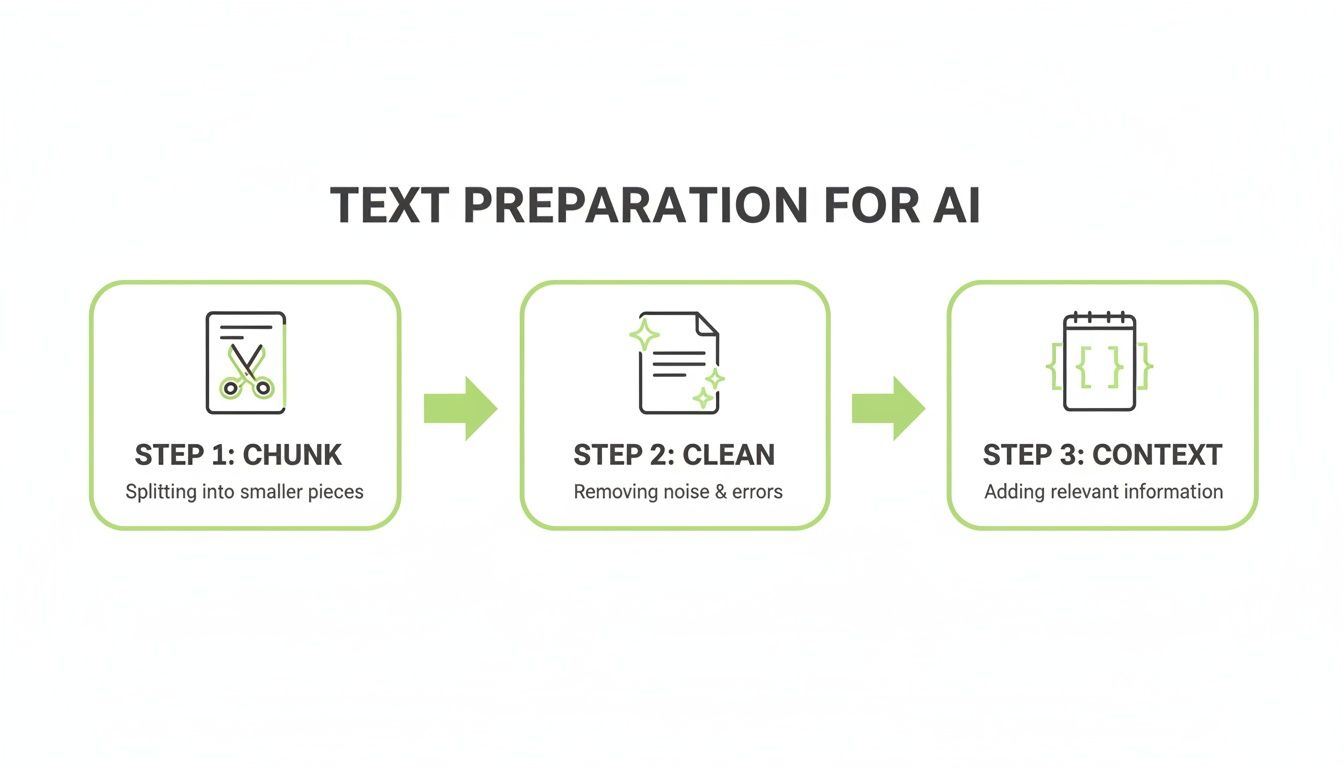
Este flujo de trabajo simple (fragmentar documentos grandes, limpiar lenguaje desordenado y agregar contexto vital) garantiza que la IA no esté desperdiciando energía tratando de descifrar tu entrada. Puede concentrarse completamente en ejecutar tus instrucciones.
El marco PTFC: tu arma secreta para los prompts
He descubierto que una forma simple pero increíblemente efectiva de construir prompts poderosos es el marco Persona, Tarea, Formato y Restricciones (PTFC). En lugar de solo pedir una reescritura, guías a la IA definiendo estos cuatro elementos clave. Es una forma estructurada de asegurarte de no olvidar ninguna instrucción importante.
- Persona: Dile a la IA quién debería ser. ¿Un ingenioso gestor de redes sociales? ¿Un investigador académico formal? ¿Un blogger tecnológico experimentado escribiendo para principiantes?
- Tarea: Establece el objetivo principal claramente. ¿Estás tratando de simplificar un tema complejo, cambiar el tono de profesional a casual, o tal vez optimizar un párrafo para SEO?
- Formato: Especifica exactamente cómo quieres que se estructure el resultado. ¿Necesitas párrafos cortos, viñetas, listas numeradas o una estructura de encabezados específica?
- Restricciones: Establece los límites. Aquí es donde le dices a la IA qué no hacer. Por ejemplo, puedes decirle que evite la jerga técnica, la voz pasiva o palabras de moda específicas.
Este enfoque metódico elimina las conjeturas de la ecuación. Te da una forma confiable de obtener resultados consistentes y de alta calidad cada vez.
Poniendo el marco en práctica
Veamos cómo esto transforma una solicitud vaga en un comando preciso. Imagina que tienes un párrafo denso de algún informe corporativo de sostenibilidad que necesitas hacer interesante.
Un prompt básico:Reescribe este texto.
Esto probablemente solo cambiará algunas palabras. Es perezoso y obtiene resultados perezosos.
Un prompt potenciado por PTFC:Actúa como un blogger tecnológico experimentado escribiendo para una audiencia de millennials conscientes del medio ambiente (Persona). Tu tarea es reescribir este extracto de informe denso en una sección de publicación de blog atractiva y fácil de entender que destaque los logros clave (Tarea). Estructura el resultado con párrafos cortos y escaneables y usa una lista con viñetas para las estadísticas (Formato). Críticamente, debes evitar toda la jerga corporativa y mantener un tono entusiasta y optimista en todo momento (Restricciones).
Al definir la persona, tarea, formato y restricciones, no solo estás pidiendo a la IA que reformule palabras, estás dirigiéndola para crear una pieza de contenido completamente nueva adaptada a una audiencia y propósito específicos.
La tabla a continuación desglosa cómo cada pequeña adición a un prompt cambia dramáticamente el resultado de la IA.
Impacto de los elementos del prompt en las reescrituras de IA
| Elemento del prompt | Frase de ejemplo | Efecto en el texto de salida |
|---|---|---|
| Persona | Actúa como un asesor financiero... |
Adopta un tono formal, confiable y basado en datos. Usa terminología específica de la industria pero clara. |
| Audiencia | ...escribiendo para estudiantes universitarios. |
Simplifica ideas complejas, usa analogías relacionables y mantiene los párrafos cortos y atractivos. |
| Tono | Escribe en un tono urgente pero tranquilizador. |
Usa verbos activos y lenguaje directo, pero también incluye frases que generan confianza y calma. |
| Formato | Usa una lista con viñetas para los beneficios clave. |
Estructura la información especificada en un formato de lista escaneable y fácil de digerir. |
| Restricción | Evita usar la voz pasiva. |
Reescribe oraciones para que sean activas y directas, haciendo el texto más poderoso y fácil de leer. |
| Objetivo | El objetivo es persuadir al lector para que se registre. |
Se enfoca en beneficios sobre características e incluye una llamada a la acción sutil o directa. |
Como puedes ver, cada elemento actúa como una palanca, dándote un control preciso sobre el texto final. Combinarlos todos usando un marco como PTFC es cómo obtienes resultados de nivel profesional de cualquier modelo de IA.
Humanizar el texto de IA para que suene auténtico
Usar IA para reescribir texto te da un primer borrador sólido, pero rara vez es el producto terminado. La parte más crítica del proceso es ese último paso: transformar el resultado limpio y técnicamente correcto en algo que se siente genuinamente humano.
Sin esta capa final de pulido, tu contenido puede caer en saco roto. Puede parecer robótico, poco convincente o simplemente aburrido, perdiendo completamente la oportunidad de conectar con tu lector.
Detectar las huellas robóticas
Entonces, ¿cuáles son los signos reveladores de la escritura de IA? Antes de poder arreglarlo, tienes que saber qué buscar. He visto estos patrones aparecer una y otra vez.
- Ritmo monótono: Cada oración tiene aproximadamente la misma longitud. Crea un zumbido predecible e hipnótico que adormece a los lectores.
- Tono perfectamente uniforme: La escritura es inquietantemente consistente, carece de los altos y bajos naturales de la expresión humana real. Se siente estéril.
- Falta de voz personal: No hay historias personales, opiniones o giros de frase únicos. Es escritura sin alma.
- Elección de palabras demasiado genérica: La IA adora palabras seguras y sosas como "utilizar", "con el fin de" y "además" en lugar de un lenguaje más vívido y descriptivo.
Una vez que aprendas a detectar estas huellas robóticas, estarás a mitad de camino. El siguiente paso es borrarlas activamente y dejar tus propias huellas únicas.
Una lista de verificación práctica para el refinamiento manual
Muy bien, tienes tu borrador reescrito por IA. Es hora de arremangarse y hacerlo tuyo. Esto no se trata de empezar desde cero; se trata de hacer ediciones específicas que inyecten personalidad y estilo.
Comienza con la longitud de las oraciones. Es una de las correcciones más fáciles y efectivas. Sigue una oración larga y detallada con una corta y contundente. Simple, ¿verdad? Pero instantáneamente hace que tu escritura sea más dinámica.
Luego, busca esas palabras genéricas y cámbialas por alternativas más poderosas. En lugar de "bueno", prueba "excepcional" o "notable". En lugar de "caminó", ¿qué tal "paseó" o "marchó"? Estos pequeños ajustes añaden sabor y precisión. Y no tengas miedo de tejer una historia personal corta para construir una conexión real.
El objetivo es cerrar la brecha entre la eficiencia de la IA y la creatividad humana. No solo estás editando para la gramática; estás editando para el alma. Estás asegurándote de que la pieza final tenga un punto de vista genuino.
Automatizar la autenticidad con herramientas especializadas
Si bien la edición manual es esencial para agregar ese toque final y matizado, las herramientas especializadas pueden hacer el trabajo pesado de hacer que el texto de IA suene más natural desde el principio. Aquí es donde entra en juego un humanizador de IA dedicado como HumanText.pro.
Estas herramientas están construidas específicamente para este paso final y crítico. Analizan el texto en busca de patrones comunes de IA y luego usan modelos avanzados para reestructurar oraciones, variar el vocabulario y ajustar el flujo para imitar la escritura humana natural. Es mucho más sofisticado que una simple paráfrasis.
Todo el punto es evitar los detectores de IA como GPTZero y Turnitin haciendo que el contenido sea fundamentalmente más parecido al humano en su estructura y estilo. Para una mirada más profunda, consulta nuestra guía detallada sobre cómo humanizar el texto generado por IA y dominar las técnicas.
Este se ha convertido en un mercado de rápido movimiento. Para 2025, se estima que el 73% de los equipos de marketing estaban usando IA generativa, creando una demanda masiva de herramientas que pudieran hacer que el resultado sonara auténtico. Esto inició una carrera armamentista entre herramientas de humanización y detectores de IA. Proveedores como humantext.pro ahora entrenan sus modelos con más de 1.2 millones de muestras de escritura humana y afirman tasas de evasión tan altas como 99%. Puedes encontrar más información sobre estas estadísticas de IA generativa en mend.io.
El mejor flujo de trabajo que he encontrado combina ambos enfoques. Usa una herramienta poderosa para el barrido inicial de humanización, luego haz tu propia revisión manual para agregar esos toques personales finales. Este proceso de dos pasos te da la combinación perfecta de eficiencia y autenticidad.
Directrices éticas para la escritura asistida por IA
Usar IA para reescribir texto es un cambio de juego para la eficiencia, pero también nos lanza a una zona gris de la ética. La línea entre una herramienta inteligente y un atajo deshonesto es sorprendentemente delgada, lo que significa que tenemos que ser deliberados al usarla con integridad.
Esto no se trata solo de mantenerse fuera de problemas. Se trata de ser confiable y respetar el arduo trabajo que implica crear ideas originales.
Piénsalo de esta manera: la IA es tu asistente, no el autor. Siempre estás en el asiento del conductor, y eres completamente responsable del producto final: su precisión, su originalidad y su impacto en tu lector. Nunca, nunca copies, pegues y publiques.
Mantener la integridad académica y profesional
El mayor escollo ético con la reescritura de IA es el plagio. Es una trampa engañosa porque incluso si la IA cambia cada palabra, todavía estás usando las ideas centrales de otra persona. Presentar esas ideas como propias, sin dar crédito donde se debe, es fundamentalmente deshonesto.
Para mantener tu trabajo limpio y ético, haz que estas prácticas sean innegociables:
- Cita la fuente original: Si tu IA está parafraseando conceptos de un artículo, libro o estudio específico, debes citar absolutamente esa fuente original. La IA es una herramienta, como un diccionario de sinónimos; no es el origen de la idea.
- Verifica todos los hechos: Los modelos de IA son notorios por las "alucinaciones": pueden inventar estadísticas, citar mal fuentes o simplemente equivocarse. Siempre verifica cada nombre, número y afirmación clave contra una fuente confiable antes de publicar.
- Preserva la intención original: Reescribir no debería significar torcer el mensaje del autor original para que se ajuste a tu propia narrativa. Eso es una violación ética grave. Tu objetivo es aclarar o reformular, no tergiversar.
El punto es usar la IA para mejorar tu propio trabajo, no para hacer pasar el trabajo intelectual de otra persona como tuyo. Trata el resultado de la IA como un primer borrador aproximado que necesita tu cerebro y tu ojo crítico para convertirse en final.
Consideraciones de privacidad y seguridad de datos
Lo que sea que pegues en un modelo de IA, debes asumir que alguien más podría verlo. Muchas herramientas gratuitas usan tus entradas para entrenar sus sistemas. Este es un riesgo de privacidad masivo si estás trabajando con algo sensible.
Imagina pegar una estrategia comercial confidencial, los datos privados de un cliente o tu investigación no publicada en una herramienta pública. Esa información podría almacenarse, revisarse o incluso aparecer en el texto generado por IA de otra persona.
Esta es exactamente la razón por la que elegir una herramienta segura es tan crítico. Servicios como humantext.pro están construidos con un enfoque de privacidad primero. Tu contenido se procesa sin almacenarse ni usarse para entrenar sus modelos, lo cual es esencial para mantener la confidencialidad.
Para más información sobre esto, nuestra guía sobre cómo hacer que el contenido de IA sea indetectable profundiza en estrategias para mantener la autenticidad y seguridad.
En una nota más amplia, el aumento de la IA está remodelando el mercado laboral. Una estimación del Departamento de Trabajo para 2025 sugirió que alrededor de 135,000 trabajos de contenido de nivel de entrada fueron eliminados o fundamentalmente cambiados por la automatización. Este cambio también ha creado nuevos roles como el "editor asistido por IA", un profesional que combina experiencia profunda en la materia con fluidez en IA. Puedes leer más sobre estos cambios en el mercado laboral en yomu.ai. Es un poderoso recordatorio de que desarrollar habilidades éticas de IA no es solo una buena práctica, es una necesidad profesional.
Preguntas comunes sobre la reescritura de texto con IA
A medida que las herramientas de escritura de IA se convierten en parte del flujo de trabajo diario, surgen algunas grandes preguntas una y otra vez. Es natural preguntarse sobre todo, desde la originalidad hasta cómo Google ve esta nueva ola de contenido.
Aclaremos algunos de los puntos más comunes.
¿Pueden los detectores de IA realmente detectar contenido reescrito?
Esta es la pregunta del millón de dólares, y la respuesta no es un simple sí o no. La mayoría de los detectores de IA estándar son bastante buenos para detectar trabajo de IA perezoso. Buscan señales, como patrones de oraciones predecibles, un vocabulario ligeramente demasiado formal y una falta general de ritmo. Si simplemente conectas texto en un generador básico, hay una buena posibilidad de que se marque.
Pero ahí es donde la historia cambia.
Humanizadores de alta calidad como humantext.pro no solo están intercambiando palabras. Están entrenados en conjuntos de datos masivos de escritura humana real para aprender las sutilezas del lenguaje natural. Mezclan longitudes de oraciones, introducen variaciones estilísticas y usan frases de una manera que la mayoría de los detectores simplemente no son lo suficientemente sofisticados para detectar.
Es básicamente un juego continuo del gato y el ratón. A medida que los detectores se vuelven más inteligentes, también lo hacen las herramientas diseñadas para crear contenido que suene auténtico. En este momento, el texto bien humanizado es increíblemente difícil de detectar de manera confiable.
¿Reescribir texto con IA perjudicará mi posicionamiento SEO?
Rompamos este mito ahora mismo. Google no se preocupa por cómo creas tu contenido; se preocupa por qué tan bueno es. Su objetivo completo es dar a los usuarios respuestas útiles, bien escritas y valiosas.
Si escribiste cada palabra desde cero o usaste un asistente de IA para ayudar a redactar y refinar tus ideas es totalmente irrelevante para sus algoritmos.
Lo que realmente importa para el SEO es el producto terminado. Si el texto que publicas es claro, valioso y le da al lector lo que estaba buscando, puede clasificarse tan bien como, o incluso mejor que, algo escrito completamente a mano. La penalización nunca fue por usar IA. Es por publicar basura spam, de baja calidad y poco útil, sin importar quién o qué la escribió.
¿Cuál es la diferencia entre reescribir y humanizar?
La gente a menudo usa estos términos indistintamente, pero en realidad son dos pasos diferentes en el proceso. Entender la diferencia es clave para obtener excelentes resultados.
- Reescribir: Piensa en esto como el primer paso mecánico. Un reescritor toma tu texto original y cambia las palabras y la estructura de las oraciones para decir lo mismo de una nueva manera. Se trata de crear una versión única del mensaje central.
- Parafrasear: Este es un tipo de reescritura. Su trabajo principal es reformular una idea con diferentes palabras, a menudo para hacerla más simple o para evitar citar directamente una fuente.
- Humanizar: Este es el toque mágico. Es la capa final de pulido que va mucho más allá de simplemente cambiar palabras. Humanizar agrega el flujo natural, ritmo y matiz estilístico que hacen que la escritura se sienta auténtica. Borra esa rigidez robótica e inyecta personalidad.
Una buena forma de pensar en esto es: reescribir construye el marco de la casa, pero humanizar amuebla las habitaciones y hace que se sienta como un hogar.
¿Listo para crear contenido que suene verdaderamente auténtico y evite la detección de IA? humantext.pro transforma borradores robóticos en texto natural y atractivo en segundos. Pruébalo ahora y ve la diferencia por ti mismo en https://humantext.pro.
¿Listo para transformar tu contenido generado por IA en una escritura natural y humana? Humantext.pro refina instantáneamente tu texto, asegurando que se lea de forma natural y auténtica. Prueba nuestro humanizador de IA gratis hoy →
Artículos Relacionados

AI Face Search Explained: Verify Identity and Stay Safe
Understand how AI face search works, including embeddings, accuracy, and legal issues. Learn to use these tools for personal safety and verify identity online.

Reverse Face Search: A Verification Safety Guide
Learn how reverse face search works, when to use it for safety, and how to pair it with AI image checks to verify online contacts and reused photos.

Face ID Search Explained: How It Works and How to Verify
Learn how face ID search works, why it differs from reverse image search, and how to verify identities and photos safely with practical checks and tools.

