Les 12 Meilleurs Outils Alternatifs à ZeroGPT pour 2026
Vous cherchez une alternative à ZeroGPT ? Explorez notre liste détaillée des 12 meilleurs détecteurs et humaniseurs d'IA, avec avantages, inconvénients et cas d'usage.
À une époque où l'écriture assistée par IA devient la norme, se fier à un seul détecteur d'IA comme ZeroGPT peut créer des angles morts significatifs. La technologie derrière la détection d'IA est fragmentée et en constante évolution, avec différents outils utilisant des algorithmes uniques, des données d'entraînement et des seuils de détection. Cela conduit souvent à des résultats incohérents, où un texte signalé par un vérificateur passe inaperçu dans un autre.
Pour les étudiants, les rédacteurs indépendants et les professionnels du marketing, cette incohérence représente un risque tangible. Un exemple pratique : le devoir d'un étudiant, rédigé avec l'assistance de l'IA pour la structure, pourrait être signalé par Turnitin (98% IA) mais passer un vérificateur en ligne gratuit (10% IA). Cette divergence peut conduire à de fausses accusations de malhonnêteté académique, à des devoirs rejetés ou à de graves pénalités SEO pour un contenu que les moteurs de recherche perçoivent comme généré par IA. Un flux de travail de contenu fiable nécessite une approche plus robuste et multi-outils pour la vérification et le raffinement. Simplement vérifier votre travail avec une seule plateforme ne suffit plus à garantir son authenticité.
Ce guide fournit une liste complète et organisée des meilleurs outils alternatifs à ZeroGPT disponibles aujourd'hui. Nous irons au-delà de simples listes de fonctionnalités pour offrir une analyse approfondie des détecteurs d'IA avancés et des puissantes plateformes d'« humanisation » d'IA comme HumanText.pro. Nous analyserons les forces, les faiblesses, les cas d'usage idéaux et les tarifs de chaque outil, avec des captures d'écran et des liens directs. L'objectif est de fournir des exemples pratiques et des perspectives actionnables, vous aidant à construire un processus fiable pour garantir que votre contenu est authentique, de haute qualité et constamment sûr face aux détecteurs. L'écosystème en expansion de nouveaux outils d'IA puissants pour les créateurs de contenu en texte et vidéo a rendu ce type de vérification essentiel.
1. Humantext.pro
Humantext.pro se positionne comme un humaniseur d'IA de premier plan, conçu pour être une alternative à ZeroGPT puissante et fiable. Il excelle dans une tâche spécifique et critique : transformer du texte généré par IA en prose naturelle et humaine qui contourne systématiquement les principaux systèmes de détection d'IA. L'ensemble de son flux de travail est construit autour de la rapidité et de la simplicité, ce qui en fait un choix idéal pour les utilisateurs qui ont besoin de traiter du contenu rapidement sans sacrifier la qualité ou l'authenticité.
La force centrale de la plateforme réside dans sa modélisation linguistique sophistiquée, qui a été entraînée sur un vaste ensemble de données de plus de 1,2 million d'échantillons d'écriture humaine. Cela lui permet de réécrire du contenu tout en préservant le sens et la clarté d'origine, une caractéristique cruciale pour les étudiants qui peaufinent des essais ou les marketeurs qui finalisent des textes.
Caractéristiques Clés et Cas d'Usage
Humantext.pro n'est pas qu'un simple paraphraseur ; c'est un outil stratégique de réécriture conçu pour les environnements sensibles aux détecteurs. Ses fonctionnalités sont adaptées aux utilisateurs qui ont besoin de confiance dans le score humain de leur contenu.
- Contournement de Détection d'IA à Haut Taux de Réussite : Le service est commercialisé pour atteindre jusqu'à 99% de score humain sur une large gamme de vérificateurs, y compris GPTZero, Turnitin, ZeroGPT et Originality.ai. Cela en fait un outil de référence pour les étudiants soumettant des devoirs ou les professionnels SEO publiant du contenu qui doit paraître écrit par des humains pour les moteurs de recherche.
- Flux de Travail Instantané : L'expérience utilisateur est incroyablement directe. Vous collez votre texte, recevez un score d'IA instantané et cliquez pour générer une version humanisée en quelques secondes. Cette efficacité est parfaite pour les rédacteurs avec des délais serrés.
- Approche Axée sur la Confidentialité : Humantext.pro met l'accent sur la confidentialité des utilisateurs en chiffrant le contenu et en déclarant qu'il n'est pas partagé avec des tiers. C'est un avantage significatif pour les utilisateurs manipulant des informations académiques, commerciales ou clients sensibles.
- Support Multilingue : Avec un support pour plus de 50 langues, l'outil sert une base d'utilisateurs mondiale, permettant aux rédacteurs et marketeurs d'humaniser du contenu pour des publics diversifiés.
Application Pratique : Le Flux de Travail d'un Freelance
Un rédacteur indépendant utilise un outil d'IA pour générer un premier brouillon pour l'article de blog d'un client afin de gagner du temps. Le brouillon est factuel mais sonne robotique et répétitif. Pour assurer la satisfaction du client et éviter la détection, le rédacteur colle le brouillon dans Humantext.pro. La plateforme reformule les phrases maladroites, introduit un vocabulaire varié et ajuste le rythme pour sonner plus conversationnel. Le texte final passe non seulement les détecteurs d'IA mais se lit également de manière plus engageante, nécessitant des modifications manuelles minimales avant la livraison. Cette étape actionnable transforme un brouillon générique en une pièce polie et professionnelle.
Avantages et Inconvénients
Avantages :
- Hautes Revendications de Réussite avec les Détecteurs : Spécifiquement conçu pour passer les détecteurs de premier niveau.
- Interface Rapide et Simple : Pas de courbe d'apprentissage ; obtenez des résultats en quelques secondes.
- Soucieux de la Confidentialité : Le traitement du contenu chiffré procure une tranquillité d'esprit.
- Essai Gratuit Accessible : Testez l'efficacité de l'outil immédiatement sans créer de compte.
Inconvénients :
- Paysage de Détection en Évolution : Le succès du contournement peut varier à mesure que les détecteurs d'IA sont mis à jour.
- Forfaits Payants pour le Volume : L'essai gratuit a des limites de mots ; une utilisation cohérente ou à haut volume nécessite un abonnement.
Site web : https://humantext.pro
2. Originality.ai
Originality.ai est une alternative à ZeroGPT robuste privilégiée par les équipes de contenu professionnelles, les agences SEO et les institutions académiques pour son approche multifacette. Contrairement à de nombreux outils gratuits, il intègre la détection d'IA, un vérificateur de plagiat complet et un score de lisibilité dans un flux de travail cohésif unique. Cette combinaison en fait un guichet unique pour valider l'intégrité du contenu avant publication, ce qui est un avantage significatif pour les utilisateurs gérant de gros volumes de texte.
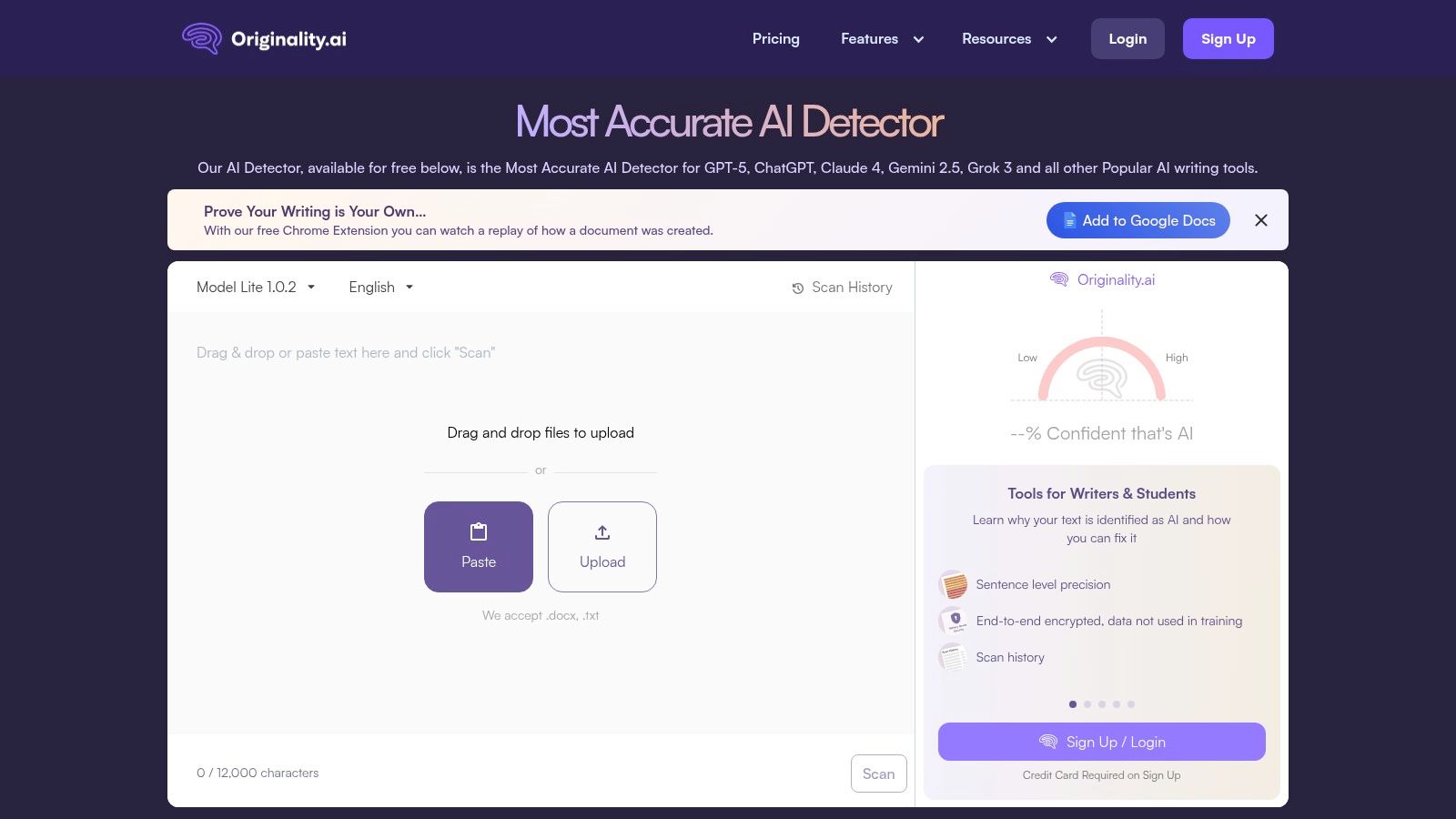
La plateforme est construite pour les flux de travail professionnels, offrant des fonctionnalités comme la gestion d'équipe, des rapports partageables et un accès API pour des vérifications automatisées. Son extension Chrome et son module complémentaire Google Docs permettent aux utilisateurs de scanner du contenu directement dans leurs environnements d'écriture existants, un gain de temps pratique pour les freelances et les éditeurs. Bien qu'il s'agisse d'un service payant, son système de crédits par mot offre de la flexibilité. Pour ceux qui ont besoin d'humaniser du contenu pour éviter la détection, comprendre comment fonctionnent ces outils avancés est crucial ; vous pouvez en découvrir plus sur comment contourner éthiquement Originality.ai pour une écriture sûre face aux détecteurs.
Caractéristiques Clés et Considérations
- Modèle de Tarification : Offre à la fois un système de crédits à l'usage (1 crédit scanne 100 mots) et des abonnements mensuels. Les crédits uniques n'expirent jamais, mais les crédits d'abonnement se réinitialisent mensuellement.
- Fonctionnalité Principale : Combine la détection d'IA avec un puissant vérificateur de plagiat et une analyse de lisibilité, fournissant un score holistique de qualité du contenu.
- Meilleur Cas d'Usage : Idéal pour les gestionnaires de contenu, les éditeurs et les responsables d'intégrité académique qui nécessitent des historiques de scan auditables, une collaboration d'équipe et une intégration API pour la vérification de contenu à haut volume.
- Perspective Actionnable : Utilisez le score de lisibilité avec le score d'IA. Si un texte est signalé comme écrit par IA et a un faible score de lisibilité, concentrez vos modifications sur la simplification des structures de phrases et la division des longs paragraphes pour améliorer simultanément les deux métriques.
- Avantages : Tarification transparente, intégrations étendues (API, Chrome, Google Docs) et fonctionnalités conçues pour les équipes professionnelles.
- Inconvénients : Peut devenir coûteux pour les très longs documents, surtout lors de l'utilisation de vérifications d'IA et de plagiat.
Site web : https://originality.ai
3. GPTZero
GPTZero se distingue comme une alternative à ZeroGPT de premier plan, particulièrement dans les secteurs académiques et éducatifs. Initialement développé comme projet étudiant, il a rapidement gagné en popularité pour son approche directe de l'identification de texte généré par IA. Il offre un scan d'IA avancé qui fournit une mise en évidence phrase par phrase et des scores de probabilité, en faisant un outil de référence pour les enseignants et les étudiants cherchant à vérifier l'originalité. Ses capacités d'intégration, incluant une extension Chrome et des modules complémentaires directs pour Google Docs et Canvas, rationalisent le processus de vérification pour les flux de travail académiques.
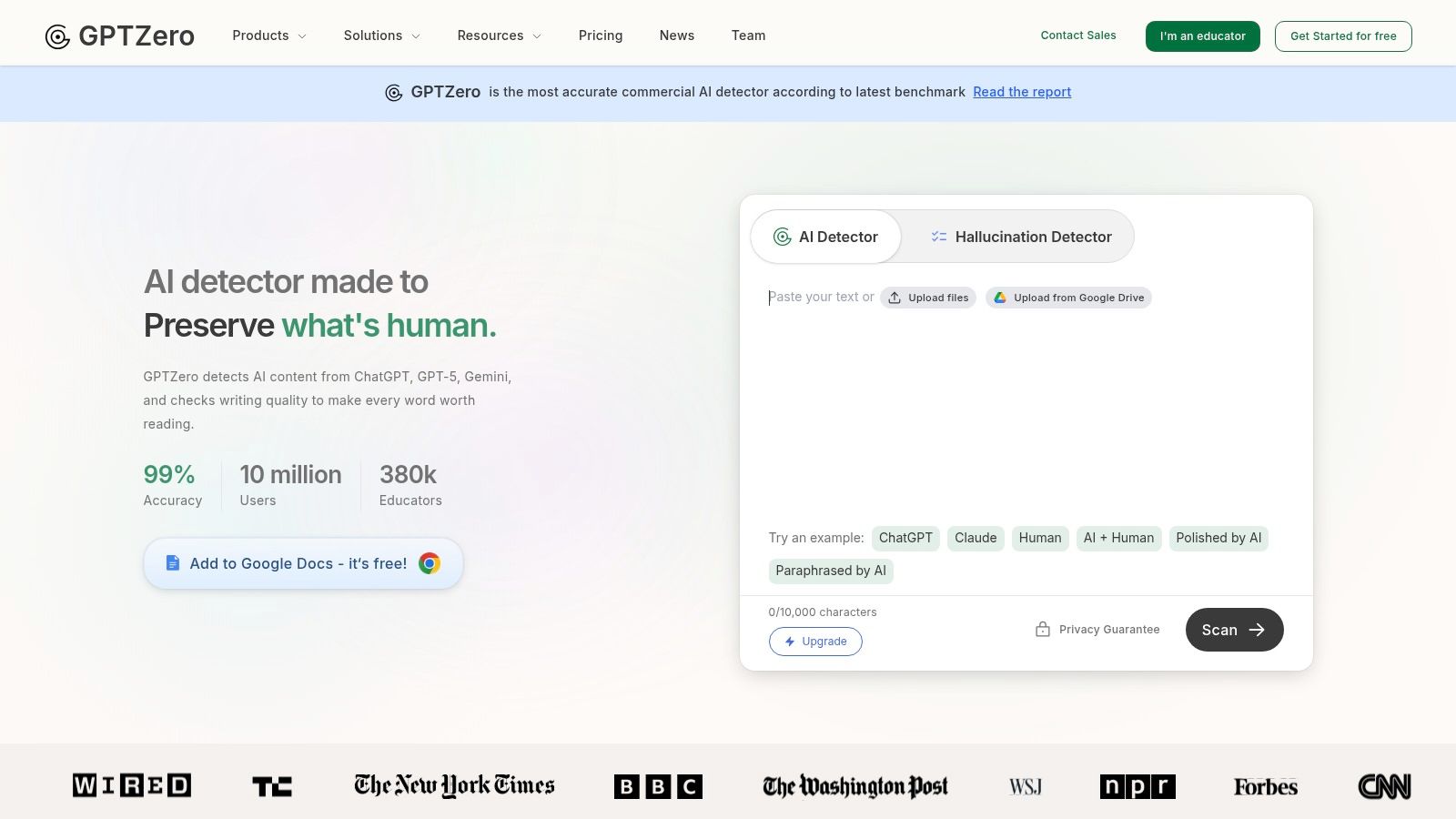
Au-delà de la simple détection, GPTZero fournit une suite d'outils de support d'écriture en tant que modules complémentaires optionnels, tels que des vérifications de plagiat, de grammaire et même d'hallucinations générées par IA. Cela le positionne comme une plateforme d'intégrité d'écriture plus complète plutôt qu'un simple détecteur. Pour les créateurs de contenu qui doivent s'assurer que leur écriture assistée par IA reste indétectable, comprendre ses modèles de détection spécifiques est clé ; vous pouvez explorer des méthodes avancées pour contourner éthiquement GPTZero pour de meilleures performances de contenu. La forte reconnaissance de marque de la plateforme dans l'éducation en fait un nom de confiance pour une utilisation institutionnelle.
Caractéristiques Clés et Considérations
- Modèle de Tarification : Offre un niveau gratuit avec limite de mots, ainsi que des forfaits premium mensuels et annuels pour les particuliers et les institutions qui débloquent des comptages de mots plus élevés et des fonctionnalités avancées.
- Fonctionnalité Principale : Fournit une détection d'IA détaillée avec analyse au niveau de la phrase, mettant en évidence la probabilité d'origine IA. Des outils optionnels de plagiat et de retour d'écriture sont disponibles dans les niveaux payants.
- Meilleur Cas d'Usage : Parfaitement adapté aux éducateurs, aux étudiants et aux institutions académiques qui ont besoin d'un outil fiable et intégré pour maintenir l'intégrité académique au sein des systèmes de gestion de l'apprentissage existants comme Canvas.
- Perspective Actionnable : Portez une attention particulière à la mise en évidence au niveau de la phrase. Les phrases signalées avec une haute probabilité d'IA sont vos cibles principales pour la réécriture manuelle. Concentrez-vous sur la reformulation de ces phrases spécifiques avec votre propre voix et des exemples uniques plutôt que de réécrire le paragraphe entier.
- Avantages : Forte réputation dans l'espace éducatif, large gamme d'intégrations (Chrome, Docs, Canvas, API) et suite complète d'outils d'analyse d'écriture.
- Inconvénients : Les résultats les plus précis et détaillés sont réservés aux niveaux payants, et son curseur de tarification interactif sur le site web peut parfois rendre les comparaisons de forfaits moins directes.
Site web : https://gptzero.me
4. Copyleaks
Copyleaks est une alternative à ZeroGPT mature et bien établie qui excelle dans la fourniture d'une détection complète d'IA et de plagiat dans un rapport unifié unique. Il s'adresse à un large public, des étudiants individuels aux grandes institutions éducatives et entreprises, avec son ensemble de fonctionnalités robuste et son support linguistique étendu. La capacité de la plateforme à générer un rapport unique de marque combinant les perspectives d'IA et de plagiat (appelé "AI Logic") en fait un outil puissant pour l'intégrité académique et la vérification de contenu.
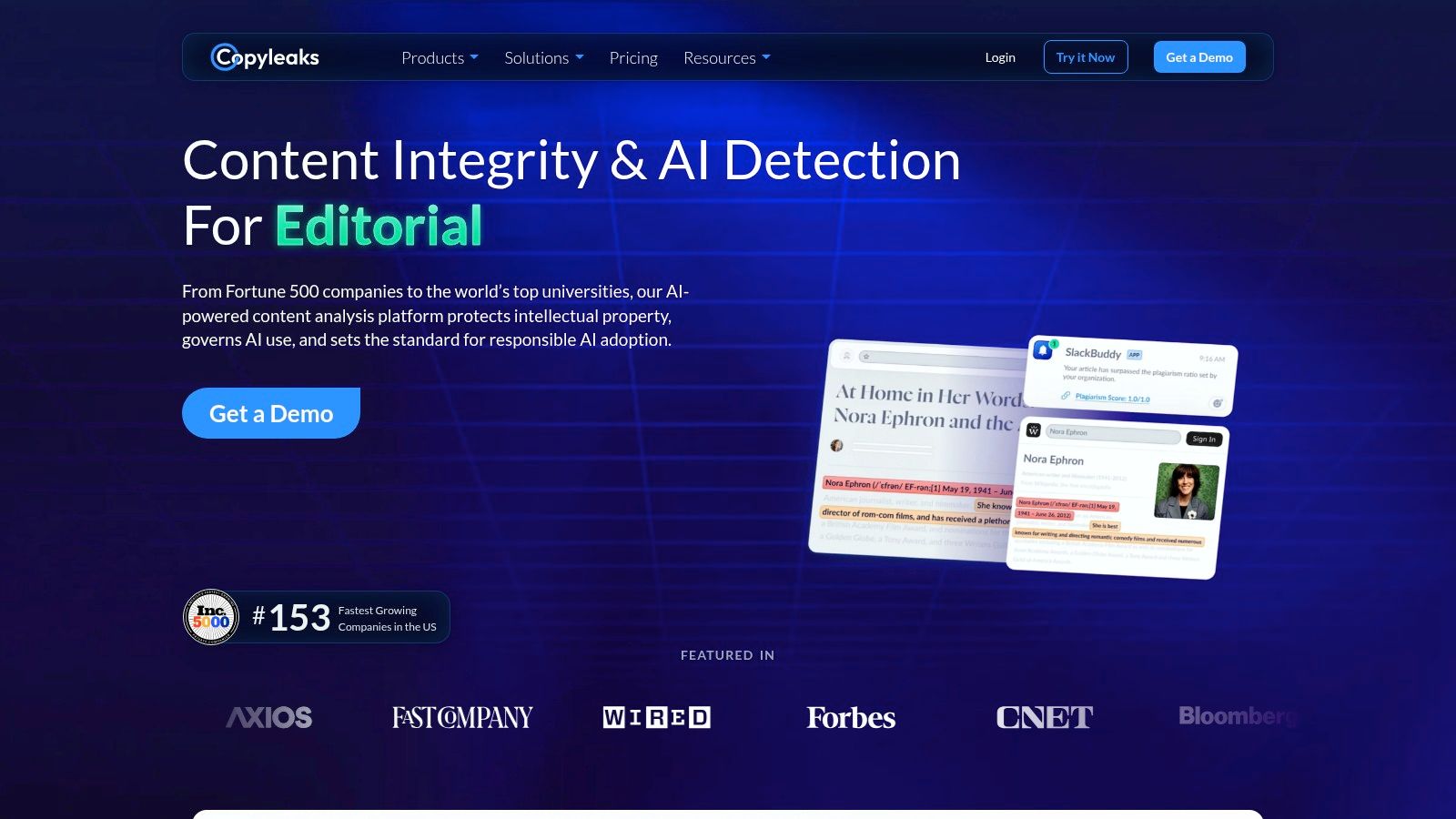
Cette double fonctionnalité est particulièrement utile pour les utilisateurs qui doivent valider à la fois l'originalité et l'auteur humain d'un document sans exécuter plusieurs scans séparés. Copyleaks offre des extensions de navigateur pour Chrome et Edge, ainsi qu'un module complémentaire Google Docs, intégrant ses capacités de détection directement dans les flux de travail d'écriture courants. Pour les grandes organisations, la plateforme fournit des analyses avancées, un scan de l'ensemble du site et un accès API pour les développeurs, en faisant une solution évolutive pour une utilisation institutionnelle.
Caractéristiques Clés et Considérations
- Modèle de Tarification : Offre des abonnements mensuels échelonnés pour les particuliers, les entreprises et les institutions éducatives, avec une tarification basée sur un système de crédits (1 crédit scanne 250 mots). Les forfaits ont des plafonds de crédits/mots mensuels.
- Fonctionnalité Principale : Combine la détection d'IA (30+ langues) et la vérification de plagiat (100+ langues) dans un rapport cohésif. Comprend des filtres avancés, une intégration LMS et une détection de plagiat de code.
- Meilleur Cas d'Usage : Excellent pour les institutions académiques, les entreprises et les professionnels juridiques qui nécessitent un rapport unique auditable pour le contenu généré par IA et le plagiat traditionnel.
- Perspective Actionnable : Pour les entreprises gérant un blog, utilisez la fonctionnalité de scan de l'ensemble du site pour effectuer un audit de contenu. Cela peut rapidement identifier les anciens articles qui pourraient nécessiter une mise à jour ou une "humanisation" pour répondre aux normes de qualité SEO actuelles, améliorant potentiellement leur classement.
- Avantages : Support multilingue étendu, structures de forfaits claires pour différents types d'utilisateurs et options robustes pour les entreprises et les développeurs pour une intégration à grande échelle.
- Inconvénients : Les crédits mensuels ne sont pas reportés, et le changement de forfait en milieu de cycle peut annuler les soldes de crédits existants. Les utilisateurs intensifs peuvent trouver les limites de crédits restrictives sur les forfaits de niveau inférieur.
Site web : https://copyleaks.com
5. Winston AI
Winston AI se présente comme une solution complète d'intégrité de contenu et une alternative à ZeroGPT polyvalente, étendant ses capacités au-delà de la simple analyse de texte. Il attire les éducateurs, les créateurs de contenu et les agences en regroupant la détection de texte IA avec la vérification de plagiat, la Reconnaissance Optique de Caractères (OCR) pour les documents scannés et même la détection d'images générées par IA. Cette approche multimodale en fait une plateforme unique pour ceux qui doivent vérifier l'authenticité de différents types de médias, pas seulement du contenu écrit.
La plateforme est conçue pour les environnements collaboratifs, offrant des fonctionnalités de gestion d'équipe et des rapports PDF partageables qui fournissent des résultats clairs et auditables. Sa capacité à scanner des images et des notes manuscrites à l'aide de l'OCR ajoute une couche d'utilité pour les milieux académiques où les étudiants pourraient soumettre un travail non numérique. Bien que son système de crédits soit direct pour la détection d'IA, les utilisateurs doivent noter que les scans de plagiat consomment le double de crédits, ce qui nécessite une gestion prudente pour une utilisation à haut volume.
Caractéristiques Clés et Considérations
- Modèle de Tarification : Offre des abonnements mensuels et annuels échelonnés avec des forfaits de crédits de mots. Les crédits inutilisés sont reportés au mois suivant, offrant une certaine flexibilité.
- Fonctionnalité Principale : Intègre la détection d'IA pour le texte (modèles majeurs comme GPT-4, Gemini), la vérification de plagiat et la détection d'images IA/deepfake dans une interface.
- Meilleur Cas d'Usage : Excellent pour les institutions éducatives, les éditeurs et les créateurs qui manipulent divers formats de médias et nécessitent un outil unique pour vérifier à la fois le texte et les images pour le contenu généré par IA.
- Perspective Actionnable : Utilisez la fonctionnalité OCR pour numériser et vérifier des notes manuscrites ou du texte d'une page de livre scannée. Cela vous permet de vérifier rapidement le plagiat ou la similarité IA même lorsque le matériel source n'est pas numérique, ce qui est utile pour les chercheurs et les étudiants.
- Avantages : Solution tout-en-un pour l'analyse de texte et d'images, forfaits de crédits généreux dans les plans d'abonnement et technologie OCR pour les documents scannés.
- Inconvénients : Le système de crédits peut être déroutant (1 crédit/mot pour IA vs. 2 crédits/mot pour plagiat), et les fonctionnalités avancées sont verrouillées derrière des niveaux de prix plus élevés.
Site web : https://gowinston.ai
6. Quetext
Quetext est une alternative à ZeroGPT bien considérée qui a débuté comme un puissant vérificateur de plagiat et a depuis intégré la détection de contenu IA dans sa plateforme. Il attire un large public, des étudiants aux rédacteurs indépendants, en offrant un tableau de bord unifié où les utilisateurs peuvent vérifier simultanément le contenu non original et généré par IA. Sa force réside dans sa simplicité et ses généreuses allocations basées sur les mots, en faisant un outil accessible pour ceux qui ont besoin de vérifications régulières sans fonctionnalités d'entreprise complexes.
La plateforme prend en charge les téléchargements en masse et les importations cloud depuis des services comme Google Drive et OneDrive sur certains forfaits, ce qui rationalise le flux de travail pour les utilisateurs gérant plusieurs documents. Des outils pratiques comme un résumeur IA et divers assistants d'écriture sont également inclus dans ses niveaux payants, ajoutant de la valeur au-delà de la simple détection. Cette combinaison de scan de plagiat et d'IA dans une interface unique facile à utiliser en fait un choix pratique pour les créateurs de contenu axés sur le maintien de l'originalité et de l'authenticité dans leur travail.
Caractéristiques Clés et Considérations
- Modèle de Tarification : Offre un niveau gratuit limité pour les vérifications de base et des forfaits payants évolutifs avec facturation mensuelle ou annuelle qui fournissent des allocations de comptage de mots significatives pour la détection de plagiat et d'IA.
- Fonctionnalité Principale : Combine sa technologie propriétaire de plagiat DeepSearch avec un détecteur d'IA. Il inclut également la génération de citations et un outil de retour pour aider à corriger les problèmes d'écriture.
- Meilleur Cas d'Usage : Idéal pour les étudiants, les rédacteurs indépendants et les petites équipes SEO qui nécessitent un outil double fiable pour les vérifications d'originalité de routine à un coût modeste.
- Perspective Actionnable : Après avoir exécuté un scan, utilisez le générateur de citations intégré pour corriger immédiatement tout plagiat signalé qui est simplement le résultat d'une référence manquante. Cela resserre la boucle de rétroaction entre l'identification d'un problème et sa résolution, en particulier pour l'écriture académique.
- Avantages : Tarification simple avec des comptages de mots généreux, et sa vérification combinée de plagiat et d'IA est efficace pour les flux de travail de blog et académiques.
- Inconvénients : Manque de fonctionnalités avancées de gestion d'équipe et de rapport en profondeur trouvées dans les solutions de niveau entreprise. Les utilisateurs avec des besoins académiques intensifs peuvent trouver les options intégrées à Turnitin plus adaptées.
Site web : https://www.quetext.com
7. Sapling.ai
Sapling.ai offre une solution polyvalente en tant qu'alternative à ZeroGPT, se distinguant par un fort accent sur l'intégration pour développeurs et l'accès API. Bien qu'il fournisse un détecteur d'IA basé sur le web gratuit pour des vérifications rapides et occasionnelles, sa principale force réside dans son API robuste, conçue pour les entreprises et les développeurs qui ont besoin d'intégrer par programmation la détection d'IA dans leurs propres applications, systèmes de gestion de contenu ou flux de travail éditoriaux. Cela en fait un outil puissant pour les équipes techniquement averties cherchant à automatiser les vérifications d'intégrité de contenu à grande échelle.
La plateforme prend en charge une gamme d'entrées, y compris du texte direct, des téléchargements de fichiers PDF et DOCX, et fournit des informations détaillées par phrase, ce qui est utile pour une analyse granulaire. Son API bien documentée et ses SDK en font un choix de référence pour les implémentations personnalisées. Sapling.ai s'engage à mettre à jour régulièrement ses modèles pour suivre les derniers développements en IA générative, garantissant que ses capacités de détection restent pertinentes. La plateforme reconnaît de manière transparente les limites inhérentes à tous les détecteurs d'IA, notant la possibilité de faux positifs et négatifs.
Caractéristiques Clés et Considérations
- Modèle de Tarification : Offre un détecteur web gratuit avec des limites de caractères. L'accès API est basé sur un modèle de tarification transparent basé sur les caractères, le rendant évolutif pour les entreprises de toutes tailles.
- Fonctionnalité Principale : Détection d'IA centrée sur les développeurs via une API HTTP robuste et divers SDK. Fournit également une interface web simple pour les vérifications manuelles et prend en charge les téléchargements de documents.
- Meilleur Cas d'Usage : Idéal pour les développeurs de logiciels, les entreprises technologiques et les éditeurs à grande échelle qui ont besoin d'intégrer la détection d'IA directement dans leurs plateformes existantes ou outils internes pour un scan automatisé à haut volume.
- Perspective Actionnable : Une entreprise avec une plateforme de contenu généré par les utilisateurs (comme un forum ou un site d'avis) peut utiliser l'API de Sapling pour signaler et mettre automatiquement en quarantaine les soumissions suspectes générées par IA pour révision humaine, prévenant le spam et maintenant l'authenticité sans effort manuel.
- Avantages : Excellent pour l'intégration programmatique avec une documentation API claire, une tarification évolutive basée sur les caractères et un outil gratuit fonctionnel pour les vérifications rapides.
- Inconvénients : La version gratuite a des limites de caractères notables, poussant les utilisateurs vers les niveaux payants pour une utilisation substantielle. Sa valeur principale est dans son API, qui peut ne pas convenir aux utilisateurs non techniques.
Site web : https://sapling.ai
8. Turnitin
Turnitin est une plateforme majeure d'intégrité académique et une formidable alternative à ZeroGPT utilisée principalement au sein des institutions éducatives. Sa détection d'écriture IA n'est pas un outil autonome mais une fonctionnalité intégrée dans sa suite de produits plus large, qui comprend de puissants vérificateurs de plagiat et de similarité comme Feedback Studio et iThenticate. Cette intégration dans les Systèmes de Gestion de l'Apprentissage (LMS) en fait une partie transparente du processus de soumission de devoirs pour des millions d'étudiants et d'éducateurs dans le monde.
La plateforme se distingue par son profond ancrage dans le monde académique, exploitant une vaste base de données de travaux étudiants, de revues académiques et de contenu web pour ses rapports de similarité. Lorsqu'une institution active la fonctionnalité de détection d'IA, elle fournit un pourcentage d'"indicateur d'écriture IA" aux côtés du score de similarité traditionnel. Ce système de double vérification offre aux éducateurs une vue complète de l'originalité d'une soumission. Pour les étudiants confrontés à cette technologie, comprendre ses mécanismes est vital ; vous pouvez en apprendre davantage sur comment contourner éthiquement Turnitin pour vous assurer que votre propre travail n'est pas mal identifié.
Caractéristiques Clés et Considérations
- Modèle de Tarification : Turnitin est sous licence directement aux institutions (universités, écoles) sur une base d'abonnement d'entreprise. Les particuliers ne peuvent pas acheter de comptes personnels.
- Fonctionnalité Principale : Combine un détecteur d'écriture IA sophistiqué avec un vérificateur de plagiat et de similarité de classe mondiale, le tout profondément intégré dans les flux de travail académiques.
- Meilleur Cas d'Usage : Principalement pour les universités et les institutions K-12 cherchant à maintenir des normes d'intégrité académique sur toutes les soumissions d'étudiants via leurs plateformes LMS existantes.
- Perspective Actionnable : Si vous êtes étudiant dans une institution qui utilise Turnitin, votre étape la plus pratique est d'utiliser l'IA comme assistant de recherche pour le brainstorming et les plans, mais d'écrire le brouillon final entièrement avec vos propres mots. Cela minimise le risque de déclencher le détecteur d'IA, car Turnitin est très sensible aux modèles d'écriture IA.
- Avantages : Intégrations LMS profondes, vaste base de données académique pour la vérification de similarité et un nom de confiance dans l'éducation.
- Inconvénients : Non disponible pour l'achat individuel ; son utilisation et la disponibilité de la fonctionnalité de détection d'IA dépendent entièrement de l'abonnement et des politiques d'une institution.
Site web : https://www.turnitin.com
9. Scribbr (Vérificateur de Plagiat avec module complémentaire de Détecteur IA)
Scribbr est un service académique bien établi qui offre un puissant vérificateur de plagiat et a intégré un détecteur d'IA en tant que module complémentaire, en faisant une excellente alternative à ZeroGPT pour les étudiants et les chercheurs individuels. Sa distinction principale est son modèle de paiement par document, qui s'écarte des services courants basés sur abonnement. Cette approche est idéale pour les utilisateurs qui n'ont besoin que de vérifications occasionnelles pour des travaux ou devoirs importants et veulent éviter les frais récurrents. La plateforme met également l'accent sur la confidentialité des utilisateurs en garantissant que les documents soumis ne sont pas stockés dans une base de données publique.
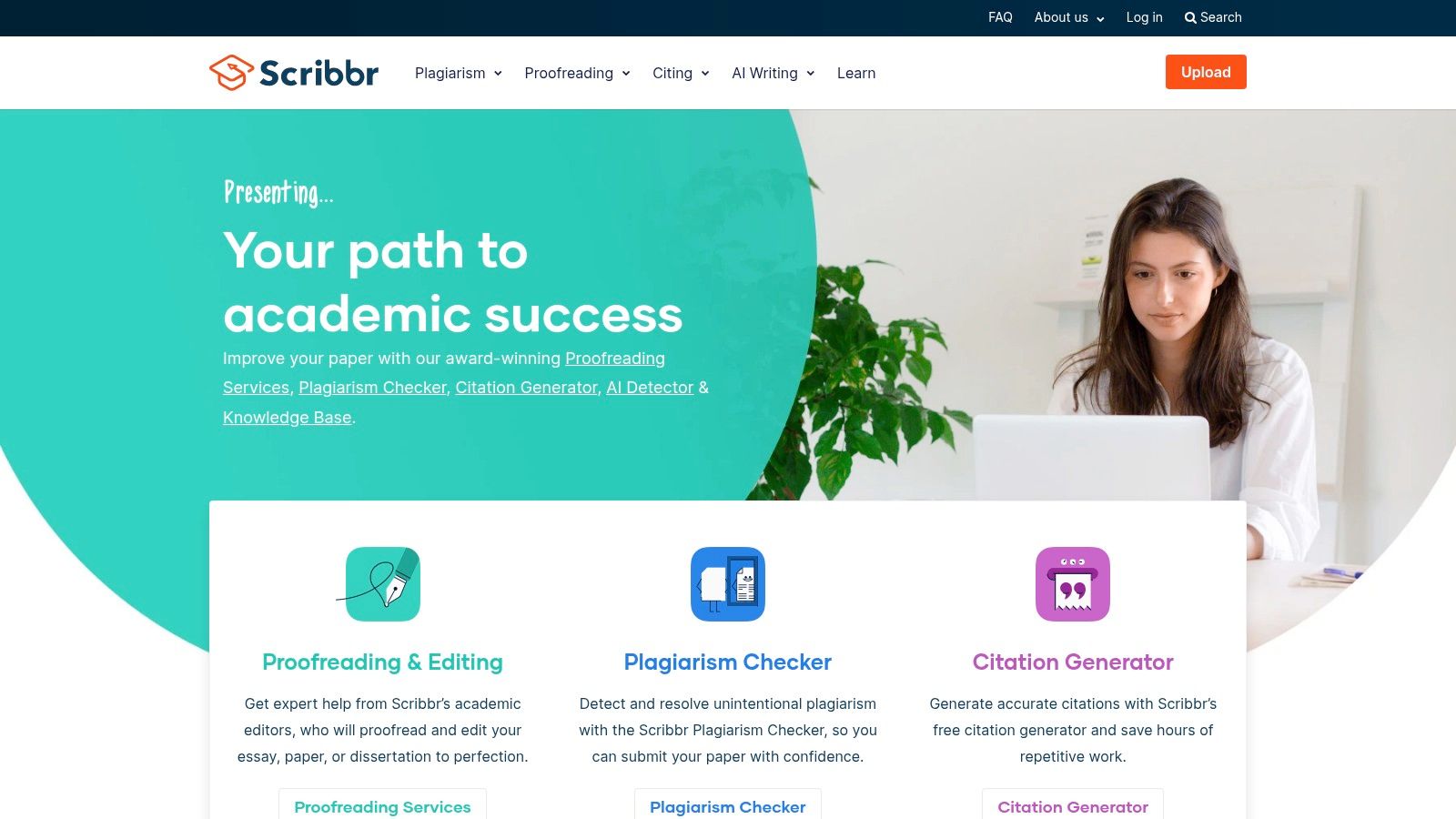
Le service est simple : vous téléchargez votre document, choisissez les services dont vous avez besoin (vérification de plagiat, détection d'IA ou les deux) et payez des frais uniques basés sur le comptage de mots du document. Pour les utilisateurs écrivant dans des langues autres que l'anglais, Scribbr offre un avantage unique en prenant en charge la détection d'IA en espagnol, allemand, français et néerlandais. Ce support multilingue est un avantage significatif pour les étudiants et les universitaires internationaux qui ont besoin d'une vérification fiable pour du contenu non anglais, une fonctionnalité qui ne se trouve pas couramment dans de nombreux outils concurrents.
Caractéristiques Clés et Considérations
- Modèle de Tarification : Un modèle simple de paiement par document avec trois niveaux basés sur le comptage de mots : Petit (<7,500 mots), Normal (7,500-50,000 mots) et Grand (>50,000 mots).
- Fonctionnalité Principale : Combine un vérificateur de plagiat détaillé avec un détecteur d'IA optionnel. Il est conçu pour être un guichet unique pour la relecture académique finale avant soumission.
- Meilleur Cas d'Usage : Parfait pour les étudiants, les chercheurs ou les utilisateurs ponctuels qui nécessitent une vérification de plagiat et d'IA de haute qualité pour un document spécifique sans s'engager dans un abonnement mensuel.
- Perspective Actionnable : Pour une thèse ou dissertation finale, utilisez Scribbr comme votre dernière porte de qualité. Le modèle de paiement par document le rend rentable pour une soumission unique et cruciale. Payez pour la vérification d'IA et de plagiat pour obtenir un rapport complet que vous pouvez utiliser comme liste de contrôle finale avant de soumettre à votre université.
- Avantages : Le modèle de paiement à l'usage offre de la flexibilité ; prend en charge plusieurs langues pour la détection d'IA ; se concentre sur la confidentialité sans stockage dans une base de données publique.
- Inconvénients : Le coût peut devenir élevé pour les utilisateurs qui doivent vérifier des documents fréquemment ; son support linguistique de détection d'IA est plus limité que son vérificateur de plagiat complet.
Site web : https://www.scribbr.com
10. Crossplag
Crossplag se présente comme une alternative à ZeroGPT spécialisée, avec un fort accent sur les environnements académiques et multilingues. Bien qu'il offre un détecteur de contenu IA gratuit, sa principale force réside dans ses capacités sophistiquées de détection de plagiat multilingue. Cette combinaison unique en fait un outil précieux pour les institutions et les entreprises traitant du contenu dans plusieurs langues, garantissant que l'originalité est maintenue au-delà des barrières linguistiques où d'autres outils pourraient échouer.
La plateforme exige que les utilisateurs créent un compte gratuit pour accéder à son détecteur d'IA, qui fournit ensuite un score de confiance simple basé sur un pourcentage. Cette étape initiale est une barrière mineure mais donne accès à un outil conçu avec l'intégrité éducative à l'esprit. Pour les organisations, Crossplag offre des solutions plus robustes, y compris des options d'auto-provisionnement, des API d'entreprise pour l'intégration du flux de travail et des démonstrations complètes adaptées aux institutions académiques, le positionnant comme plus qu'un simple scanner à usage unique.
Caractéristiques Clés et Considérations
- Modèle de Tarification : Le détecteur de contenu IA principal est gratuit à utiliser pour ceux ayant un compte Crossplag. Des forfaits payants sont disponibles pour ses services avancés de détection de plagiat, avec des options pour les particuliers, les entreprises et les institutions éducatives.
- Fonctionnalité Principale : Son principal différenciateur est la détection de plagiat multilingue, capable d'identifier du contenu traduit ou paraphrasé dans différentes langues. Le détecteur d'IA fournit un score de pourcentage simple indiquant la probabilité de génération IA.
- Meilleur Cas d'Usage : Excellent pour les institutions académiques, les publications multilingues et les entreprises mondiales qui ont besoin de vérifier l'originalité du contenu au-delà des barrières linguistiques, en plus d'effectuer des vérifications IA standard.
- Perspective Actionnable : Si vous dirigez une entreprise mondiale et soupçonnez qu'un concurrent a traduit et réutilisé votre contenu de blog anglais pour un marché espagnol, Crossplag est l'outil idéal. Sa vérification multilingue peut trouver ce plagiat traduit là où un outil comme Copyscape pourrait le manquer.
- Avantages : Le détecteur d'IA gratuit est un excellent point d'entrée, et son accent sur les scénarios multilingues offre un avantage unique par rapport à de nombreux concurrents.
- Inconvénients : Nécessite l'inscription d'un compte pour utiliser le détecteur d'IA gratuit. La profondeur du rapport de détection d'IA et sa capacité de traitement sont plus limitées par rapport aux alternatives payantes dédiées de niveau entreprise.
Site web : https://crossplag.com
11. Content at Scale
Content at Scale se positionne comme une solution de marketing de contenu de bout en bout, en faisant une alternative à ZeroGPT puissante pour les utilisateurs qui ont besoin de plus que de la simple détection. Bien qu'il offre un détecteur d'IA gratuit capable, sa force principale réside dans l'intégration de ce détecteur avec une suite d'outils conçus pour réécrire, humaniser et produire du contenu optimisé pour le SEO. Cette approche tout-en-un attire les équipes marketing et les agences cherchant à rationaliser leur flux de travail du brouillon IA à l'article indétectable et publié.
La plateforme est conçue pour les professionnels qui ont besoin non seulement de vérifier du contenu mais aussi d'agir immédiatement sur les résultats. Si un texte est signalé comme généré par IA, les utilisateurs peuvent exploiter les fonctionnalités intégrées de paraphrase et d'humanisation pour ajuster le contenu sur place. Cette intégration pratique fait gagner un temps considérable par rapport à l'utilisation d'outils séparés pour la détection et la réécriture. La version Pro améliore cette capacité avec des limites de scan plus importantes et la capacité de vérifier des URL entières, ce qui est idéal pour l'analyse concurrentielle ou les audits de contenu.
Caractéristiques Clés et Considérations
- Modèle de Tarification : Offre un détecteur gratuit avec des limites de caractères. Des forfaits Pro et des bundles de suite de contenu sont disponibles par abonnement, bien que les détails de tarification puissent être incohérents en ligne et soient mieux vérifiés directement sur la plateforme.
- Fonctionnalité Principale : Combine un détecteur d'IA gratuit avec une version Pro qui ajoute des scans d'URL et des limites plus élevées. La valeur principale de la plateforme est son ensemble d'outils intégrés de réécriture et d'humanisation de contenu.
- Meilleur Cas d'Usage : Parfait pour les agences SEO, les marketeurs de contenu et les blogueurs qui nécessitent un système unifié pour détecter, réécrire et optimiser du contenu pour les moteurs de recherche sans passer d'une plateforme à l'autre.
- Perspective Actionnable : Utilisez la fonctionnalité de scan d'URL pour analyser l'article le mieux classé d'un concurrent. S'il obtient un score d'écriture humaine, vous connaissez le niveau de qualité. S'il obtient un score d'IA, vous avez une opportunité claire de créer un article plus authentique avec une voix humaine pour le surclasser.
- Avantages : Combine de manière transparente la détection avec la réécriture et l'humanisation, offre un outil gratuit pour les vérifications rapides et évolue pour soutenir la production de contenu au niveau agence.
- Inconvénients : La suite complète d'outils peut être excessive et coûteuse si vous n'avez besoin que d'un détecteur. Les informations de tarification nécessitent une inscription pour plus de clarté.
Site web : https://contentatscale.ai
12. PlagiarismCheck.org (TraceGPT)
PlagiarismCheck.org est une alternative à ZeroGPT complète ciblant principalement les secteurs académiques et éducatifs, bien que ses fonctionnalités soient assez robustes pour une utilisation commerciale. Il combine son détecteur d'IA TraceGPT propriétaire avec un puissant vérificateur de plagiat, en faisant une solide solution tout-en-un pour les institutions. Ce qui le distingue, c'est sa profonde intégration avec les Systèmes de Gestion de l'Apprentissage (LMS) et ses forfaits structurés conçus pour les étudiants individuels, les équipes et les organisations entières.
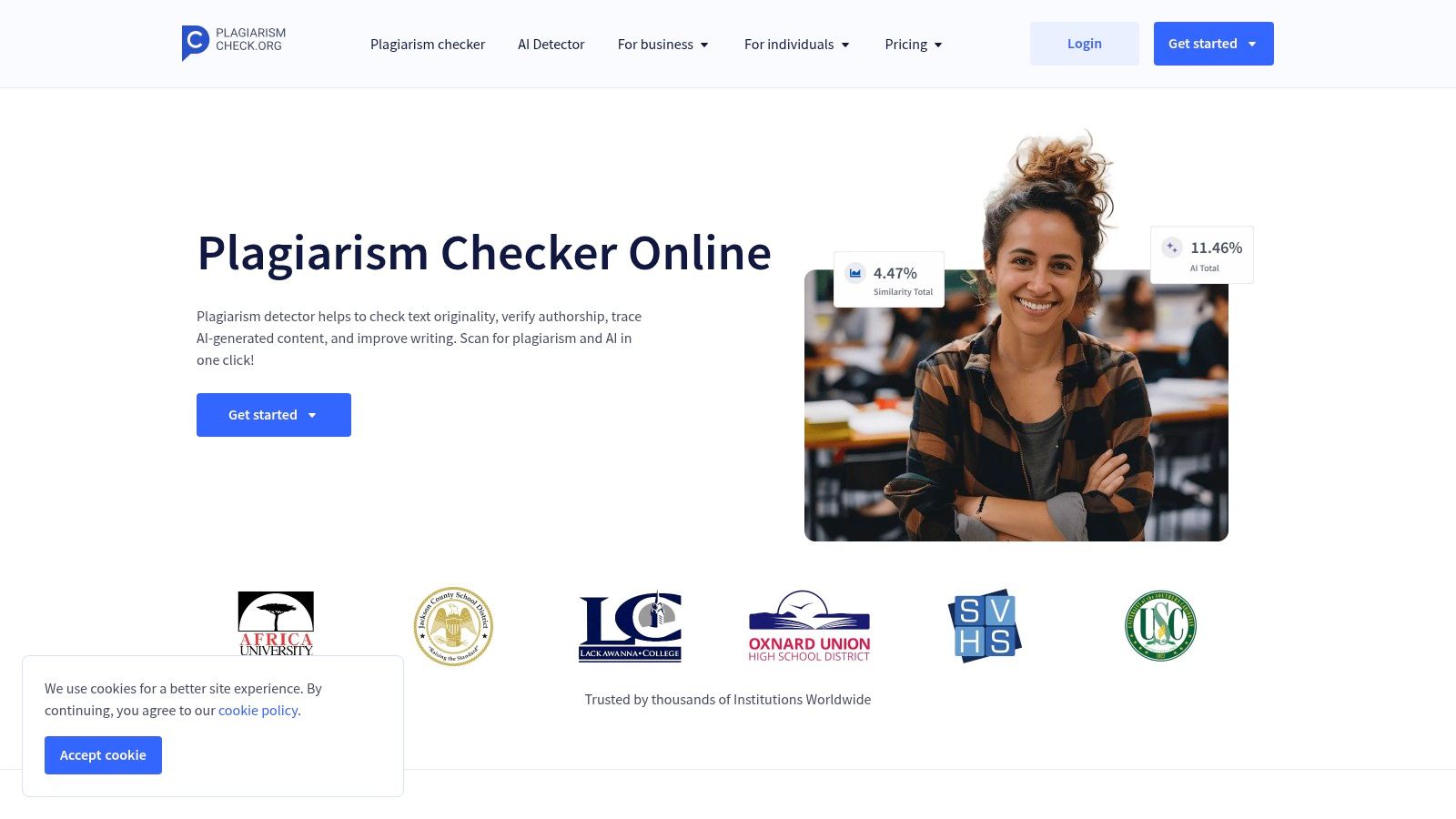
La plateforme se concentre fortement sur la convivialité au sein des flux de travail éducatifs établis. Des fonctionnalités comme les intégrations Google Classroom, Moodle et Canvas permettent aux éducateurs de vérifier les soumissions de manière transparente sans quitter leur environnement natif. Pour les grandes institutions, PlagiarismCheck.org offre une intégration dédiée, un accès API et un support 24/7, garantissant un déploiement et une adoption fluides dans tous les départements. Cet accent sur le support institutionnel et l'intégration en fait un choix pratique pour les écoles et les universités à la recherche d'un outil fiable de vérification de contenu.
Caractéristiques Clés et Considérations
- Modèle de Tarification : Offre des abonnements mensuels et annuels fixes pour les particuliers et les équipes, mesurés par le nombre de "pages" (275 mots). La tarification d'entreprise et institutionnelle est basée sur devis.
- Fonctionnalité Principale : Intègre la détection d'IA pour le texte anglais et espagnol avec un vérificateur de plagiat approfondi. Il met en évidence les phrases potentiellement générées par IA et fournit un score global de probabilité d'IA.
- Meilleur Cas d'Usage : Idéal pour les institutions éducatives, des enseignants individuels aux déploiements à l'échelle universitaire, qui ont besoin d'un outil fiable et intégré pour l'intégrité académique. Il convient également aux entreprises avec une production de contenu mensuelle fixe.
- Perspective Actionnable : Pour un enseignant utilisant Google Classroom, l'intégration est un gain de temps clé. Vous pouvez créer un devoir, faire soumettre le travail par les étudiants et exécuter des vérifications de plagiat et d'IA directement dans l'interface Classroom, gardant tous les retours et notations dans un endroit centralisé.
- Avantages : Intégrations LMS étendues, support 24/7 pour les clients institutionnels et structures de forfaits claires pour différentes échelles d'utilisateurs.
- Inconvénients : La facturation "basée sur les pages" pour les forfaits individuels peut être moins intuitive que la tarification standard par mot. Les fonctionnalités avancées et la tarification personnalisée sont verrouillées derrière des devis d'entreprise.
Site web : https://plagiarismcheck.org
Alternatives à ZeroGPT : Comparaison de 12 Outils
| Produit | Fonctionnalités principales | Détection / Qualité | Prix et Valeur | Public cible | Points de vente uniques |
|---|---|---|---|---|---|
| Humantext.pro 🏆 | Coller → score instantané + humaniser | ★★★★★ | 💰 Essai gratuit (500 mots) → forfaits abordables | 👥 Étudiants, rédacteurs, marketeurs, équipes | ✨ Confidentialité d'abord ; entraîné sur 1,2M+ échantillons humains ; humanisation instantanée |
| Originality.ai | IA + plagiat + lisibilité ; scans API et de site | ★★★★☆ | 💰 Crédits à l'usage et abonnements (peut devenir coûteux) | 👥 Éditeurs, agences, équipes de contenu | ✨ Rapports détaillés, intégrations Chrome/Docs |
| GPTZero | Scan IA avancé ; intégrations edu et modules complémentaires | ★★★★☆ | 💰 Gratuit limité / niveaux payants edu | 👥 Éducateurs, institutions, étudiants | ✨ Détection axée sur l'éducation et outils LMS |
| Copyleaks | IA + plagiat ; rapports multilingues et analyses | ★★★★☆ | 💰 Forfaits échelonnés avec crédits mensuels | 👥 Institutions, équipes, utilisateurs internationaux | ✨ Détection IA en 30+ langues ; analyses et scans de site |
| Winston AI | Détection IA de texte + image/deepfake + OCR | ★★★★☆ | 💰 Forfaits de crédits ; tarifs échelonnés par équipes | 👥 Créateurs, éditeurs, écoles | ✨ Combine vérifications d'intégrité de texte + image |
| Quetext | Détecteur IA + plagiat DeepSearch ; téléchargements en masse | ★★★☆☆ | 💰 Packs de mots simples ; niveau gratuit | 👥 Étudiants, freelances, petites équipes | ✨ DeepSearch + résumeur IA dans le tableau de bord |
| Sapling.ai | Détecteur web + SDK/API ; perspectives par phrase | ★★★☆☆ | 💰 Tarification API claire basée sur caractères ; limites gratuites | 👥 Développeurs, équipes de produits | ✨ Fort support API/SDK ; analyse par phrase |
| Turnitin | Indicateur IA + vérifications de similarité ; intégration LMS | ★★★★★ | 💰 Sous licence institutionnelle (pas individuelle) | 👥 Universités, écoles, administrateurs | ✨ Grand corpus académique ; intégrations LMS profondes |
| Scribbr | Plagiat au paiement par document avec module complémentaire IA | ★★★☆☆ | 💰 Niveaux de paiement par document (pas d'abonnements) | 👥 Étudiants nécessitant des vérifications ponctuelles | ✨ Soumissions privées ; vérifications IA spécifiques par langue |
| Crossplag | Détecteur IA gratuit (compte) + plagiat multilingue | ★★★☆☆ | 💰 Basique gratuit / forfaits commerciaux payants | 👥 Utilisateurs multilingues, institutions | ✨ Détecteur gratuit + scan multilingue |
| Content at Scale | Détecteur gratuit + Pro avec réécriture/humanisation | ★★★☆☆ | 💰 Limites gratuites → Pro pour scans plus importants | 👥 Marketeurs, équipes SEO, agences | ✨ Détection + ensemble d'outils de réécriture/production |
| PlagiarismCheck.org (TraceGPT) | Détecteur IA + plagiat ; options LMS et API | ★★★☆☆ | 💰 Forfaits mesurés par pages ; niveaux d'équipe | 👥 Étudiants, écoles, organisations | ✨ Intégrations LMS, support 24/7 et intégration |
Choisir Votre Alternative Idéale à ZeroGPT : Un Guide Pratique
Naviguer dans le paysage de la détection d'IA peut ressembler à un jeu à enjeux élevés du chat et de la souris. Comme nous l'avons exploré, le marché est rempli d'une gamme diversifiée d'outils, chacun avec ses propres forces, faiblesses et cas d'usage idéaux. La recherche d'une alternative à ZeroGPT parfaite ne consiste pas à trouver une solution unique infaillible ; il s'agit de construire stratégiquement une boîte à outils qui s'aligne avec vos objectifs spécifiques, vos normes éthiques et votre flux de travail. Le "meilleur" outil est celui qui s'intègre parfaitement dans votre processus, que vous soyez étudiant visant l'intégrité académique, marketeur faisant évoluer du contenu, ou rédacteur affinant votre métier.
Récapitulatif de Vos Options : De la Détection à l'Humanisation
Notre parcours à travers douze plateformes puissantes a révélé une distinction claire en fonctionnalité. D'un côté, nous avons les détecteurs d'IA purs comme GPTZero, Winston AI et Originality.ai. Ces outils agissent comme votre première ligne de défense, fournissant un score de probabilité qui vous aide à évaluer comment votre texte pourrait être perçu par les vérificateurs institutionnels ou clients. Leur rôle principal est diagnostique ; ils identifient les problèmes potentiels mais ne les résolvent pas.
D'un autre côté, nous avons des plateformes qui mélangent la détection avec d'autres fonctionnalités. Des outils comme Turnitin et Scribbr intègrent la détection d'IA dans un cadre plus large d'intégrité académique, en faisant des normes non négociables dans les milieux éducatifs. Pendant ce temps, des solutions comme Content at Scale offrent un flux de travail de bout en bout, de la génération et de la détection à la réécriture, adaptées aux équipes SEO et marketing.
Enfin, nous avons les humaniseurs d'IA spécialisés, avec HumanText.pro se distinguant comme un exemple phare. Ces outils servent un objectif unique et crucial : ils ne signalent pas seulement le texte ressemblant à l'IA, ils le transforment activement. Ce sont l'étape proactive que vous prenez après la rédaction, entièrement axée sur le raffinement de la syntaxe, la variation de la structure des phrases et l'infusion de votre contenu avec la cadence naturelle de l'écriture humaine pour garantir qu'il contourne les détecteurs et se connecte avec les lecteurs.
Un Cadre Pratique pour Faire Votre Choix
Sélectionner le bon outil nécessite une compréhension claire de votre objectif principal. Ne vous laissez pas distraire par une longue liste de fonctionnalités que vous n'utiliserez jamais. Au lieu de cela, ancrez votre décision sur votre besoin central.
Voici un guide simple basé sur les besoins pour vous aider à choisir la bonne alternative à ZeroGPT :
Pour l'Intégrité Académique et les Vérifications Finales : Si vous êtes étudiant, votre première étape devrait être d'identifier ce que votre institution utilise, qui est souvent Turnitin ou Scribbr. Pour les vérifications personnelles avant soumission, l'accessibilité de GPTZero ou la tarification par document de Scribbr offre une tranquillité d'esprit. Votre objectif ici est la conformité et la vérification.
Pour les Équipes de Contenu à Haut Volume et les Agences SEO : Les professionnels gérant des dizaines ou des centaines d'articles ont besoin d'une solution robuste et évolutive. Originality.ai est un concurrent solide avec ses scans complets, ses fonctionnalités d'équipe et son accès API. Content at Scale est un autre excellent choix si vous avez besoin d'un système entièrement intégré qui gère l'ensemble du cycle de vie du contenu.
Pour les Rédacteurs Indépendants et les Créateurs de Contenu : Les créateurs individuels ont besoin d'un équilibre entre précision, accessibilité et utilité. Utiliser un vérificateur gratuit comme TraceGPT par PlagiarismCheck.org pour un scan préliminaire, suivi d'un outil plus robuste comme Winston AI pour les projets critiques, crée un flux de travail rentable. L'étape la plus importante, cependant, est d'affiner le texte lui-même.
Pour Contourner Proactivement les Détecteurs d'IA : Si votre objectif principal est de prendre un brouillon généré par IA et de garantir qu'il se lit comme authentiquement humain et indétectable, un outil spécialisé est non négociable. C'est là qu'un humaniseur d'IA comme HumanText.pro devient indispensable. Son objectif n'est pas de surveiller votre texte mais de l'élever, en faisant votre chemin le plus direct pour créer du contenu sûr face aux détecteurs.
La conclusion finale est la suivante : la détection est une mesure réactive, tandis que l'humanisation est proactive. La stratégie la plus efficace implique de combiner les deux. Utilisez un détecteur fiable pour comparer vos brouillons, puis exploitez un puissant humaniseur pour les affiner et les polir. Souvenez-vous toujours que ces outils sont des aides conçues pour améliorer votre travail, pas des raccourcis pour contourner les responsabilités éthiques. Le résultat final devrait toujours être le reflet de vos propres connaissances, de votre pensée critique et de votre voix unique.
Prêt à passer de la simple détection de contenu IA à sa transformation en texte indétectable de qualité humaine ? Arrêtez de laisser le sort de votre travail au hasard et prenez le contrôle avec un outil conçu pour les rédacteurs, pas seulement pour les vérificateurs. Essayez Humantext.pro aujourd'hui pour découvrir l'humaniseur d'IA le plus avancé et garantir que votre contenu répond toujours aux normes les plus élevées d'authenticité.
Prêt à transformer votre contenu généré par l'IA en une écriture naturelle et humaine ? Humantext.pro affine instantanément votre texte, garantissant une lecture naturelle et authentique. Essayez notre humaniseur d'IA gratuit aujourd'hui →
Articles Connexes
AI Face Search Explained: Verify Identity and Stay Safe
Understand how AI face search works, including embeddings, accuracy, and legal issues. Learn to use these tools for personal safety and verify identity online.
Reverse Face Search: A Verification Safety Guide
Learn how reverse face search works, when to use it for safety, and how to pair it with AI image checks to verify online contacts and reused photos.
Face ID Search Explained: How It Works and How to Verify
Learn how face ID search works, why it differs from reverse image search, and how to verify identities and photos safely with practical checks and tools.

