Hur man gör ChatGPT odetekterbar (och varför du bör)
Lär dig hur du tydligt märker AI-genererad text och främjar ansvarsfull ChatGPT-användning med praktiska tips och bästa praxis.
Att göra din ChatGPT-output odetekterbar handlar om mer än en enkel sök-och-ersätt. Det handlar om att skriva om texten för att variera dess rytm och introducera de subtila egenheterna som är kännetecken för mänskligt skrivande. Denna process, ofta kallad humanisering, handlar om att bryta upp de förutsägbara mönster som AI-detektorer är tränade att hitta. Det handlar mindre om att försöka lura ett system och mer om att polera ett utkast tills det flödar med äkta kreativitet.
Verkligheten bakom AI-innehållsdetektering
Har du någonsin haft ett perfekt bra stycke som flaggats som AI-genererat? Det är inte magi—det är bara mönsterigenkänning. AI-detektorer som Turnitin eller GPTZero är digitala detektiver, tränade att upptäcka de statistiska fingeravtrycken som lämnas av stora språkmodeller (LLM). Med framväxten av automatisk innehållsskapande med AI, har detta katt-och-råtta-spel blivit otroligt relevant för marknadsförare, studenter och skribenter.
Dessa verktyg "läser" inte för mening på samma sätt som en person gör. Istället analyserar de statistiska egenskaper i texten. Tänk på det som en kriminalteknisk expert som tittar på en signatur. De läser inte namnet; de analyserar trycket, lutningen och slingorna som gör den unik.
De avslöjande tecken AI-detektorer letar efter
AI-detektorer letar efter specifika lingvistiska egenskaper som är vanliga i maskingenererad text. De två största röda flaggorna är perplexitet och sprängighet.
- Låg perplexitet: Detta låter tekniskt, men det handlar verkligen om förutsägbarhet. AI-modeller är designade för att välja det mest statistiskt troliga nästa ordet, vilket leder till smidiga, logiska, men ofta oinspirerade meningar. Mänskligt skrivande är helt enkelt rörigare och mycket mindre förutsägbart. Till exempel kan en AI skriva: "Den ekonomiska prognosen indikerar en period av hållbar tillväxt." En människa kan skriva: "Ärligt talat ser ekonomin ut att äntligen ta sig samman." Den andra meningen är mycket mindre förutsägbar.
- Låg sprängighet: Människor skriver i ryck och stötar. Vi blandar naturligt korta, slagkraftiga meningar med längre, mer komplexa. Som standard tenderar AI att producera meningar av en mer enhetlig längd, vilket skapar en robotisk rytm som detektorer lätt kan upptäcka. En AI kan producera tre meningar alla runt 15 ord långa. En människa kan skriva en 25-ords mening, följt av en 4-ords mening, sedan en 18-ords mening.
Kärnproblemet är att AI-genererad text ofta är för perfekt. Den saknar den lätta klumpigheten, det enstaka märkliga ordvalet och den varierade takten som definierar autentiskt mänskligt uttryck. Din uppgift är att återinföra den naturliga ofullkomligheten.
Varför detektorer inte är idiotsäkra
Det är kritiskt att komma ihåg att dessa detekteringsverktyg är långt ifrån ofelbar. Deras noggrannhet kan vara förvånansvärt skakig, vilket leder till ett frustrerande antal "falska positiva" där mänskligt skrivande blir flaggat.
Oberoende tester visar att Turnitin har fel nästan hälften av tiden på de där knepiga gränsfall. Ännu värre, det missar hela 31% av rent uppenbart ChatGPT-genererat innehåll, särskilt när det gäller nyare modeller som GPT-4 som har blivit bättre på att imitera mänskliga egenarter.
Denna opålitlighet är varför det ofta inte räcker att bara justera några ord. Du behöver en mer grundläggande omskrivning för att verkligen ändra textens statistiska signatur. Om du letar efter praktiska sätt att komma igång, är vår guide om hur man kringgår ZeroGPT-detektering en bra startpunkt. Detta sätter scenen för ett arbetsflöde som prioriterar äkta förbättring framför ytliga ändringar.
Manuella redigeringar som humaniserar ditt AI-innehåll
Medan AI är en fantastisk utgångspunkt, är dess råa output exakt vad som blir flaggat av detektorer. Hemligheten med att göra ditt innehåll odetekterbart är inte något komplext tekniskt hack; det handlar om att kavla upp ärmarna och ge texten en äkta mänsklig touch.
Denna praktiska process tacklar direkt kärnproblemen med förutsägbarhet och enhetlighet som AI-detektorer är designade att upptäcka. Tänk på dig själv som en skulptör. ChatGPT ger dig ett solidt marmorblock—nyckelidéerna och informationen finns där. Din uppgift är att mejsla bort de robotiska kanterna och hugga in de fina detaljerna som väcker det till liv.
Blanda upp meningsstrukturen för bättre sprängighet
En av de största AI-avslöjandena är en monoton, sjungande rytm. AI-modeller producerar ofta meningar av liknande längd och struktur, vilket skapar ett platt, förutsägbart flöde. Experter kallar denna brist på variation låg sprängighet.
Människor, å andra sidan, skriver med en naturlig takt. Vi använder korta, slagkraftiga meningar för effekt. Sedan följer vi dem med längre, mer beskrivande för att förklara saker. Denna naturliga blandning är hjärtat av sprängighet.
Här är ett snabbt exempel:
- AI-genererad text: "Systemet använder avancerade algoritmer för att bearbeta data effektivt. Det ger användare exakta insikter för bättre beslutsfattande. Plattformen är designad för att vara användarvänlig och mycket tillgänglig."
- Humaniserad version: "Systemet använder avancerade algoritmer för att bearbeta data. Men vad betyder det egentligen för dig? Exakta insikter. Bättre beslut. Det är en kraftfull plattform som också är otroligt lätt att använda."
Ser du skillnaden? Den humaniserade versionen bryter upp den enhetliga strukturen med en fråga, ett kort fragment och varierade meningslängder. Det skapar en mycket mer engagerande rytm och är ett av de mest effektiva sätten att störa mönstren som AI-detektorer letar efter.
Leta upp och ersätt vanligt AI-ordförråd
Vissa ord är döda avslöjanden av AI-genererat innehåll. Modeller som ChatGPT tenderar att luta sig mot en specifik uppsättning formella, något överanvända termer. Ord som "fördjupa sig", "utnyttja", "släppa lös" och "utnyttja" dyker upp så ofta att de praktiskt taget skriker AI.
Ditt uppdrag är att bli en orddetektiv. Kamma igenom texten, hitta dessa AI-favoriter och byt ut dem mot mer naturliga, konversationella alternativ. Detta hjälper inte bara dig att göra ChatGPT odetekterbar utan gör också ditt skrivande mer autentiskt.
Praktiskt tips: Skapa en "förbjudna ord"-lista. Varje gång du fångar ett ord som känns för robotiskt (som "robust", "sömlös" eller "gobeläng"), lägg till det på din lista. Innan du slutför någon text, gör en snabb sökning (Ctrl+F) efter dessa ord och utmana dig själv att ersätta varenda en.
Manuella redigeringstekniker och deras inverkan på AI-detektering
Denna tabell sammanfattar några nyckelstrategier, vilken lingvistisk metrik de påverkar och en realistisk uppskattning av tiden som krävs för ett 1000-ords stycke.
| Teknik | Vad det förbättrar | Tidsinvestering (per 1000 ord) |
|---|---|---|
| Varierande meningslängd | Sprängighet | 15-20 minuter |
| Ersätta AI-ordförråd | Ordvalsförutsägbarhet | 10-15 minuter |
| Lägga till anekdoter/berättelser | Perplexitet & autenticitet | 20-30 minuter |
| Använda idiom/bildspråk | Naturliga språkmönster | 10-15 minuter |
| Förenkla komplexa strukturer | Läsbarhet & perplexitet | 15-20 minuter |
Som du kan se kan en fokuserad redigeringssession på ungefär en timme dramatiskt förändra det lingvistiska DNA:t i en AI-genererad artikel, vilket gör den mycket mer sannolikt att passera som mänskligt skriven.
Injicera din personliga röst och ton
Slutsligen är det mest kraftfulla verktyget i din arsenal din egen unika röst. AI har inga personliga erfarenheter, åsikter eller känslor. Det kan efterlikna en ton, men det kan inte replikera en äkta personlighet.
Här är några sätt att injicera din röst:
- Lägg till personliga anekdoter: Dela en kort, relevant personlig berättelse. Istället för att säga: "Många användare tycker att denna funktion är hjälpsam", prova: "Jag kommer ihåg att jag kämpade med exakt detta problem i veckor, och denna funktion var en total game-changer."
- Ställ retoriska frågor: Engagera läsaren direkt. "Men hur fungerar detta egentligen i ett verkligt scenario?" Detta bryter monotonin och efterliknar en naturlig konversation.
- Använd idiom (lämpligt): Beroende på din publik kan vanliga idiom få text att kännas omedelbart mer mänsklig. En fras som "det är en helt ny match" känns mycket mer naturlig än "det representerar ett betydande paradigmskifte."
Genom att aktivt tillämpa dessa manuella redigeringar omstrukturerar du fundamentalt textens DNA. Den blir mindre förutsägbar och mycket mer autentisk. För en djupare dykning i denna redigeringsprocess, kolla in vår guide om att konvertera AI-genererad text till mänskligt innehåll för mer avancerade exempel.
Skapa uppmaningar för mer naturliga utdata
Medan du alltid kommer att behöva göra lite manuell redigering, kan du kraftigt minska den tiden genom att få ett bättre första utkast från AI:n. Varför brottas med en generisk, robotisk output i en timme när en smartare uppmaning kunde ha gett dig något 90% av vägen från början?
Detta handlar om att guida ChatGPT att tänka mindre som en maskin och mer som en specifik typ av mänsklig skribent.
Standard ChatGPT-rösten är lätt att upptäcka. Den är ofta lite för formell, lite långrandig och nästan smärtsamt hjälpsam—exakt den kombination som AI-detektorer är tränade att känna igen. Genom att skapa mer sofistikerade uppmaningar berättar du för modellen att anta en persona, imitera en skrivstil och följa specifika regler. Detta är ditt första, och mest kraftfulla, drag för att göra ChatGPT odetekterbar.
Använda rollspelsuppmaningar för att lägga till personlighet
Ett av de snabbaste sätten att få mer mänskligt klingande text är att ge AI:n ett jobb. Be inte bara om information; berätta vem den ska vara. Detta kallas rollspel, och det tvingar modellen att anta rösten, tonen och till och med de subtila fördomar hos en specifik karaktär.
Denna enkla förskjutning drar outputen bort från den generiska "hjälpsam assistent"-personan och in i något mycket mer specialiserat och autentiskt.
Generisk uppmaning:
"Skriv ett stycke om utmaningarna med distansarbete."
Rollspelsuppmaning:
"Agera som en cynisk senior projektledare som har tvingats leda ett distansteam de senaste två åren. Skriv ett kort, lite blaserat stycke om utmaningarna med distansarbete, med fokus på kommunikationssammanbrott och myten om ökad produktivitet. Använd en världstrött men professionell ton."
Den andra uppmaningen kommer att generera ett dramatiskt annorlunda resultat—ett fyllt med en distinkt synvinkel som är mycket svårare för någon detektor att flagga.
Tillämpa begränsningar för att undvika AI-vanor
Låt oss vara ärliga, AI-modeller har avslöjanden. De har förutsägbara vanor, som en överdriven användning av passiv form, en kärlek för övergångsfraser som "sammanfattningsvis" och en tendens att skapa perfekt balanserade, symmetriska stycken.
Du kan bryta dessa vanor genom att sätta tydliga regler, eller begränsningar, i din uppmaning.
Tänk på det som att sätta upp räcken. Dessa begränsningar tvingar AI:n att konstruera meningar på mindre förutsägbara sätt, vilket är en nyckelfaktor för att öka textens naturliga komplexitet och "sprängighet".
Här är några praktiska begränsningar du kan börja använda omedelbart:
- "Undvik passiv form helt och hållet." Denna enkla regel tvingar fram mer aktiva, direkta meningar.
- "Använd minst två retoriska frågor." Detta gör texten omedelbart mer konversationell.
- "Håll genomsnittlig meningslängd under 20 ord." Detta förhindrar de långa, slingriga meningarna som ofta skriker "AI".
- "Inkludera en kort, relaterbar anekdot." Detta lägger till en personlig touch som AI fundamentalt saknar.
Till exempel kan bara att lägga till "Skriv detta i en konversationell ton, undvik passiv form och inkludera en kort, relaterbar metafor" helt omvandla en torr, tråkig förklaring till något som låter som att en riktig person skrev det.
Genom att sätta specifika stilistiska och strukturella regler, föredierar du i princip innehållet innan det ens är skrivet. Detta proaktiva steg sparar enorm tid och bekämpar direkt de kärnmönster som AI-detektorer är programmerade att identifiera.
Att bli bättre på prompt engineering är ett måste om du vill ha naturliga utdata som kringgår detektering. För några bra, konkreta exempel, kolla in dessa 10 praktiska ChatGPT-uppmaningar för SEO. Även om de är inramade för sökmotoroptimering, gäller kärnprinciperna för att skapa detaljerade, effektiva uppmaningar överallt. När du lär dig att guida AI:n mer exakt, är ditt första utkast redan mycket närmare det högkvalitativa, odetekterbara innehåll du behöver, vilket gör dina slutliga humaniseringsredigeringar snabbare och mer effektiva.
Använda AI-humaniserare på det smarta sättet
Manuella redigeringar och smart promptning är bra, men låt oss vara verkliga—de tar mycket tid. När du stirrar ner i en deadline eller har ett berg av innehåll att ta dig igenom, behöver du ett annat verktyg i ditt bälte. Det är här en bra AI-humaniserare blir en oumbärlig del av ditt arbetsflöde.
Dessa specialiserade plattformar är byggda för att göra en sak och göra den exceptionellt bra: ta robotisk AI-text och skriva om den så att den låter som att en människa skrev den. Detta är inte bara en enkel synonymväxlare. Verktyg som HumanText.pro använder sina egna avancerade lingvistiska modeller för att analysera strukturen, ordvalet och rytmen i AI-genererat innehåll. Sedan bygger de om det från grunden, håller ditt kärnbudskap intakt samtidigt som de lägger till den naturliga komplexitet och variation som detektorer (och läsare) letar efter.
Resultatet är ett arbetsflöde som ger dig det bästa av två världar. Du får den råa hastigheten och idégenereringen av en LLM som ChatGPT, följt av den slutliga poleringen av en mänsklig omskrivning—allt på några sekunder.
Hur AI-humaniserare överlista detektering
AI-humaniserare fungerar genom att rikta in sig på de exakta statistiska mönster som detektorer är tränade att flagga. De är specifikt designade för att öka "perplexiteten" och "sprängigheten" i en text, effektivt scramblande de digitala fingeravtrycken som lämnas av modeller som GPT-4.
Denna process involverar några olika lager av transformation:
- Strukturell omformulering: Istället för att bara byta ut ord, omstrukturerar en humaniserare helt meningar och stycken. Detta skapar ett mer naturligt, mindre förutsägbart flöde som efterliknar mänskligt skrivande.
- Ordförrådsberikning: Den byter intelligent ut vanliga, lata AI-fraser mot mer nyanserat och kontextuellt lämpligt språk.
- Idiomatiska justeringar: De bästa humaniserarna kan till och med injicera subtila idiom, kulturella referenser och konversationella egenarter som får texten att kännas genuint autentisk.
Det är viktigt att komma ihåg att AI-detektorer är långt ifrån perfekta. Ett experiment fann att fem stora detektorer korrekt identifierade AI-innehåll endast 58,3% av tiden. När samma text kördes genom enkla grammatikfixare eller innehållsförbättrare sjönk detekteringsfrekvensen dramatiskt, med vissa verktyg som kringgick varje detektor. Detta bevisar att även en liten mängd smart efterbehandling kan göra en värld av skillnad. Du kan se en sammanfattning av dessa fynd om hur smart bearbetning överlista detekteringssystem.
AI-humaniserare är byggda på exakt denna princip, men de tar det till en mycket mer sofistikerad och riktad nivå.
En praktisk mini-fallstudie
Låt oss säga att du just använde ChatGPT för att generera en 500-ords uppsats om klimatförändringarnas effekter. Fakta är solida, men du kör den genom en AI-detektor och får en allvarlig 92% AI-genererad poäng. Att skicka in det skulle vara en stor risk.
Istället för att blockera ut en timme för en manuell omskrivning, vänder du dig till en AI-humaniserare.
Här är en titt på HumanText.pro-gränssnittet. Du kan bara klistra in din text och omedelbart se AI-detekteringspoängen innan du ens gör något.
Denna enkla instrumentpanel visar omedelbart problemet (en hög AI-poäng) och sätter lösningen ett klick bort.
Efter att ha klistrat in uppsatsen och tryckt på "Humanize"-knappen, skriver plattformen om den på under 30 sekunder. Den nya versionen har alla samma nyckelfakta och argument, men meningarna är mer varierade, tonen är mindre stel och de förutsägbara AI-fraserna har försvunnit. Du kör denna nya version genom samma detektor, och poängen rasar till bara 8% AI-genererad.
Hela processen tog mindre än en minut. Detta är den verkliga kraften hos en AI-humaniserare: den ger dig resultaten av en djup, manuell redigering med automatiseringens hastighet. Den hjälper dig att göra ChatGPT odetekterbar i stor skala.
Viktiga fördelar: Hastighet, effektivitet och integritet
När de används på rätt sätt erbjuder AI-humaniserare en massiv fördel. De handlar inte bara om att slinka förbi detektorer; de handlar om att höja den slutliga kvaliteten på ditt arbete på ett snabbt, effektivt och säkert sätt.
Här är vad du kan vinna:
- Hastighet och effektivitet: Detta är den stora. Att humanisera en 1 000-ords artikel kan göras på några sekunder. En grundlig manuell redigering? Det kan lätt ta en timme eller mer.
- Effektivitet: Dessa verktyg är specialbyggda för att slå de senaste detekteringsalgoritmerna. De är ofta mer effektiva än enkla manuella justeringar för att få ner höga AI-poäng.
- Integritet: Välrenommerade tjänster som HumanText.pro sätter en premie på användarintegritet. Ditt innehåll bearbetas, humaniseras och returneras till dig utan att lagras eller användas för att träna andra AI-modeller, vilket håller ditt arbete helt konfidentiellt.
Om du letar efter att ta med denna teknik i din innehållsstrategi, erbjuder vår detaljerade guide om de bästa AI-humaniseringsverktygen som finns tillgängliga en djupare jämförelse för att hjälpa dig hitta rätt passform. Detta tillvägagångssätt låter dig arbeta smartare, inte bara hårdare, och förvandlar AI till en sann assistent från första utkastet till det slutliga, polerade stycket.
Din checklista för kvalitetssäkring före inlämning
Okej, innan du ens tänker på att trycka "publicera" eller "skicka in", är det dags för en slutlig kvalitetskontroll. Detta handlar inte bara om att kryssa för dina T:n; det är en metodisk process för att se till att ditt innehåll är polerat, autentiskt och redo för vilken granskning som helst.
Jag har sett det hända tusen gånger: att stressa detta sista steg är vad som skiljer innehåll som seglar igenom från innehåll som blir flaggat. Denna systematiska granskning hjälper dig att fånga de subtila, nästan osynliga mönster som bara skriker "AI". Det förvandlar en slumpmässig spotkontroll till ett självsäkert slutgodkännande.
Denna snabbguide kan hjälpa dig att avgöra om en snabb genomgång med ett humaniseringsverktyg räcker eller om du behöver kavla upp ärmarna för en djupare manuell redigering.
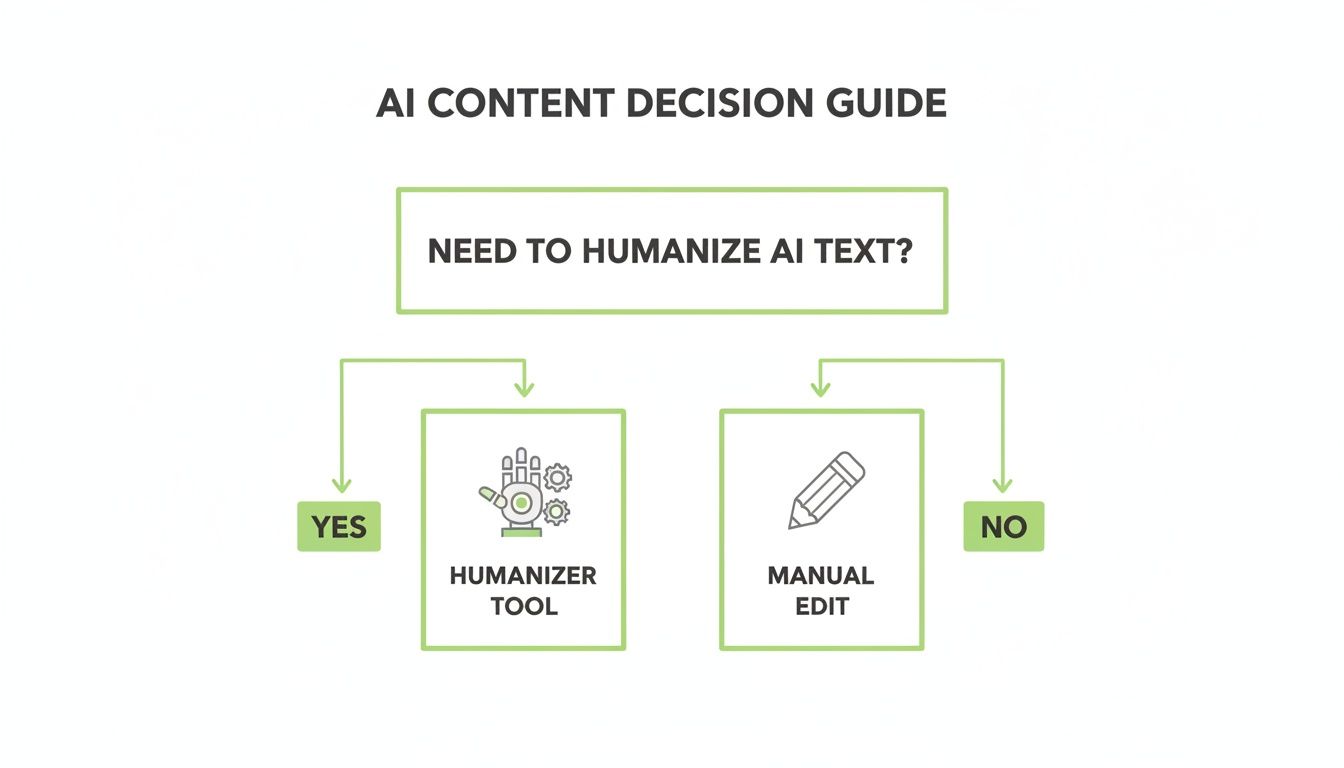
Detta beslutsträd lägger ut de två huvudsakliga arbetsflödena du kan följa efter att ha fått det första AI-utkastet, och styr dig mot antingen snabb effektivitet eller djup, personlig förfining beroende på vad du behöver.
Korsreferera flera AI-detektorer
Här är ett nybörjarmisstag: att förlita sig på bara en AI-detektor. Dessa verktyg är notoriskt över hela platsen. Det som passerar en med glans kan få en 90% AI-poäng på en annan. Var och en använder en lite annorlunda algoritm och letar efter sina egna unika statistiska egenarter i texten.
För att få en mycket bättre känsla för var du faktiskt står, kör ditt slutliga utkast genom minst två eller tre olika verktyg. Jag gillar att använda en blandning, kanske GPTZero, Copyleaks och kontrollanten inbyggd i en plattform som HumanText.pro. Detta trianguleringstillvägagångssätt ger dig en mycket mer exakt bild av ditt innehålls verkliga risknivå. Om det passerar flera kan du andas mycket lättare.
Utför en slutlig manuell granskning
Även efter all promptning och humanisering slår inget en slutlig hands-on-granskning. Detta är din chans att fånga de små ofullkomligheter som automatiserade verktyg helt enkelt inte kan se. Ditt mål här är inte bara att kontrollera efter fel, utan att verkligen ställa in flödet, tonen och den övergripande autenticiteten.
Här är en praktisk genomgång av vad jag gör för min slutliga genomläsning:
- Läs det högt: Detta är det enskilt bästa tricket i boken. Det exponerar omedelbart klumpiga formuleringar och klumpiga meningar. Om det inte låter rätt när du säger det, kommer det inte att läsas rätt, punktum.
- Kontrollera repetitiva startare: Ge dina stycken en snabb skanning. Börjar du för många med "Dessutom", "Sammanfattningsvis" eller "Det..."? Att blanda upp hur du öppnar dina meningar är en enkel fix som gör en enorm skillnad i läsbarheten.
- Verifiera tonkonsistens: Känns tonen konsekvent från första meningen till sista? AI-utkast kan ibland driva från en vänlig, konversationell intro till en stel, formell slutsats. Se till att det låter som att en person skrev hela grejen.
- Faktakontrollera nyckelpåståenden: AI-modeller är notoriska för "hallucinationer", vilket är ett artigt sätt att säga att de hittar på saker med otrolig självförtroende. Dubbelkontrollera alltid specifik data, namn eller statistik. Din trovärdighet står på spel.
För att göra detta sista steg ännu mer strukturerat har jag sammanställt en checklista du kan använda varje gång. Den säkerställer att du täcker alla dina baser innan du skickar ditt arbete ut i världen.
Din checklista för kvalitetssäkring före inlämning
| Kontroll | Syfte | Rekommenderade verktyg |
|---|---|---|
| Plagiatskanning | Säkerställa originalitet och undvika upphovsrättsfrågor. | Copyscape, Grammarly |
| AI-detekteringsskanning (flera) | Triangulera AI-poäng för en mer tillförlitlig riskbedömning. | GPTZero, Copyleaks, HumanText.pro |
| Läs högt-test | Fånga onaturliga formuleringar och förbättra meningsflöde. | Din egen röst |
| Grammatik- och stavningskontroll | Polera för professionalism och ta bort grundläggande fel. | Grammarly, ProWritingAid |
| Faktakontroll | Verifiera all data, statistik och påståenden för noggrannhet. | Google, källdokument |
| Ton & röstkonsistens | Säkerställa att skrivstilen är konsekvent från början till slut. | Manuell granskning |
Att gå igenom denna checklista tar inte lång tid, men det lägger till ett avgörande lager av polish och skydd, vilket bekräftar att ditt innehåll är redo för mänskliga läsare och algoritmiska kontrollanter lika.
Denna slutliga, människoledd kvalitetskontroll är din sista försvarslinje. Det är vad som överbryggar klyftan mellan innehåll som bara är tekniskt "odetekterbart" och skrivande som är genuint övertygande, pålitligt och effektivt. Det säkerställer att dina ansträngningar att göra ChatGPT odetekterbar också resulterar i en verkligt högkvalitativ slutprodukt.
Låt oss prata om etiken bakom "odetekterbar" AI
Denna hela konversation om att göra AI-innehåll odetekterbart kommer med en massiv asterisk. Det är en kraftfull idé, men vi vadar in i ett allvarligt gråområde här, och det är kritiskt att trampa försiktigt. Målet bör aldrig vara att fuska på en uppsats eller låtsas att AI:s arbete är ditt eget. Det är en snabb väg till problem.
Istället, tänk på detta som en produktivitetsökning. En AI-assistent är som en superladdad miniräknare eller ett avancerat grammatikverktyg. Det är fantastiskt för att spotta ut ett första utkast, reda ut dina tankar eller bara blåsa igenom ett otäckt fall av skrivarblock. "Humaniserings"-processen handlar verkligen om att ta det råa materialet och polera det till något som återspeglar din egen expertis och röst.
Så, var går gränsen?
Det handlar verkligen om en enkel sak: avsikt.
Använder du AI för att brainstorma, disposera eller generera ett grovt utkast som du sedan kraftigt skriver om, faktakontrollerar och genomsyrar med dina egna insikter? Det är bara ett smart, modernt arbetsflöde. Men om du bara genererar en uppsats, kör den genom ett verktyg och klistrar ditt namn på den för att få ett betyg—du har passerat gränsen.
Kärnprincipen här är förstärkning, inte ersättning. Använd AI för att göra dig snabbare och bättre, men låt det aldrig ersätta ditt eget kritiska tänkande, kreativitet och integritet.
Låt oss vara verkliga: skolor och arbetsgivare har legitima bekymmer. Denna teknik vänder helt upp och ner på hur vi traditionellt har mätt kunskap och ansträngning. Den mest ansvarsfulla vägen framåt är transparens.
Om du är student måste du känna till din skolas specifika policyer om AI. Gissa inte. Om du är en professionell är fokus på att producera arbete som är högkvalitativt, exakt och värdefullt. I det sammanhanget är AI din medpilot, inte piloten.
I slutändan ligger etiken bakom AI i våra händer. Det är bara ett verktyg. Och som alla verktyg kan du använda det för att bygga något fantastiskt eller för att orsaka mycket skada.
Dina frågor, besvarade
Att hoppa in i världen av AI-genererat innehåll kan kännas som att navigera i en labyrint. Många frågor dyker upp. Låt oss rensa luften och ta itu med några av de vanligaste vi hör om att få AI-text att låta mer mänsklig.
Är AI-detektorer faktiskt 100% exakta?
Nej, inte ens nära. AI-detektorer är inte idiotsäkra. De är designade för att leta efter statistiska mönster, som hur förutsägbara ordvalen är (perplexitet) eller hur enhetliga meningslängderna är (sprängighet).
Detta betyder att de kan, och ofta gör, få fel. Vi har sett många fall där helt människoskriven text blir flaggad som AI. Att förlita sig på en enda detektor är ett nybörjarmisstag. Kör alltid din text genom några olika verktyg för att få en mer balanserad bild.
Är det fel att göra AI-innehåll odetekterbart?
Detta handlar om avsikt. Använder du AI för att komma förbi skrivarblock eller för att snabbt slå ut ett första utkast som du sedan häller din egen expertis i? Det är bara ett smart, effektivt arbetsflöde.
Men om du försöker lämna in rå AI-output som din egen för en skoluppgift eller ett kundprojekt utan att lägga till något verkligt värde, passerar du en gräns. Det är inte bara oetiskt; det bryter ofta mot akademiska integritetspolicyer eller professionella uppförandekoder.
Målet bör alltid vara att förstärka dina egna färdigheter, inte att ersätta dem. Tänk på AI som en kraftfull assistent som hjälper dig producera arbete av högre kvalitet snabbare, med din egen expertis och röst som leder vägen.
Vad är det snabbaste sättet att humanisera AI-text?
Om hastighet är vad du behöver är en dedikerad AI-humaniserare ditt bästa val. Även om inget slår kontrollen av manuell redigering, kan ett verktyg skriva om en hel artikel på några sekunder. Det är byggt specifikt för att hitta och fixa de robotiska mönster som AI-detektorer hänger fast vid.
För alla som behöver bearbeta en stor volym innehåll är det en väsentlig del av ett effektivt arbetsflöde. Du kan helt enkelt inte matcha den hastigheten för hand.
Kommer användning av en AI-humaniserare att skada min SEO?
När det görs rätt bör det faktiskt hjälpa din SEO. Sökmotorer blir smartare när det gäller att belöna innehåll som människor genuint vill läsa.
Att omvandla generisk, robotisk text till något engagerande och naturligt ger en bättre användarupplevelse. Bättre läsbarhet och mer tid på sidan är positiva signaler till Google. I slutändan skapar du innehåll av högre kvalitet som känns autentiskt, och det är exakt vad sökmotorer vill ranka.
Redo att förvandla dina AI-utkast till polerat, odetekterbart innehåll? HumanText.pro ger dig ett kraftfullt och privat sätt att humanisera din text på några sekunder. Prova det gratis och se hur lätt det är att kringgå AI-detektorer samtidigt som du behåller ditt budskaps integritet intakt.
Redo att förvandla ditt AI-genererade innehåll till naturligt, mänskligt skrivande? Humantext.pro förfinar din text omedelbart och säkerställer att den läses naturligt och autentiskt. Prova vår gratis AI-humaniserare idag →
Relaterade artiklar
AI Face Search Explained: Verify Identity and Stay Safe
Understand how AI face search works, including embeddings, accuracy, and legal issues. Learn to use these tools for personal safety and verify identity online.
Reverse Face Search: A Verification Safety Guide
Learn how reverse face search works, when to use it for safety, and how to pair it with AI image checks to verify online contacts and reused photos.

Face ID Search Explained: How It Works and How to Verify
Learn how face ID search works, why it differs from reverse image search, and how to verify identities and photos safely with practical checks and tools.

